
Annularis Angelfish (Adult)
$399.99
Pomacanthus annularis
| Care Level | Moderate to Difficult |
| Temperament | Semi-aggressive |
| Color Form | electric blue, brown body |
| Diet | Omnivore |
| Reef Compatible | Not reef-safe |
| Water Conditions | 74–80°F (23–27°C), Sg1.023–1.025, pH: 8.1–8.4, 8–12 dKH |
| Max Size | 5 “ |
| Family | Pomacanthidae |
| Minimum Tank Size | 220 gallons (for adults) |
3-Day Guarantee
Approximate Purchase Size: Small: 1-2.5″; Medium: 2.5-3.75″; Large: 4-5″
Annularis Angelfish (Adult)
Also known as the Blue Ring Angelfish
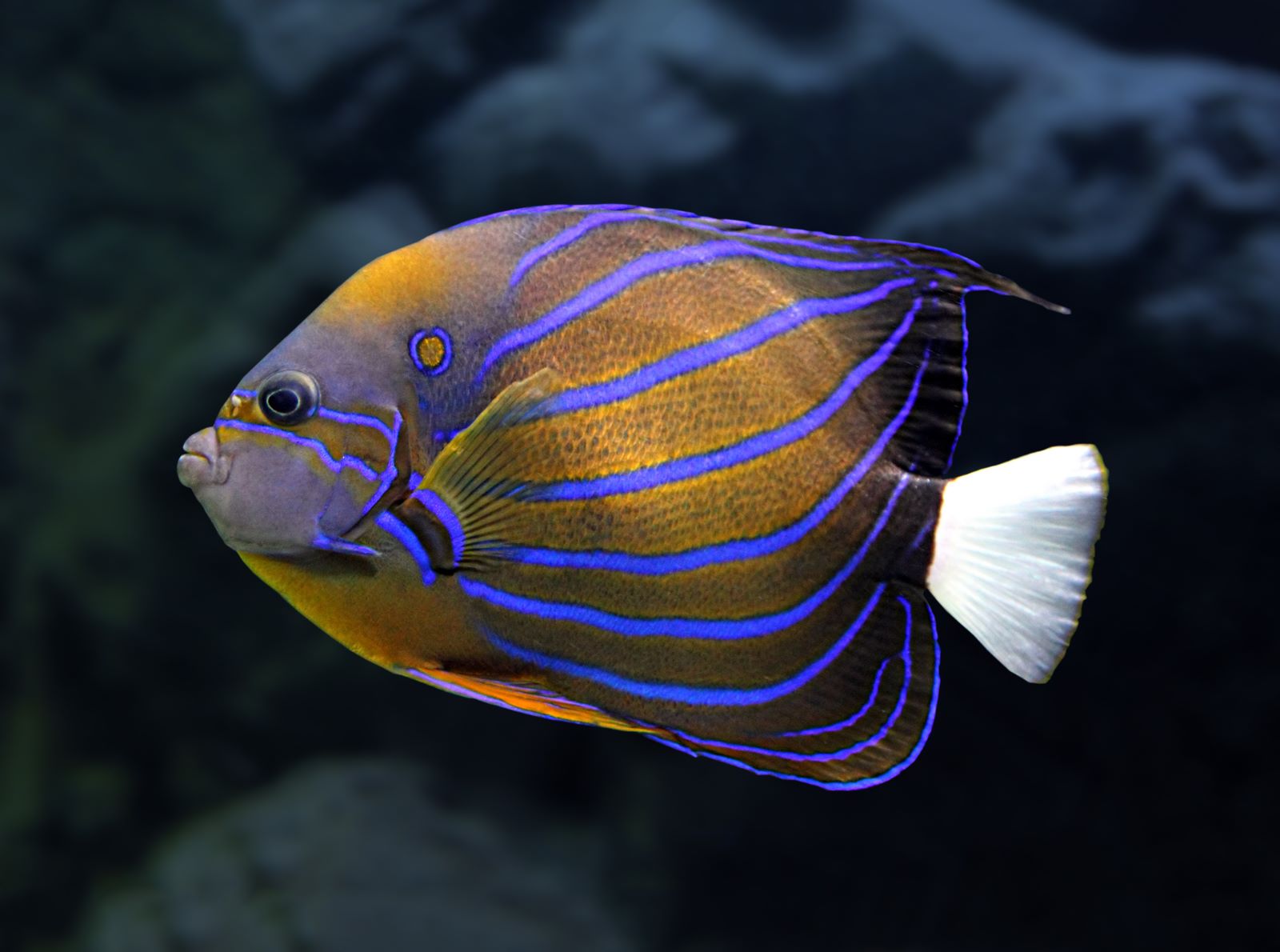
The Annularis Angelfish is a stunning large angelfish native to the Indo-Pacific region, ranging from East Africa to Samoa. Adults display dramatic coloration with electric blue curved lines on a tan to brown body, culminating in a distinctive white tail with yellow margins. As they mature, the characteristic blue “annulus” (ring) pattern behind the gill plate becomes more pronounced, giving this species its common name.
Key Features
- Scientific Name: Pomacanthus annularis
- Common Names: Annularis Angelfish, Blue Ring Angelfish, Blue King Angelfish
- Adult Size: 10–12 inches (25–30 cm)
- Lifespan: 15–20+ years with proper care
- Temperament: Semi-aggressive; territorial once established
- Reef Compatibility: Not reef-safe – will nip at stony and soft corals, clams, and zoanthids
- Minimum Tank Size: 220 gallons (for adults)
- Experience Level: Advanced – requires stable water conditions and careful acclimation
Habitat & Tank Requirements
Natural Habitat: Found on coral-rich areas and rocky reefs at depths of 10–100 feet, typically as solitary individuals or in pairs.
Tank Environment:
- Provide extensive live rock with caves, overhangs, and swimming space
- Create multiple hiding spots to reduce stress during acclimation
- Strong water flow with some calmer areas
- Stable, mature aquarium (6+ months established recommended)
Water Parameters:
- Temperature: 74–80°F (23–27°C)
- Salinity: 1.023–1.025 specific gravity
- pH: 8.1–8.4
- Ammonia/Nitrite: 0 ppm
- Nitrate: <20 ppm (lower is better)
- Alkalinity: 8–12 dKH
Essential Equipment:
- High-quality protein skimmer
- UV sterilizer (helps prevent parasitic infections)
- Robust filtration system
- Regular water changes (15–20% biweekly minimum)
Diet & Feeding
Annularis Angelfish are omnivores requiring a varied diet rich in both meaty foods and marine algae.
Recommended Foods:
- Pellets/Flakes: High-quality marine angelfish pellets, spirulina-enriched formulas
- Frozen Foods: Mysis shrimp, brine shrimp, krill, chopped clams, squid, marine fish flesh
- Plant Matter: Nori seaweed sheets, spirulina, marine algae (essential for immune health and color)
- Prepared Mixes: Angelfish-specific frozen blends containing sponge material
- Enrichment: Vitamin-soaked foods, garlic-enriched preparations for immune support
Feeding Schedule:
- Feed 2–3 times daily
- Offer variety to prevent nutritional deficiencies
- Include sponge-based foods when available (mimics natural diet)
Note: In the wild, large angelfish graze throughout the day on sponges, tunicates, and algae. Replicating this diversity is crucial for long-term health.
Behavior & Compatibility
Temperament:
- Shy initially but becomes bold and territorial once acclimated
- Generally peaceful toward non-angelfish tankmates
- May become aggressive toward other angelfish, especially in smaller systems
Tank Mates:
- Compatible with: Large tangs, wrasses, peaceful groupers, snappers, large butterflyfish
- Caution with: Smaller, timid fish may be intimidated
- Avoid: Other Pomacanthus species, dwarf angelfish in tanks under 300 gallons, aggressive triggers or dottybacks
Reef Compatibility:
- Not reef-safe: Will pick at most corals, especially LPS and soft corals
- May consume zoanthids, mushroom corals, and clam mantles
- Can work in FOWLR (Fish Only With Live Rock) systems
Acclimation & Care Tips
Initial Acclimation:
- Dim tank lights for first 48 hours
- Add to display tank last (after most other fish established)
- Minimize disturbance during first week
Signs of a Healthy Specimen:
- Active swimming throughout the tank
- Clear, bright eyes
- Smooth, vibrant coloration
- Eager feeding response
- No visible spots, lesions, or frayed fins
Color & Development
Juvenile Coloration: Juveniles display curved vertical white and blue stripes on a dark blue body, dramatically different from adults. They may act as “cleaner fish” on reefs.
Adult Transformation: The transition begins around 4–5 inches. Adult coloration features:
- Tan to brownish-orange body
- Electric blue curved lines across the body
- Prominent blue ring (annulus) behind gill plate
- White tail with yellow-orange margins
- Blue facial markings
This transformation can take 1–2 years depending on conditions.
Why Choose a Quarantined Annularis Angelfish?
When you purchase a properly quarantined Annularis Angelfish, you’re investing in a healthier, better-adjusted specimen. Our quarantine protocol includes observation, preventative treatment, dietary conditioning, and stress reduction, giving you the best possible start for long-term success with this magnificent species.
| Service Level | Quarantined |
|---|
You must be logged in to post a review.
Reviews
There are no reviews yet.