
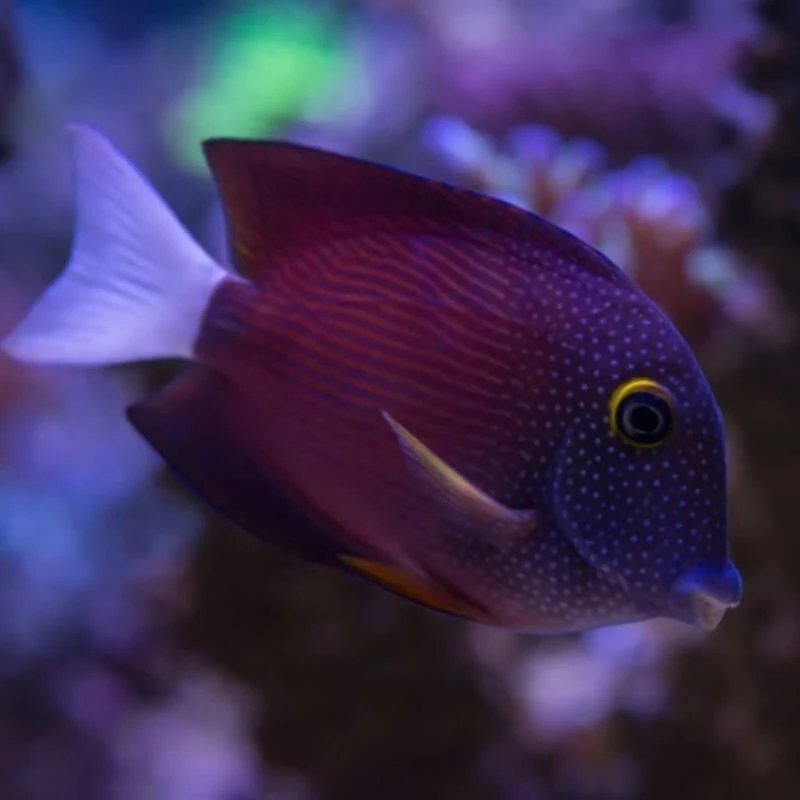
Whitetail Bristletooth Tang
$329.99
Ctenochaetus flavicauda
| Care Level | Beginner to intermediate |
| Temperament | Peaceful |
| Color Form | Light brown body with subtle markings and a clear white tail |
| Diet | Herbivore |
| Reef Compatible | Reef-safe |
| Water Conditions | sg 1.023–1.025, 74–80°F, pH 8.1–8.4 |
| Max Size | 6“ |
| Family | Acanthuridae |
| Minimum Tank Size | 70 gallons |
3-Day Guarantee
Approximate Purchase Size: Small: 1-2.5″; Medium: 2.5-3.75″; Large: 4-5″
Whitetail Bristletooth Tang
Also known as the Whitetail Tang or Ctenochaetus flavicauda.
The Whitetail Bristletooth Tang is a small, peaceful tang recognized for its subtle brown body, fine bristle-like teeth, and distinctive white tail. Native to the Indo-Pacific, this species is an excellent algae grazer and a hardy addition to reef aquariums. Its calm temperament and constant grazing behavior make it ideal for community setups, helping maintain healthy algae levels while adding gentle movement to the tank.
Key Features
- Scientific Name: Ctenochaetus flavicauda
- Common Names: Whitetail Bristletooth Tang, Whitetail Tang
- Adult Size: 5–6 inches (12–15 cm)
- Lifespan: 8–12+ years with excellent care
- Temperament: Peaceful; compatible with most community fish
- Reef Compatibility: Reef-safe
- Minimum Tank Size: 70 gallons
- Experience Level: Beginner to intermediate
Habitat & Tank Requirements
Natural Habitat:
Found on coral-rich reefs, lagoons, and reef slopes throughout the Indo-Pacific, including Hawaii, Fiji, and Indonesia. They thrive in areas with moderate water flow and abundant algae for grazing.
Tank Environment:
- Moderate water flow with open swimming areas
- Plenty of live rock for grazing and hiding
- Stable water parameters with high oxygen levels
- UV sterilizer recommended to reduce parasite exposure
Water Parameters:
- Temperature: 74–80°F (23–27°C)
- Salinity: 1.023–1.025
- pH: 8.1–8.4
- Ammonia/Nitrite: 0 ppm
- Nitrate: <10 ppm
- Alkalinity: 8–12 dKH
Essential Equipment:
- Protein skimmer
- Moderate circulation pumps
- UV sterilizer for parasite prevention
- Auto-top-off system for stability
- Regular water changes (10–15% weekly)
Diet & Feeding
Whitetail Bristletooth Tangs are primarily herbivorous and graze constantly on algae. Bristle-like teeth help them clean surfaces efficiently, keeping the tank naturally maintained.
Recommended Foods:
- Nori sheets (green, red, brown)
- Spirulina-based flakes or pellets
- Frozen herbivore blends
- Occasional mysis or brine shrimp for variety
- Vitamin-enriched foods for immune support
Feeding Schedule:
- Feed 2–3 times daily
- Provide continuous access to algae or nori
- Rotate food types for balanced nutrition
Behavior & Compatibility
Whitetail Bristletooth Tangs are peaceful and slow-moving grazers, making them compatible with most reef-safe species. They rarely show aggression and blend well into community aquariums.
Tank Mates:
- Compatible with: peaceful community fish, gobies, blennies, wrasses, anthias, and most reef-safe species
- Caution with: very aggressive tangs in confined spaces
- Avoid: overcrowding of surgeonfish
Color & Development
Whitetail Bristletooth Tangs have a subtle brown body with fine horizontal markings and a prominent white tail. Juveniles may have slightly darker coloration that lightens with age. Healthy diet and proper lighting enhance their natural sheen.
Size & Growth:
Juveniles are typically 1–2 inches and grow steadily to 5–6 inches as adults.
Acclimation & Care Tips
Initial Acclimation:
- Drip acclimate for 30–45 minutes
- Float bag for temperature equalization
- Dim lights during introduction
- Provide immediate access to algae and hiding areas
- Avoid adding to new or unstable tanks
Health Considerations:
Whitetail Bristletooth Tangs are hardy but may develop marine ich (Cryptocaryon) or HLLE if diet or water quality is poor.
Signs of a Healthy Specimen:
- Active grazing and swimming
- Clear eyes and smooth fins
- Strong appetite and natural coloration
- No flashing or labored breathing
Special Considerations
Quarantine is Recommended:
Quarantined Whitetail Bristletooth Tangs have higher survival rates, are conditioned to prepared foods, and are free from parasites. Dr Reef’s quarantine protocol ensures each fish is:
- Observed and treated preventatively
- Conditioned to aquarium diet
- Stabilized before shipment
Breeding Potential
Breeding Whitetail Bristletooth Tangs in captivity is extremely rare due to their specific grazing behavior and schooling tendencies. Most spawning occurs in large, stable reef systems.
Why Choose a Quarantined Whitetail Bristletooth Tang?
Quarantined Whitetail Bristletooth Tangs settle faster, eat readily, and adapt efficiently to aquarium life. Their health, coloration, and natural grazing behavior are ensured, making them an excellent addition to beginner and intermediate reef setups.
| Service Level | Quarantined |
|---|
2 reviews for Whitetail Bristletooth Tang
You must be logged in to post a review.
Related products
Achilles Tang
Price range: $549.99 through $649.99
Flame Hawkfish
$99.99
Midas Blenny
$99.99
Moorish Idol
$179.99

Yee Yang –
Beautiful fish, very colorful! Mine will eat everything nori, frozen, pellets! Active swimmer and pecks all around the tank.
Isarduy –
Communication was prompt, fish arrived lively and healthy. Colors were stunning. Highly recommend.