
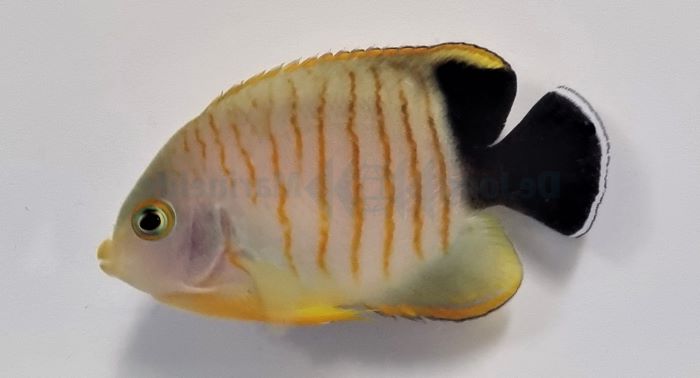

Red Stripe Angelfish
Price range: $99.99 through $114.99
Centropyge eibli
| Care Level | Intermediate |
| Temperament | Semi-aggressive |
| Color Form | Pearlescent body with orange-red stripes, black tail with blue edge, and yellow fins |
| Diet | Omnivore |
| Reef Compatible | With caution |
| Water Conditions | sg 1.020–1.025, 72–82°F, pH 8.1–8.4 |
| Max Size | 6″ |
| Family | Pomacanthidae |
| Minimum Tank Size | 75 gallons |
3-Day Guarantee
Approximate Purchase Size: Small: 1-2″; Medium: 2-3″; Large: 3-4″
Red Stripe Angelfish
Also known as the Eibli Angelfish, Blacktail Angelfish, or Orangeline Angelfish
The Red Stripe Angelfish is a captivating dwarf angelfish species known for its pearlescent body adorned with distinctive vertical orange to red stripes, a jet-black tail outlined in brilliant sapphire blue, and yellow pectoral fins. Native to the Eastern Indian Ocean from the Maldives to Northwest Australia, this hardy and beautiful species makes an excellent addition to established marine aquariums. One of the larger dwarf angelfish, the Red Stripe brings vibrant color and personality to any reef setup.
Key Features
- Scientific Name: Centropyge eibli
- Common Names: Red Stripe Angelfish, Eibli Angelfish, Blacktail Angelfish, Orangeline Angelfish, Eibl’s Angelfish, Eibl’s Dwarf Angel
- Adult Size: Up to 6 inches (15 cm)
- Lifespan: 5–10 years with proper care
- Temperament: Semi-aggressive; initially docile but becomes territorial when established
- Reef Compatibility: With caution – may nip at soft corals, LPS corals, clam mantles, and sessile invertebrates
- Minimum Tank Size: 70–75 gallons
- Experience Level: Intermediate
Habitat & Tank Requirements
- Tank Environment: Provide abundant live rock with plenty of caves, rocky crevices, and hiding places that mimic natural reef habitats. A mature, established tank (6+ months old) is strongly recommended to provide natural grazing opportunities on algae and diatoms.
- Water Parameters:
- Temperature: 72–82°F (22–28°C)
- Salinity: 1.020–1.025
- pH: 8.1–8.4
- Aquascape: Live rock is essential for grazing and shelter. This active species requires plenty of swimming space – cramped quarters heighten aggression levels toward smaller, peaceful species.
- Compatibility: Keep only one Red Stripe Angelfish per tank. Do not house with other Centropyge species or dwarf angelfish, as they will fight aggressively. Initially shy when introduced, they become more assertive and territorial once established. Should not be housed with overly aggressive tank mates. Best added last to the tank to reduce territorial disputes.
Diet & Feeding
Red Stripe Angelfish are omnivorous and require a varied, balanced diet:
- Meaty Foods: Vitamin-enriched mysis shrimp, enriched brine shrimp, chopped clams, frozen preparations
- Plant Matter: Marine algae, spirulina, nori sheets, dried seaweed, filamentous algae
- Natural Grazing: In mature tanks, will forage on microalgae, diatoms, and detritus from live rock
- Feeding Schedule: Feed small portions 2–3 times daily. Multiple small feedings help prevent the fish from pestering corals and invertebrates. Remove uneaten food promptly to maintain water quality.
Notes & Considerations
- Appearance Details: Pearlescent light gray to greenish-brown body with thin, vertical wavy orange-red stripes along the flanks. The eye is surrounded by an orange ring. Caudal peduncle and tail fin are jet black with a striking bright blue edge on the rear margin. Yellow pectoral fins complete the vibrant color palette.
- Behavior: While initially docile and shy upon introduction, this species becomes increasingly assertive and territorial as it settles in. Requires plenty of hiding places to feel secure. Will venture near the surface for food when well acclimated. Active throughout the day, but tends to retire around rocks and corals.
- Reef Considerations: Not considered fully reef-safe. May nip at soft corals (especially Zoanthus), LPS corals, clam mantles, and mucus produced by corals. SPS corals generally have better success. If attempted in reef tanks by advanced aquarists, use large tanks where the fish is less likely to continually damage any particular invertebrate. Keeping this fish well-fed reduces coral-nipping behavior.
- Water Sensitivity: Sensitive to nitrate levels – keep nitrates as close to zero as possible. Maintain pristine water quality with stable parameters. Like all dwarf angelfish, it can easily contract cryptocaryon (marine ich) when stressed. A quarantine tank is highly recommended.
- Social Structure: In the wild, found in small harems consisting of one male and several females. This species is a protogynous hermaphrodite – the dominant female will change sex to male if the male disappears.
- Hybridization: In the wild, this species crossbreeds with the Pearlscale Angelfish (C. vrolikii) and Lemonpeel Angelfish (C. flavissimus), producing attractive hybrids that occasionally appear in the trade.
- Mimicry: The color pattern of this species closely resembles juvenile Indian Ocean Mimic Surgeonfish (Acanthurus tristis), which mimic the small, agile angelfish to deter predators.
- Breeding: Extremely difficult to breed in captivity. Males and females are visually indistinguishable.
Why Choose a Quarantined Red Stripe Angelfish?
Our quarantined Red Stripe Angelfish are acclimated, monitored, and conditioned before being offered for sale. We adapt all our angelfish to aquarium life, focusing on their health and ensuring most are eating high-quality flake food and/or pellets before being offered. This ensures they arrive healthy, parasite-free, and ready to thrive in your aquarium, giving you peace of mind and a smoother transition into your tank.
| Service Level | Quarantined |
|---|---|
| Extended Guarantee | 3 days (Included), 7 days, 14 days |
You must be logged in to post a review.
Related products
Chromis
Price range: $19.99 through $45.99
Flame Hawkfish
Price range: $99.99 through $114.99
Margarite Snail
Price range: $11.99 through $54.99
Moorish Idol
$179.99
Reviews
There are no reviews yet.