
Purple Dottyback
Price range: $29.99 through $34.99
Pseudochromis porphyreus
| Care Level |
Beginner to Intermediate |
| Temperament | Semi-aggressive |
| Color Form | Violet-purple body with yellow facial markings and yellow-edged fins |
| Diet | Carnivore |
| Reef Compatible | Reef-safe |
| Water Conditions | sg 1.023–1.025, 72–78°F, pH 8.1–8.4 |
| Max Size | 2.5“ |
| Family | Pseudochromidae |
| Minimum Tank Size | 30 gallons |
Purple Dottyback
Also known as the Magenta Dottyback or Purple Pseudochromis
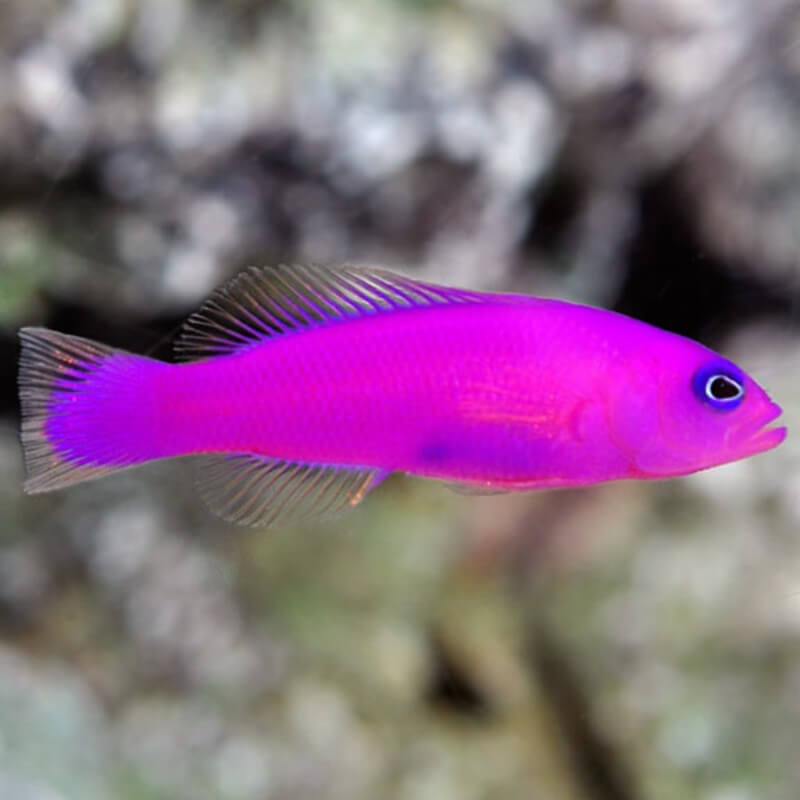
The Purple Dottyback is a brilliantly colored marine fish featuring intense violet-purple coloration with distinctive yellow accents on the head and fins. Native to the Red Sea and Gulf of Aden, this striking species displays one of the most vibrant purple colorations found in any marine fish. While they share the bold, territorial nature common to dottybacks, Purple Dottybacks are moderately aggressive—more assertive than Orchid Dottybacks but less aggressive than Bicolor Dottybacks. Their spectacular coloration, manageable size, and reasonable hardiness make them popular choices for aquarists seeking a vivid purple centerpiece fish willing to accept their semi-aggressive temperament.
Key Features
Scientific Name: Pseudochromis porphyreus
Common Names: Purple Dottyback, Magenta Dottyback, Purple Pseudochromis, Strawberry Dottyback
Adult Size: 2–2.5 inches (5–6 cm)
Lifespan: 5–7+ years with proper care
Temperament: Semi-aggressive to aggressive; territorial and bold
Reef Compatibility: Reef-safe – will not harm corals or most invertebrates
Minimum Tank Size: 30 gallons (larger tanks reduce aggression)
Experience Level: Beginner to Intermediate – hardy but requires careful tankmate selection
Habitat & Tank Requirements
Tank Environment:
- Live rock with caves and multiple hiding spots for territory
- Moderate to strong water flow acceptable
- Standard reef or FOWLR aquarium lighting
- Established aquarium preferred (2+ months)
- Multiple territories help reduce aggression toward tankmates
Water Parameters:
- Temperature: 72–78°F (22–26°C)
- Salinity: 1.023–1.025 specific gravity
- pH: 8.1–8.4
- Ammonia/Nitrite: 0 ppm
- Nitrate: <20 ppm
Diet & Feeding
Recommended Foods:
- Frozen mysis shrimp, brine shrimp, cyclops (primary diet)
- High-quality carnivore pellets and flakes
- Finely chopped krill, seafood, squid
- Enriched preparations with color enhancers
Feeding Schedule:
- Feed 1–2 times daily
- Small portions consumed in 2–3 minutes
- Aggressive, enthusiastic feeders
- Color-enhancing foods maintain vibrant purple coloration
- May outcompete slower, peaceful fish for food
Behavior & Compatibility
Temperament:
- Bold, confident, and territorial
- Moderately aggressive toward smaller fish
- Will harass timid or similarly sized fish
- Establishes and defends territory vigorously
- More aggressive than Orchid Dottybacks, less than Bicolor Dottybacks
- Personality mellows somewhat in larger tanks (50+ gallons)
Tank Mates:
- Compatible with: Larger tangs, clownfish, larger wrasses, angelfish, anthias, chromis, damselfish, larger gobies, assertive fish
- Caution with: Small gobies, dartfish, firefish, blennies, Royal Grammas, other dottybacks, basslets, similarly colored fish
- Avoid: Very small peaceful fish, other Purple Dottybacks, multiple dottybacks in tanks under 100 gallons, timid species
Social Behavior:
- Best kept singly in most home aquariums
- Multiple specimens only in very large tanks (100+ gallons) with extensive rockwork
- Territorial disputes with conspecifics can be intense
- Generally ignores dissimilar, larger, or more assertive tankmates
- May patrol entire tank claiming large territory
Reef Compatibility:
- Completely reef-safe with all corals
- May eat very small ornamental shrimp (sexy shrimp)
- Safe with larger ornamental shrimp (Cleaner, Peppermint, Fire Shrimp)
- Will not disturb snails, hermit crabs, or other cleanup crew
- Excellent for mixed reef systems with appropriate tankmates
Acclimation & Health
Initial Acclimation:
- Drip acclimation over 45–60 minutes
- Float bag for temperature equalization (15–20 minutes)
- Dim lights during introduction for 24 hours
- Add as one of the last fish to reduce territorial aggression
- May hide initially but becomes bold within hours
Health Considerations:
- Hardy and disease-resistant once established
- Can be susceptible to marine ich and velvet when stressed
- Quarantine 3–4 weeks recommended
- Watch for aggression toward tankmates (primary concern)
- Captive-bred specimens (if available) significantly hardier
Signs of a Healthy Specimen:
- Vibrant violet-purple body with yellow highlights
- Active, confident, bold swimming
- Immediate, aggressive feeding response
- Clear, bright eyes with alertness
- Smooth, intact fins with no damage
- No spots, lesions, or excess mucus
Color & Development
Coloration Characteristics:
- Body: Brilliant violet-purple to deep magenta throughout
- Head/Face: Yellow to orange wash on face and around eyes
- Fins: Purple body with yellow-orange edges on dorsal, anal, and pelvic fins
- Caudal Fin: Yellow outer margin with purple base
- Eyes: Large with yellow-gold iris
- Unique Feature: Yellow facial markings and fin edges distinguish from Orchid Dottyback
Color Intensity:
- High-quality varied diet maintains brilliant coloration
- Color-enhancing foods with astaxanthin boost purple intensity
- Carotenoids enhance yellow fin and facial markings
- Proper lighting (blue/violet spectrum) enhances natural brilliance
- Stress or poor water quality causes temporary fading
- Males may display more intense coloration
Color Comparison:
- Orchid Dottyback: Solid purple with no yellow markings
- Purple Dottyback: Purple body with distinctive yellow face and fin edges
- Indigo Dottyback: Uniform blue-violet with no yellow
Size & Growth:
- Juveniles typically available at 1–1.5 inches
- Reach adult size (2–2.5 inches) within 8–12 months
- Slightly smaller than most other dottyback species
- Compact, streamlined body shape
- Growth rate moderate
Special Features
Distinctive Coloration: The Purple Dottyback’s combination of violet-purple body with yellow facial markings and fin edges creates a uniquely beautiful appearance that distinguishes it from other purple dottybacks. This bicolor accent pattern makes them particularly striking under actinic lighting.
Size Advantage: At 2–2.5 inches maximum, Purple Dottybacks are among the smaller dottyback species, making them suitable for nano reefs (30+ gallons) and reducing their potential for serious aggression compared to larger dottyback species.
Captive-Bred Availability: While less commonly captive-bred than Orchid or Bicolor Dottybacks, some captive-bred Purple Dottybacks are occasionally available. These specimens offer superior hardiness, immediate food acceptance, and better temperament compared to wild-caught individuals.
Special Considerations
Aggression Management:
- Critical: Add Purple Dottyback as one of the last fish to established tank
- Provide multiple caves and hiding spots (2–3 minimum)
- Larger tanks (50+ gallons) significantly reduce aggression
- Will likely harass small, peaceful, or timid fish
- Generally respects larger, assertive tankmates
- Rearrange rockwork before introduction to reset territories
Tankmate Selection Strategy:
- Avoid housing with Royal Grammas (similar size and shape)
- Choose larger or equally assertive tankmates
- Add peaceful fish first, allow them to establish, then add dottyback last
- Monitor closely for first 48–72 hours
- Be prepared to remove if excessive aggression occurs
Small Tank Considerations: In 30-gallon aquariums, Purple Dottybacks may dominate the entire tank. Limit tankmates to similarly sized, assertive species or keep as single specimen with invertebrates. Larger tanks (50+ gallons) provide space for multiple territories.
Feeding Competition: Purple Dottybacks are aggressive feeders that may outcompete peaceful fish. Ensure slower fish receive adequate food through target feeding or multiple feeding locations.
Why Choose a Purple Dottyback?
Purple Dottybacks offer spectacular violet-purple coloration enhanced by distinctive yellow accents, creating one of the most visually striking color combinations in the marine hobby. Their smaller size makes them suitable for moderate-sized aquariums where larger dottybacks would be inappropriate. While they require careful tankmate selection due to semi-aggressive temperament, their hardiness, brilliant coloration, and bold personality make them rewarding centerpiece fish for appropriate community setups.
Their manageable size, stunning colors, and reasonable care requirements appeal to aquarists seeking vivid purple coloration without the extreme aggression of some dottyback species. When housed with compatible tankmates in adequately sized systems with proper introduction timing, Purple Dottybacks become confident, beautiful additions that command attention while remaining manageable for intermediate aquarists willing to respect their territorial nature.
| Service Level | Quarantined |
|---|---|
| Extended Guarantee | 3 days (Included), 7 days, 14 days |
You must be logged in to post a review.
Related products
Astraea Snail
Price range: $29.99 through $79.99
Blue Leg Hermit Crabs
Price range: $19.99 through $74.99
Blue Throat Triggerfish (Male)
Price range: $179.99 through $275.99
Chalk Bass (Wild Caught)
Price range: $49.99 through $57.99
Moorish Idol
$179.99
Reviews
There are no reviews yet.