
Scribbled Angelfish
$699.99
Chaetodontoplus duboulayi
| Care Level | Moderate to Advanced |
| Temperament | Semi-aggressive |
| Color Form | Dark blue body with yellow markings |
| Diet | Omnivore |
| Reef Compatible | Not reef-safe |
| Water Conditions | sg 1.020–1.025, 72–82°F, pH 8.1–8.4, dKH 8–12 |
| Max Size | 12″ |
| Family | Pomacanthidae |
| Minimum Tank Size | 180 gallons |
Live Arrival Guarantee
Approximate Purchase Size: Small: 1-2.5″; Medium: 2.5-3.75″; Large: 4-5″
Scribbled Angelfish
Also known as Duboulay’s Angelfish
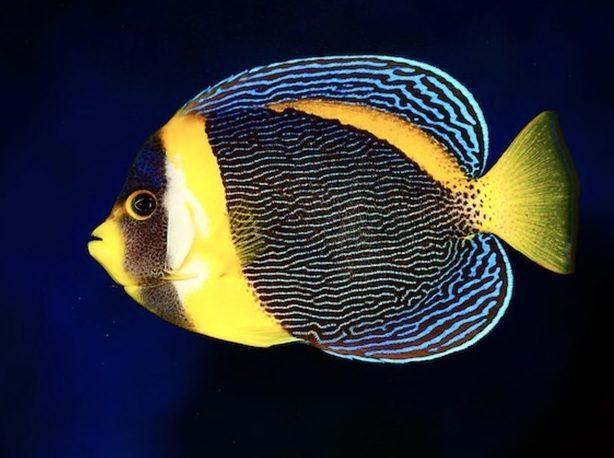
The Scribbled Angelfish is a spectacular and highly sought-after marine species known for its intricate scribble-like markings adorning its dark blue-black body, contrasted by vibrant yellow accents and bands. Endemic to the Coral Sea along the Great Barrier Reef of northeastern Australia, this stunning centerpiece fish is one of Australia’s most iconic reef species. While historically expensive and difficult to acquire, the recent availability of captive-bred specimens has made this species more accessible and significantly easier to maintain than wild-caught individuals, offering aquarists a hardy and adaptable alternative.
Key Features
- Scientific Name: Chaetodontoplus duboulayi
- Common Names: Scribbled Angelfish, Duboulay’s Angelfish
- Adult Size: Up to 10–12 inches (25–30 cm)
- Lifespan: 10–15 years with proper care
- Temperament: Semi-aggressive; shy initially but becomes territorial once established
- Reef Compatibility: Not reef-safe – will nip at stony corals, soft corals, sessile invertebrates, and clam mantles
- Minimum Tank Size: 110–180 gallons (larger systems preferred)
- Experience Level: Moderate to advanced (wild-caught); Intermediate (captive-bred)
Habitat & Tank Requirements
- Tank Environment: Requires a mature, well-established tank (6+ months old) with abundant live rock for grazing, shelter, and territory establishment. Provide plenty of caves, rocky crevices, and hiding places that mimic natural reef habitats with heavy coral growth. This species needs a large area to swim and should not be kept in cramped quarters.
- Water Parameters:
- Temperature: 72–82°F (22–28°C)
- Salinity: 1.020–1.025
- pH: 8.1–8.4
- dKH: 8–12
- Aquascape: Extensive live rock formations are essential for natural grazing, filtration, and maintaining stable water conditions. Provide ample swimming space while maintaining structural complexity with caves and ledges. Live rock adds an element of natural filtration to assist with the stable water conditions this species requires.
- Compatibility: Generally peaceful toward other tank mates but can be very timid when young and during acclimation, should not initially be housed with aggressive fish that may bully them. Once acclimated, however, may become more aggressive and territorial. Will become territorial toward conspecifics and other angelfish, keep only one Scribbled Angelfish per tank unless provided with an extremely large aquarium (500+ gallons). Generally not aggressive compared to Holacanthus and Pomacanthus species. Compatible with peaceful, similar-sized fish. Should not be mixed with conspecifics or other Chaetodontoplus species unless the system is very large.
Diet & Feeding
Scribbled Angelfish are omnivores with dietary preferences focused on sessile invertebrates and algae:
- Natural Diet: Primarily sessile invertebrates (sponges, anemones, soft corals, tunicates), marine algae, and small benthic invertebrates. Juveniles are predominantly plankton eaters.
- Captive Diet:
- Meaty Foods: Frozen mysis shrimp, enriched brine shrimp, chopped krill, chopped clams, scallops, squid, bloodworms, silversides, fresh shrimp
- Plant Matter: Spirulina, marine algae, nori sheets, zucchini, spinach, romaine lettuce, dandelion greens
- Specialty Items: High-quality marine angelfish preparations containing sponge matter, Angel Formula, Angel & Butterfly Mix (San Francisco Bay Brand), LRS Reef Frenzy
- Premium Foods: Vitamin C-soaked pellets (ABN Chromo Pellets recommended), quality Spirulina-based flake foods for angelfish
- Feeding Schedule: Feed small portions multiple times daily (at least 3 times per day, preferably more). Multiple small feedings help with acclimation and prevent the fish from pestering corals and invertebrates if kept in mixed aquariums. When first introduced, offer several daily feedings to quickly acclimate to surroundings.
- Feeding Enticement: If refusing food during acclimation, offer live brine shrimp, ghost shrimp, or freshly chopped seafood to entice eating.
- Critical Note: Captive-bred specimens from Biota/AlgaeBarn are already trained on prepared foods, making them significantly easier to feed than wild-caught specimens. This species has a decent track record of accepting standard angelfish foods including frozen cubes, nori, mysis shrimp, brine shrimp, and pellets.
Notes & Considerations
- Appearance Details: The body is predominantly dark blue-black with dull yellow lips and a yellow facial area. A wide vertical band of yellow and white separates the head from the body, running from the top of the head across the operculum, pectoral fins, pelvic fins, and wrapping at the breast. A bright yellow “skunk-like” stripe adorns the upper body, straddling each side of the dorsal fin and joining the caudal section while remaining above the lateral line. The caudal fin is bright yellow. The species derives its name from the many horizontal scrawls and scribbles covering the body, large dorsal fin, and anal fin, intricate markings in varying shades of blue from dark to light blue.
- Sexual Dimorphism: Males differ morphologically from females. Males typically have clearly defined horizontal dark blue scribbled stripes down their sides and are longer in body, while females usually have a more randomized dark blue scribbled pattern on their sides and are shorter in body length. Males may also exhibit a small white patch on the gill cover. Most Scribbled Angelfish start life as females and undergo the sex change to male coloration when they reach approximately 4–6 inches (10–15 cm) in size.
- Behavioral Traits: Initially shy and timid, especially when young and during acclimation. Should not be placed with aggressive tank mates that may bully or outcompete them for food. Once fully acclimated, however, they become more confident and may display territorial behavior toward other angelfish. Less aggressive overall than Holacanthus and Pomacanthus species.
- Captive-Bred Advantage: Aquacultured Scribbled Angelfish from Biota offer a huge advantage over wild-caught specimens. When bred and raised under captive conditions, they adjust more easily to aquarium life, are much less likely to carry disease, are more capable of tolerating shipping stress, and are already trained on readily available aquarium foods. Purchasing aquacultured fish supports sustainable aquaculture and helps make the hobby more environmentally responsible.
- Reef Considerations: Not a good candidate for reef tanks. Prone to nip at both stony corals (LPS and SPS) and soft corals, sessile invertebrates (anemones, zoanthids), and clam mantles. An underfed adult may attempt to try something new and find that clams and corals become its newest favorite diet. Best kept in large, well-established FOWLR (Fish-Only-With-Live-Rock) environments where they quickly become the center of attention.
- Health Considerations: Relatively hardy and easy to keep when provided with proper conditions. UV sterilizer and protein skimmer are strongly recommended to ensure optimal health. Requires stable water conditions with pristine water quality. Can be susceptible to common marine diseases when stressed.
- Cheek Spines Warning: Like all angelfish in the Pomacanthidae family, Scribbled Angelfish possess cheek spines along the edge of their gill covers. These serve a defensive role but can cause severe gill damage if the fish is collected with a net. Exercise caution when handling—never use a net for capture. Instead, coax them into a separate container with a flattened net, which can later be used to cover the top of the container preventing escape and injury.
- Social Structure: This species is hermaphroditic (protogynous hermaphrodite—all born female with ability to change to male). Extremely difficult to breed in an aquarium. Males and females are usually indistinguishable in coloration except for the differences noted above.
- Pricing and Availability: Historically priced extremely high ($250–$800 depending on size and location) and sometimes hard to acquire. Gradually becoming more affordable within the hobby as captive-bred numbers increase and availability improves.
- Geographic Range: Endemic to tropical Australia—Great Barrier Reef and Coral Sea regions of northeastern Australia, extending to Papua New Guinea and Indonesia (Irian Jaya). Southward range extends to Lord Howe Island. Also reported from southern Taiwan waters but very rare. Inhabits reefs with heavy coral growth. Depth range: Surface to 26 meters (85 feet). Not common in the wild.
- Size Considerations: While juveniles may be raised in smaller aquariums initially, adults can grow up to 12 inches and require a minimum of 110–180 gallons with plenty of swimming room. Larger systems are always better for adult specimens.
Why Choose a Quarantined Scribbled Angelfish?
Our quarantined Scribbled Angelfish are carefully checked and prepared before sale. Whenever possible, we offer captive-bred fish from trusted farms like Biota, which are stronger, healthier, and easier to feed than wild ones. These fish are already used to eating pellets and frozen foods. If they are wild-caught, we make sure they are eating well on high-quality sponge-based foods before they ship. This helps ensure they arrive healthy, parasite-free, and ready to thrive in your tank.
| Service Level | Quarantined |
|---|
You must be logged in to post a review.
Related products
Foxface
$149.99
Midas Blenny
$99.99
Pajama Cardinal (Captive Bred)
$39.99
Reviews
There are no reviews yet.