
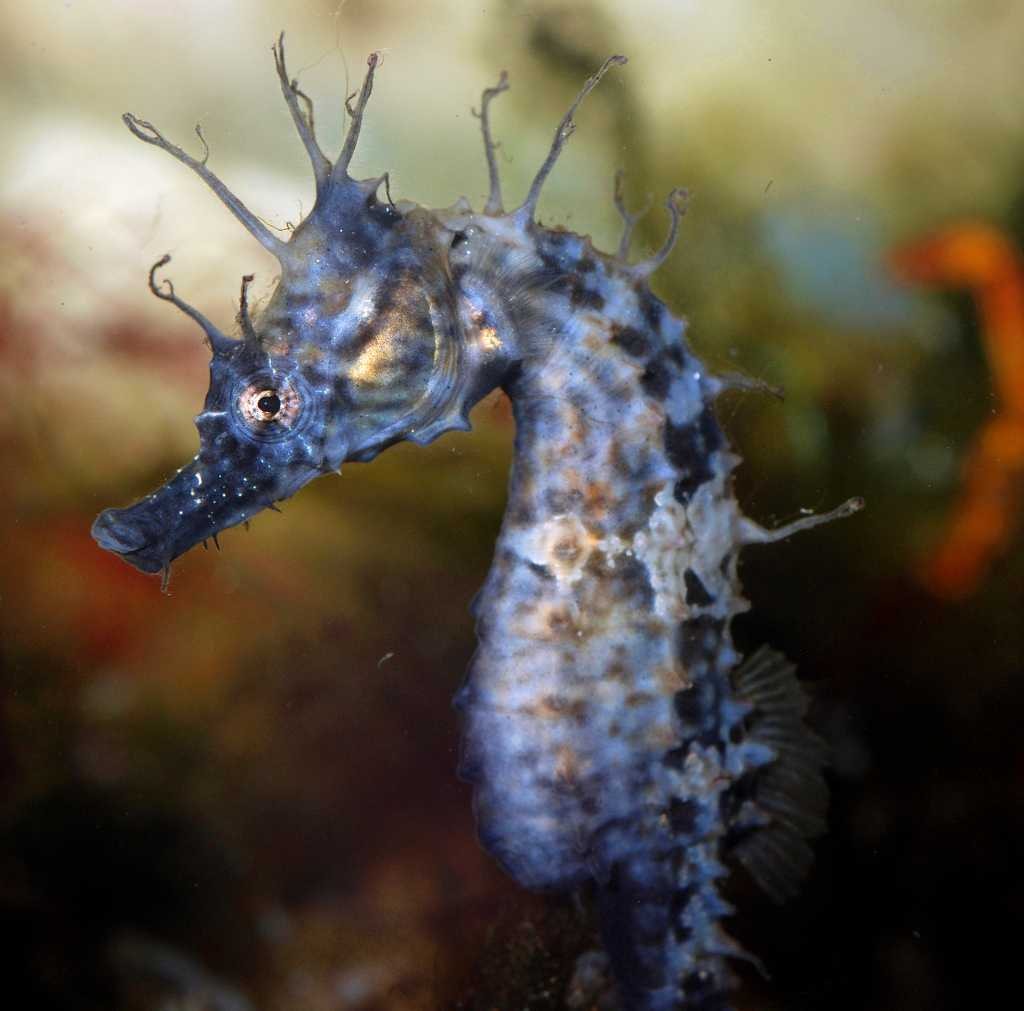

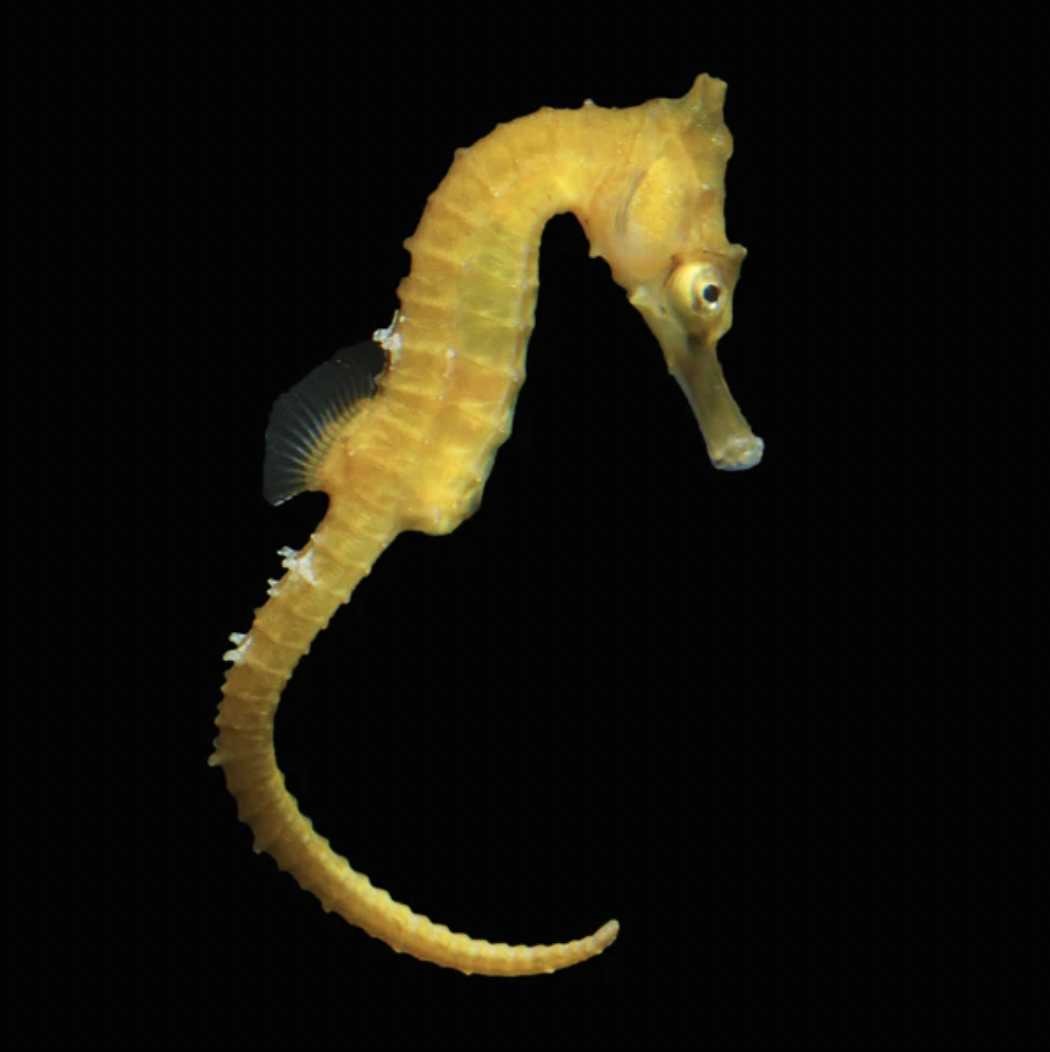
Saddled Erectus Seahorse (Captive Bred)
$189.99
Hippocampus erectus
| Care Level | Intermediate to Advanced |
| Temperament | Peaceful and gentle |
| Color Form | Black and white or brown and white “saddle” patterns; pinto or paint horse appearance |
| Diet | Carnivore |
| Reef Compatible | Reef caution |
| Water Conditions | sg 1.020–1.025, 68–74°F, pH 8.1–8.4 |
| Max Size | 7″ |
| Family | Syngnathidae |
| Minimum Tank Size | 30 gallons |
Saddled Erectus Seahorse (Captive Bred)
Also known as Saddled Seahorse, Pinto Seahorse, Lined Seahorse (color variant)
The captive-bred Saddled Erectus Seahorse is a stunning color morph of Hippocampus erectus featuring distinctive black and white or brown and white “saddle” patterns creating a pinto or paint horse appearance. This beautiful variant combines the same hardy, captive-bred characteristics of the standard Lined Seahorse with spectacular unique coloration. These peaceful, fascinating animals are highly sought after by seahorse enthusiasts for their striking patterns and hardy captive-bred nature.
Key Features
- Scientific Name: Hippocampus erectus (color morph)
- Common Names: Saddled Seahorse, Pinto Seahorse, Saddled Erectus
- Adult Size: Up to 6-7 inches (height)
- Lifespan: 3-5 years with proper care
- Temperament: Peaceful; gentle and slow-moving
- Reef Compatibility: Reef safe; will not harm corals but requires specialized conditions
- Minimum Tank Size: 30 gallons minimum for pair; 40+ gallons preferred
- Experience Level: Intermediate to Advanced; requires specialized seahorse care
Habitat & Tank Requirements
Tank Environment: Requires species-specific or seahorse-only tank with gentle water flow. Provide abundant hitching posts: gorgonians, macroalgae (Caulerpa), artificial seahorse trees, smooth PVC branches. Include hitching posts at multiple heights throughout the tank. Gentle flow only; no powerheads or aggressive circulation. Subdued lighting. No anemones or stinging corals.
Water Parameters:
- Temperature: 68-74°F (20-23°C) – cooler water species
- Salinity: 1.020-1.025
- pH: 8.1-8.4
- Pristine, stable water quality absolutely critical
Equipment Recommendations:
- Gentle filtration (sponge filter or modified canister)
- Protein skimmer (gentle model)
- Minimal circulation (laminar flow only)
- Chiller recommended (prefers cooler temperatures)
- Species-only tank strongly recommended
Seahorses require calm, specialized conditions incompatible with standard reef systems.
Diet & Feeding
Saddled Erectus Seahorses are carnivores requiring frequent feeding.
Recommended foods include:
- Primary: Vitamin-enriched frozen mysis shrimp (staple diet)
- Variety: Frozen cyclops, enriched frozen brine shrimp, small chopped krill
- Live Foods: Live mysis shrimp (captive-bred readily accept frozen)
- Enrichment: Soak all foods in liquid vitamins (Selcon, Vita-Chem) before feeding
- Size: Food must fit through small tubular snout
Feeding Frequency: 2-3 times daily minimum; more frequent small feedings ideal
Special Note: Captive-bred advantage: Already trained to accept frozen enriched foods from birth (major advantage over wild seahorses). Must be target-fed directly. Cannot compete with any fast-moving tankmates. Require large quantities of food despite small size.
Social Structure & Compatibility
- Tankmates: ONLY with other seahorses or extremely peaceful, slow species
- Completely Peaceful: Cannot defend themselves or compete for food
- Pairs: Form lifelong monogamous pairs; best kept in pairs or groups
- Species-Only: Species-specific tank strongly recommended
- Incompatible: Essentially all typical marine fish
Notes & Considerations
- Stunning coloration: Distinctive black and white or brown and white “saddle” patterns.
- Pinto or paint horse appearance; each specimen uniquely patterned.
- Color morph of H. erectus; same care as standard Lined Seahorse.
- Pattern remains stable throughout life (does not fade).
- Captive-bred advantages: Hardy, disease-resistant, trained on frozen foods, sustainable.
- Significantly more expensive than standard colored erectus due to unique patterns.
- Highly sought after by seahorse collectors and enthusiasts.
- Can change color intensity slightly but pattern remains constant.
- Males have prominent brood pouches; females have smooth abdomen.
- Males carry and give birth to babies: Unique reproductive behavior.
- Form strong monogamous pair bonds; pairs mate for life.
- Should not separate established pairs; causes significant stress.
- Prefers cooler water: 68-74°F ideal; chiller strongly recommended.
- Temperatures above 75°F cause stress, disease susceptibility, shortened lifespan.
- Slow swimmers using a prehensile tail to anchor to objects.
- Require numerous hitching posts at various heights throughout the tank.
- Feed by suction through tubular snout; only small prey items suitable.
- Must be individually target-fed; cannot compete with ANY fast fish.
- CANNOT coexist with standard marine fish – will starve and die from stress.
- Very limited suitable tankmates: other seahorses, possibly pipefish.
- Species-only tanks provide the best chance of long-term success.
- Require pristine water quality; very sensitive to nitrates and ammonia.
- Susceptible to bacterial infections if water quality is poor.
- Prone to gas bubble disease if oxygen supersaturation occurs.
- Very sensitive to medications; copper is lethal; use seahorse-safe treatments only.
- Cannot tolerate extended periods without food; frequent feeding mandatory.
- Weekly vitamin supplementation critical for health.
- Very sensitive to parameter fluctuations; stability essential.
- Stress easily; require a calm, stable environment.
- Fascinating behavior: daily morning greeting dance between pairs.
- Elaborate courtship rituals before mating.
- Males become pregnant; gestation 2-3 weeks depending on temperature.
- Can produce dozens to hundreds of fry per brood.
- Captive breeding is possible but fry rearing is extremely difficult.
- Long-term success requires dedication and specialized knowledge.
- Not suitable for beginners or typical reef aquariums.
- Requires species-specific setup and expert seahorse husbandry.
- Premium pricing reflects unique coloration and captive breeding.
Why Choose a Quarantined Saddled Erectus Seahorse (Captive Bred)?
Purchasing a quarantined captive-bred specimen from us means you’re starting with the healthiest, most beautiful seahorse possible. Captive-bred seahorses are vastly superior to wild-caught: hardier, disease-resistant, trained on frozen foods, and sustainably produced. Our quarantine process ensures optimal health, confirms robust feeding on enriched foods, and provides proper acclimation. Given the premium price of saddled morphs, our quarantine provides essential protection for your investment. This provides the absolute best foundation for long-term success with these spectacular, specialized animals.
You must be logged in to post a review.
Related products
Astraea Snail
Price range: $29.99 through $79.99
Flame Hawkfish
Price range: $99.99 through $114.99
Margarite Snail
Price range: $11.99 through $54.99
Midas Blenny
Price range: $99.99 through $114.99
Reviews
There are no reviews yet.