
Engineer Goby
$39.99
Pholidichthys leucotaenia
| Care Level | Easy to Moderate |
| Temperament | Peaceful but territorial |
| Color Form | Juveniles black with white stripes; adults brownish-gray |
| Diet | Carnivores |
| Reef Compatible | with Caution |
| Water Conditions | 72–79°F (22–26°C), SG 1.020–1.025, pH 8.1–8.4 |
| Max Size | 12–14″” |
| Family | Pholidichthyidae |
| Minimum Tank Size | 75 gallons |
3-Day Guarantee
Approximate Purchase Size: Small to medium
Engineer Goby
Also known as Convict Blenny, Convict Goby blenny hybrid (though not a true goby)
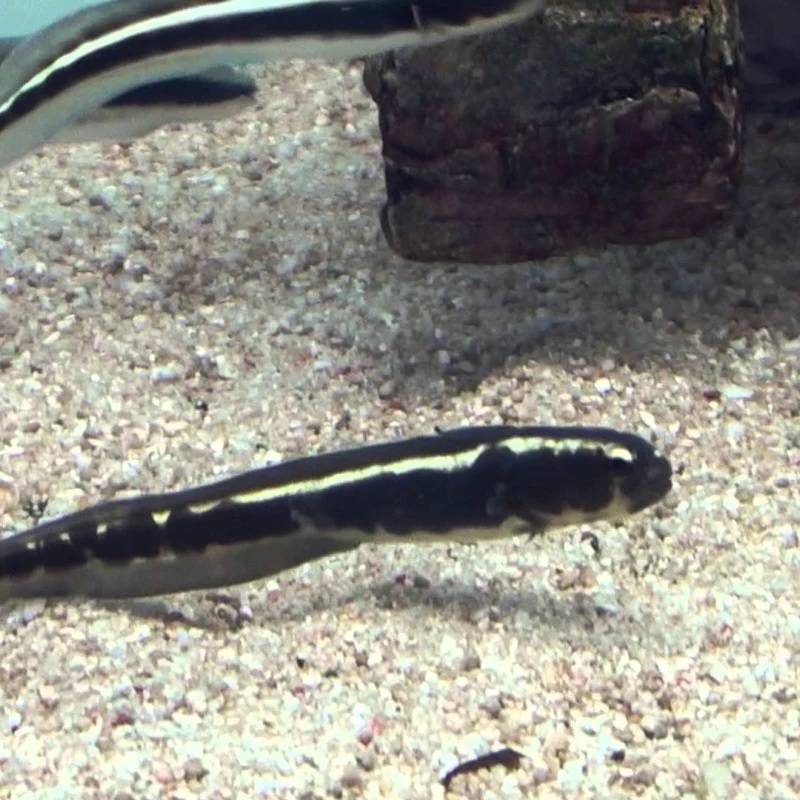
The Engineer Goby is a unique eel like substrate oriented fish from the Pacific, often found schooling under ledges or among rubble and coral in nature. It is not a true goby but shares some similar behavior and habitat needs. This species is known for its strong burrowing or digging behavior and can help keep substrate aerated yet requires special care due to its shape, activity, and size as it matures.
Key Features
- Scientific Name: Pholidichthys leucotaenia
- Common Names: Engineer Goby, Convict Goby blenny, Convict Blenny (common misnomer)
- Adult Size: Can grow quite large up to lengths where juveniles resemble striped fish, adults develop distinctive banding or spotting. Exact adult length varies.
- Lifespan: With proper care, moderate to good; exact data varies depending on tank conditions.
- Temperament: Generally peaceful, schooling or group oriented, but strong digging or burrowing behavior can shift substrate and rockwork over time.
- Reef Compatibility: Caution as substrate movers and potential rock shifters, they may disturb live rock, corals, or tank structure; more suitable in fish only or robust setups.
- Minimum Tank Size: Large needs plenty of substrate and swimming or burrowing space; not ideal for small tanks.
- Experience Level: Intermediate to Advanced due to size, behavior, and habitat needs.
Habitat and Tank Requirements
Natural Habitat: Coastal reefs, shallow lagoons, reef flats in the western Pacific (Philippines to Solomon Islands), often under ledges or near rubble and sand where fish can shelter and burrow.
Tank Environment:
- Deep sand or mixed substrate to allow burrowing and movement
- Plenty of rockwork, ledges, overhangs for shelter and hiding but ensure rockwork rests securely on tank bottom to avoid collapse due to digging.
- Moderate water flow, good filtration, stable water parameters
- Avoid fragile coral or delicate setups better in fish only or robust mixed tanks
Diet and Feeding
Engineer Gobies are carnivorous or omnivorous; they feed on small invertebrates, plankton, detritus and small prey. In tanks they accept:
- Frozen or live mysis or shrimp or copepods or small crustaceans
- Fine marine pellets or flakes suitable for mid size carnivores
- They may sift substrate or rubble for detritus and microfauna
Feeding schedule: small to moderate feedings once or twice daily; ensure food sinks to bottom or is near substrate where they hunt.
Behavior and Compatibility
Peaceful schooling or small group fish tends to stay near substrate or rubble under ledges.
Good tank mates: similarly sized or larger peaceful fish; avoid small, delicate fish or invertebrates that may be disturbed by digging.
Because of substrate shifting behavior, it may not be ideal for reef tanks with sensitive corals; better in fish only or hardy tank setups.
Acclimation and Care Tips
- Introduce into a mature tank with stable parameters.
- Ensure substrate and rockwork are stable, arrange rockwork directly on tank bottom, not resting on loose sand, to prevent collapse.
- Provide hiding spaces under rockwork or ledges.
- Monitor substrate movement ensures stability over time.
Signs of Healthy Specimen
- Active movement under rubble or sand, normal swimming or hiding behavior
- Clear eyes, intact fins, no visible wounds from substrate contact
- Steady feeding response and normal growth over time
- Normal schooling behavior if multiple individuals kept
Color and Development
Juveniles may resemble striped fish; as they mature, coloration may shift to more distinct banding or spotting depending on individual and tank conditions.
Size and body condition maintained with good diet and stable environment
Anemone Hosting or Coral Interaction Behavior
Not an anemone host; not a coral safe species in reef tanks due to digging or rock shifting behavior. Better in fish only or robust mixed aquaria.
Special Considerations
- Strong diggers and substrate movers ensure secure rockwork and stable substrate.
- Not ideally suited for reef tanks with delicate corals or inverts.
- Needs ample space and stable water not for small or beginner tanks.
Breeding Potential
Breeding information in captivity is limited and not well documented. Due to their size, schooling tendency, and substrate behavior, breeding would require a large dedicated tank and careful conditions.
Why Choose a Quarantined Engineer Goby
Quarantining helps ensure the fish is free from parasites or diseases and stable in captivity before being introduced into a main tank. Given their digging and substrate moving nature, it is important that they are healthy and robust so they can navigate the stress of introduction without disrupting tankmates or rockwork. A quarantined goby reduces risk and increases chances of successful long term care in your aquarium.
| Service Level | Quarantined |
|---|
You must be logged in to post a review.
Reviews
There are no reviews yet.