

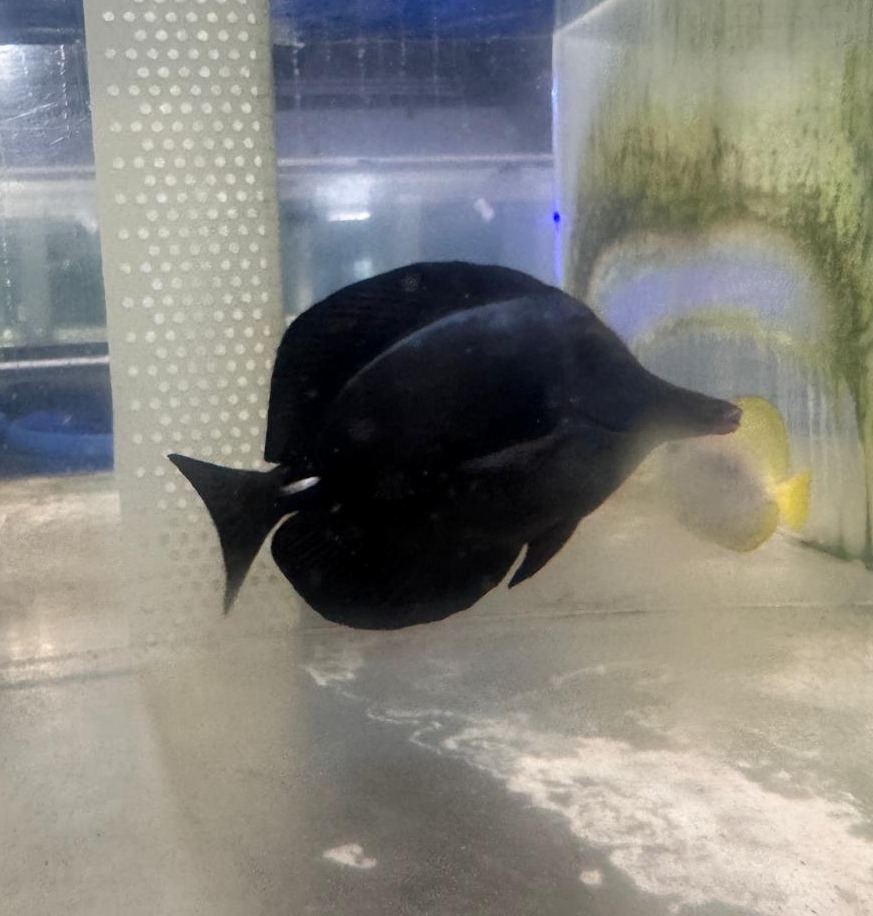


Black Longnose Tang
$2,999.99
Zebrasoma rostratum
| Care Level | Intermediate to advanced |
| Temperament | Semi-aggressive |
| Color Form | Deep black body with elongated snout |
| Diet | Herbivore |
| Reef Compatible | Reef-safe |
| Water Conditions | sg 1.023–1.025, 74–80°F, pH 8.1–8.4 |
| Max Size | 10“ |
| Family | Acanthuridae |
| Minimum Tank Size | 180 gallons |
Live Arrival Guarantee
Approximate Purchase Size: XL: 4-6″
Black Longnose Tang
Also known as the Longnose Surgeonfish or Longnose Unicorn Tang (juvenile stage).
The Black Longnose Tang is a sleek, uniquely shaped surgeonfish known for its elongated snout, smooth profile, and deep charcoal-to-black body coloration. Found throughout the Indo-Pacific, this species is active, graceful, and constantly grazing. Its distinctive long nose allows it to reach algae tucked between rocks, making it an excellent natural grazer for reef tanks. When properly quarantined, this species adapts well to captivity and becomes a strong, hardy addition to larger marine aquariums.
Key Features
Scientific Name: Zebrasoma rostratum
Common Names: Black Longnose Tang, Longnose Surgeonfish, Longnose Tang
Adult Size: 8–10 inches (20–25 cm)
Lifespan: 10–15+ years with proper care
Temperament: Semi-aggressive; territorial toward other tangs
Reef Compatibility: Reef-safe, does not nip corals or invertebrates.
Minimum Tank Size: 180 gallons (larger recommended)
Experience Level: Intermediate to Advanced, requires pristine water and ample swimming space.
Habitat & Tank Requirements
Natural Habitat:
Native to French Polynesia and surrounding Pacific regions, this tang inhabits clear outer reefs, grazing along vertical rock faces and coral slopes.
Tank Environment:
- Large open swimming areas
- Plenty of live rock for grazing
- Moderate to strong water flow
- High oxygen levels
- Stable, mature aquarium required
Water Parameters
- Temperature: 74–80°F (23–27°C)
- Salinity: 1.023–1.025
- pH: 8.1–8.4
- Ammonia/Nitrite: 0 ppm
- Nitrate: <15 ppm
- Alkalinity: 8–12 dKH
Essential Equipment
- Oversized protein skimmer
- Strong circulation pumps
- UV sterilizer for disease reduction
- Reliable auto top-off system
- High-capacity biological filtration
- Regular water changes (10–15% weekly)
Diet & Feeding
Black Longnose Tangs are herbivores that require constant plant-based nutrition.
Recommended Foods
- Nori sheets (green, red, or brown)
- Spirulina-based pellets and flakes
- Frozen herbivore blends
- Marine algae sheets
- Occasional mysis or brine (supplements only)
- Vitamin- or garlic-soaked foods to boost immunity
Feeding Schedule
- Feed 2–3 times daily
- Keep nori available on a clip
- Provide algae-rich diet for long-term health and color
Behavior & Compatibility
Temperament:
Active, alert, and assertive, especially toward other tangs. Peaceful with most non-tang species.
Tank Mates:
Compatible with:
- Wrasses
- Gobies
- Anthias
- Butterflyfish
- Peaceful reef fish
Caution with:
- Other Zebrasoma tangs
- Surgeonfish with similar shape or diet
Avoid:
- Aggressive triggers
- Groupers
- Very small timid fish if aggression becomes territorial
Color & Development
Coloration Characteristics:
- Deep black or charcoal body
- Elongated snout
- Smooth dorsal and anal fin lines
- Sharp white caudal spine
- Soft gradient toward lighter fin edges in some individuals
Color Intensity:
A high-quality herbivore diet ensures rich, stable coloration. Poor water quality or stress may cause dulling.
Size & Growth:
Juveniles start at 2–3 inches and grow steadily, reaching adult size within 2–3 years.
Acclimation & Care Tips
Initial Acclimation:
- Float bag for 15–20 minutes
- Dim lights during introduction
- Provide rockwork hiding spots
- Offer nori immediately
Signs of a Healthy Specimen:
- Smooth, consistent dark coloration
- Clear, bright eyes
- Strong grazing behavior
- Active swimming
- No spots, lesions, or fin tears
- Steady appetite
Breeding Potential
Breeding Black Longnose Tangs in home aquariums is extremely rare. They require very large open-water conditions and group-spawning behavior that cannot be reproduced in typical tanks. While they display natural social behaviors, actual spawning is not expected in captivity.
Why Choose a Quarantined Black Longnose Tang?
A fully quarantined specimen offers better long-term success, fewer health issues, stronger feeding habits, and a smoother transition into your display tank, giving you confidence that your new tang will thrive in your reef system.
| Service Level | Quarantined |
|---|---|
| Size | XL |
You must be logged in to post a review.
Related products
Chromis
Price range: $19.99 through $39.99
Copperband Butterflyfish
Price range: $149.99 through $189.99
Coral Beauty Angelfish
$79.99
Flame Hawkfish
$99.99
Midas Blenny
$99.99
Reviews
There are no reviews yet.