
Bicolor Angelfish
$99.99
Centropyge bicolor
| Care Level | Moderate |
| Temperament | Semi-aggressive |
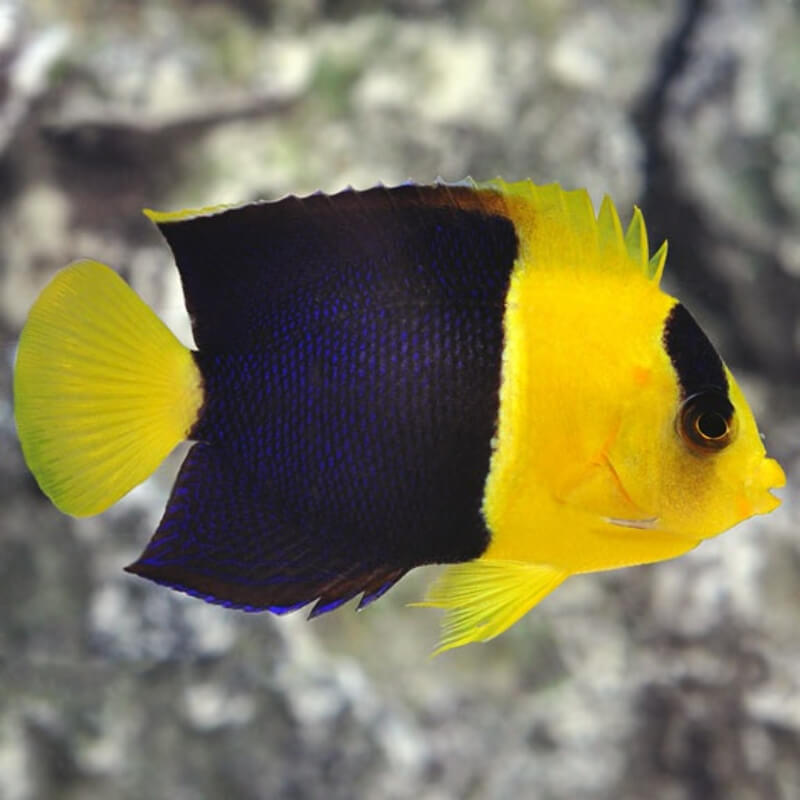
| Color Form | Bright yellow front half; deep royal blue rear half; vertical blue eye bar; caudal fin yellow. |
| Diet | Omnivore |
| Reef Compatible | Not reef safe |
| Water Conditions | 2–78°F (22–26°C), Sg 1.023–1.025 specific gravity, pH: 8.1–8.4, 8–12 dKH |
| Max Size | 6″ |
| Family | Pomacanthidae |
| Minimum Tank Size | 70 gallons |
3-Day Guarantee
Approximate Purchase Size: Small: 1-2″; Medium: 2-3″; Large: 3-4″
Bicolor Angelfish
Also known as the Two-Colored Angelfish or Oriole Angelfish
The Bicolor Angelfish is a distinctive and bold dwarf angelfish native to the Indo-Pacific region. True to its name, this species displays a striking two-toned coloration pattern with a bright yellow anterior half and deep blue to purple posterior half, divided by a sharp vertical line. While beautiful and popular, this species is known for having a bold personality and can be moderately challenging to keep compared to other dwarf angelfish.
Key Features
- Scientific Name: Centropyge bicolor
- Common Names: Bicolor Angelfish, Two-Colored Angelfish, Oriole Angelfish, Blue and Gold Angelfish
- Adult Size: 5–6 inches (13–15 cm)
- Lifespan: 5–12+ years with proper care
- Temperament: Semi-aggressive; can be territorial
- Reef Compatibility: Not reef-safe – will nip at corals and clams
- Minimum Tank Size: 70 gallons (70+ gallons preferred for long-term success)
- Experience Level: Intermediate – requires attention to diet and tankmate selection
Habitat & Tank Requirements
Natural Habitat: Found in lagoons and outer reef slopes at depths of 10–80 feet throughout the Indo-Pacific, including the Great Barrier Reef, Fiji, and Indonesia. Inhabits caves and crevices in coral-rich areas, typically as solitary individuals or in pairs.
Tank Environment:
- Abundant live rock with multiple caves, overhangs, and hiding spots
- Complex rockwork structure for territory establishment
- Moderate swimming space
- Well-established aquarium (3–6 months minimum for algae growth)
- Moderate to strong water flow with calmer areas
Water Parameters:
- Temperature: 72–78°F (22–26°C)
- Salinity: 1.023–1.025 specific gravity
- pH: 8.1–8.4
- Ammonia/Nitrite: 0 ppm
- Nitrate: <20 ppm
- Alkalinity: 8–12 dKH
- Calcium: 400–450 ppm (if keeping with some invertebrates)
Essential Equipment:
- Quality protein skimmer
- Efficient biological filtration
- Moderate to strong water circulation
- Regular water changes (15–20% biweekly minimum)
- UV sterilizer (optional but beneficial)
Diet & Feeding
Bicolor Angelfish are omnivores with a strong herbivorous component, requiring a varied diet rich in both algae and meaty foods for optimal health and color.
Recommended Foods:
- Plant Matter: Nori sheets, spirulina, marine algae, dried seaweed (essential component – 40–50% of diet)
- Frozen Foods: Mysis shrimp, enriched brine shrimp, finely chopped krill, marine fish flesh, quality angelfish preparations
- Pellets/Flakes: High-quality marine angelfish pellets, spirulina-based formulas, herbivore pellets
- Prepared Mixes: Angelfish formula blends containing sponge material, marine cuisine
- Natural Grazing: Live rock with microalgae and film algae growth
- Supplements: Vitamin C-enriched foods, garlic supplements for immune health
Feeding Schedule:
- Feed 2–3 times daily
- Provide nori sheets clipped to tank glass for constant grazing
- Variety is crucial for maintaining health and vibrant coloration
- Allow natural algae growth on live rock for supplemental grazing
Note: In the wild, Bicolor Angels spend much of their day grazing on algae, microorganisms, and sponges. Replicating this constant feeding behavior with herbivore foods is important for their wellbeing.
Behavior & Compatibility
Temperament:
- Semi-aggressive and territorial, especially once established
- More aggressive than many other dwarf angelfish species
- Becomes bolder and more assertive with time
- May chase peaceful tankmates, particularly in smaller aquariums
- Can be territorial toward other angelfish and similarly shaped/colored fish
- Individual personalities vary significantly
Territorial Behavior:
- Establishes and defends territory within rockwork
- Most aggressive toward other dwarf angelfish
- May harass new additions to established tank
- Aggression increases in smaller aquariums
Tank Mates:
- Compatible with: Moderate to semi-aggressive tangs, larger wrasses, dottybacks, damselfish, clownfish, larger gobies, blennies, pseudochromis
- Caution with: Peaceful or timid fish may be intimidated; other dwarf angelfish (only in very large tanks with multiple territories)
- Avoid: Other Centropyge species in tanks under 100 gallons, very peaceful fish (fairy wrasses, dartfish, firefish), slow-moving species
Introduction Strategy:
- Introduced as one of the last fish to minimize territorial aggression
- Or introduce as one of the first to allow it to establish without competition
- Rearranging rockwork during introduction can reduce territorial disputes
Reef Compatibility:
- Not reef-safe: Known coral and clam nipper
- Will pick at LPS corals, soft corals, and zoanthids
- May damage clam mantles
- Can consume coral polyps
- Particularly destructive to certain corals (brain corals, favia, open brain)
- Best suited for FOWLR (Fish Only With Live Rock) systems
- Some individuals may leave corals alone, but this is unpredictable
Acclimation & Care Tips
Initial Acclimation:
- Dim tank lights for first 24–48 hours
- Provide multiple hiding spots for security
- Minimize disturbances for first few days
- May take 1–3 days to begin feeding confidently
Signs of a Healthy Specimen:
- Active swimming and exploration of rockwork
- Bold, confident behavior
- Bright, vibrant coloration with sharp yellow/blue division
- Clear, alert eyes
- Full-bodied appearance
- Eager feeding response to both meaty and herbivore foods
- No visible spots, lesions, or fin damage
- Smooth, intact fins
Color & Development
Standard Coloration: Adults display distinctive two-toned pattern:
- Anterior half: Bright yellow to golden yellow (head, front body, pectoral fins)
- Posterior half: Deep blue to purple-blue (rear body, dorsal, anal, and caudal fins)
- Division: Sharp vertical line at approximately mid-body
- Tail: Deep blue with white to pale blue posterior edge
- Eye: Blue bar through eye area
Juvenile Coloration: Juveniles appear similar to adults but with:
- Slightly less intense coloration
- Less defined division between yellow and blue areas
- May show more muted tones
Color Variations:
- Yellow intensity can vary from pale to deep golden
- Blue areas range from royal blue to deep purple-blue
- Some individuals show more extensive yellow areas
- Stress or poor diet can cause color fading
Regional Variations: Pacific specimens may show slight color differences compared to Indian Ocean populations, though the basic pattern remains consistent.
Special Considerations
Individual Personality Variation: Bicolor Angels show significant personality differences between individuals:
- Some specimens are relatively peaceful
- Others can be highly aggressive and territorial
- Behavior cannot be reliably predicted before purchase
- Observe specimen behavior at retailer if possible
Tank Size Importance: While they can survive in 55-gallon tanks, larger volumes significantly reduce aggression issues:
- 70–90 gallons: Better long-term housing
- 100+ gallons: Allows for multiple dwarf angelfish species (with caution)
- Smaller tanks often result in increased aggression
Compared to Other Dwarf Angels:
- More aggressive than Flame, Coral Beauty, or Potter’s Angels
- Similar aggression level to Lemonpeel Angels
- Less reef-safe than many other Centropyge species
- Hardier than some deepwater dwarf angels (Multibar, Venusta)
Geographic Collection: Quality and hardiness can vary by collection location:
- Indonesian specimens are commonly available
- Great Barrier Reef specimens are typically hardy but less common
- Fiji specimens generally acclimate well
Pairing & Multiple Specimens
Keeping Pairs:
- Males and females can be kept together in tanks 75+ gallons
- Sexual dimorphism is subtle; difficult to sex visually
- Pairs should be introduced simultaneously
- Monitor for aggression; not all individuals will pair successfully
Multiple Dwarf Angels:
- Only attempt in tanks 100+ gallons with complex rockwork
- Introduce simultaneously or introduce less aggressive species first
- Provide multiple distinct territories
- High risk of aggression; closely monitor
- Best avoided unless experienced with aggressive fish management
Why Choose a Quarantined Bicolor Angelfish?
Purchasing a properly quarantined Bicolor Angelfish ensures you’re starting with a healthy, well-adjusted specimen that has been treated preventatively for parasites and trained to accept a variety of foods, including the crucial herbivore component of their diet. Our quarantine period also allows us to assess individual temperament, helping you understand the personality of your specific fish. This careful conditioning provides the foundation for long-term success with this beautiful but sometimes challenging species, reducing the risk of disease introduction to your display tank and giving you confidence in your new addition.
| Service Level | Quarantined |
|---|
You must be logged in to post a review.
Related products
Aiptasia Eating Filefish
$99.99
Chalk Bass (Wild Caught)
$49.99
Coral Beauty Angelfish
$79.99
Foxface
$149.99
Reviews
There are no reviews yet.