

Black Longnose Tang
Price range: $1,899.99 through $2,399.99
Sailfin Desjardini
$159.99
Blue Hippo Tang
Price range: $139.99 through $399.99
Paracanthurus hepatus
| Care Level | Intermediate to advanced |
| Temperament | Peaceful |
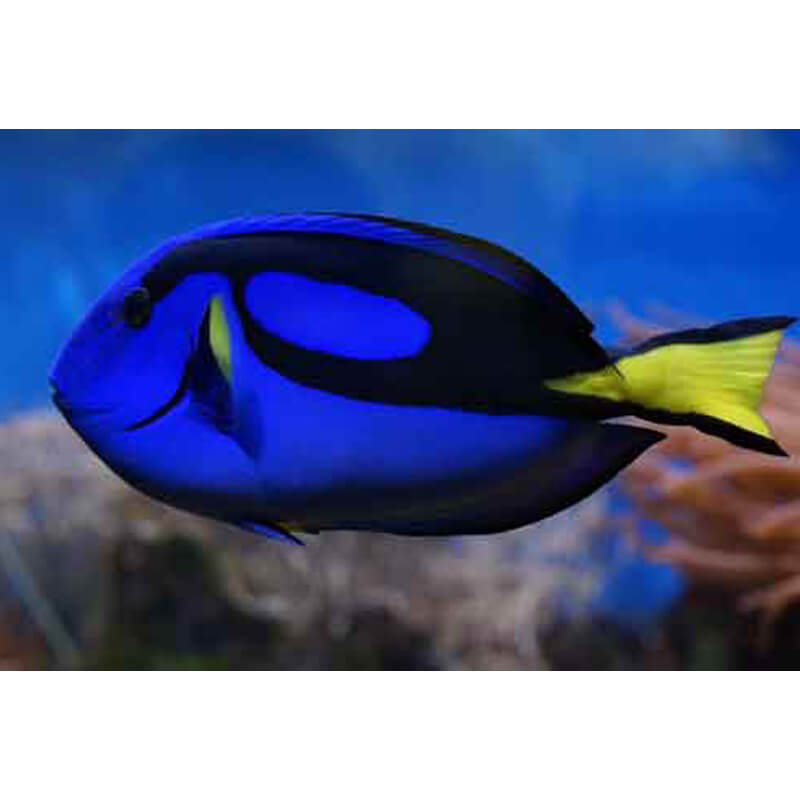
| Color Form | Bright royal-blue body with black palette markings and yellow tail |
| Diet | Omnivore |
| Reef Compatible | Reef-safe |
| Water Conditions | sg 1.023–1.025, 75–80°F, pH 8.1–8.4 |
| Max Size | 12“ |
| Family | Acanthuridae |
| Minimum Tank Size | 180 gallons |
3-Day Guarantee
Approximate Purchase Size: Small: 1-2.5″; Medium: 2.5-3.75″; Large: 4-5″
Description
Blue Hippo Tang
Also known as the Pacific Blue Tang, Regal Tang, Palette Tang, and famously recognized as the “Dory Fish,” the Blue Hippo Tang is one of the most iconic and visually unforgettable reef fish in the world. Its vibrant royal-blue body, jet-black palette markings, and bright yellow tail make it an instant centerpiece in large aquariums. Active, intelligent, and constantly exploring its environment, this species is loved by beginners and advanced aquarists alike—though it does require ample swimming space and stable water conditions. When properly quarantined, conditioned, and cared for, the Blue Hippo Tang becomes a long-lasting, disease-resistant show fish.
Key Features
Scientific Name: Paracanthurus hepatus
Common Names: Blue Hippo Tang, Regal Tang, Palette Surgeonfish, Pacific Blue Tang, “Dory”
Adult Size: 10–12 inches (25–30 cm)
Lifespan: 15–20+ years in well-maintained systems
Temperament: Peaceful; may show mild territorial behavior toward new tankmates
Reef Compatibility: Fully reef-safe, does not nip corals or invertebrates
Minimum Tank Size: 180 gallons (125 gallons absolute minimum for juveniles)
Experience Level: Intermediate to Advanced , requires clean water and ample swimming room
Habitat & Tank Requirements
Natural Habitat:
The Blue Hippo Tang is found across the Indo-Pacific on coral reefs, drop-offs, and surge zones. They inhabit high-energy environments with strong currents and abundant rockwork where they can dart in and out for safety.
Tank Environment:
- Large open water column for constant swimming
- Numerous caves and crevices for sheltering at night
- Strong water movement to mimic natural surge conditions
- Mature live rock with natural algae growth
- Stable parameters and excellent oxygenation
Water Parameters:
- Temperature: 75–80°F (24–27°C)
- Salinity: 1.023–1.025 SG
- pH: 8.1–8.4
- Ammonia/Nitrite: 0 ppm
- Nitrate: <15–20 ppm
- Alkalinity: 8–12 dKH
Essential Equipment:
- High-quality protein skimmer
- Powerful filtration and refugium (optional but beneficial)
- Wave makers for strong, alternating flow
- UV sterilizer recommended for disease control
- Routine water changes (10–15% weekly)
Diet & Feeding
Blue Hippo Tangs are omnivores, grazing algae throughout the day while also consuming meaty foods. Their diet must be varied and nutrient-rich to prevent health issues such as HLLE (Head and Lateral Line Erosion).
Recommended Foods:
- Nori/seaweed sheets (daily)
- Spirulina-based pellets and flakes
- Frozen mysis shrimp, brine shrimp, and plankton
- High-quality herbivore mixes
- Enriched frozen blends (Omega-3, vitamins)
- Garlic-soaked foods for parasite resistance
Feeding Schedule:
- Feed 2–3 times per day
- Provide seaweed on clips for continuous grazing
- Rotate foods to maintain color and immunity
Behavior & Compatibility
Temperament:
- Active, curious, peaceful
- Generally non-aggressive
- May be shy when first introduced
- Known to wedge themselves into rock crevices to sleep
Tank Mates:
Compatible with:
- Clownfish, wrasses, gobies, anthias, blennies
- Angelfish, butterflies, and other peaceful reef fish
- Other tangs of differing shapes (with space)
Caution with:
- Other surgeonfish with similar shape or coloration
Very aggressive tankmates that may intimidate shy tangs
Avoid:
- Large predatory fish
- Multiple Blue Hippo Tangs unless in very large systems (300+ gallons)
Reef Compatibility:
Completely reef-safe , they ignore corals and invertebrates and contribute to algae control.
Acclimation & Care Tips
Initial Acclimation:
- Float for temperature matching
- Introduce with lights dimmed
- Provide hiding spots to reduce early stress
Signs of a Healthy Hippo Tang:
- Clear eyes
- Strong swimming
- Deep blue coloration
- Healthy appetite
- No scratching, spots, or heavy breathing
Color & Development
Coloration Characteristics:
- Brilliant royal-blue body
- Jet-black swirling “palette” pattern
- Bright yellow tail
- Subtle purple hues on face in some specimens
Juvenile Appearance:
- Smaller, more saturated blue
- Sharper black markings
- Increased shyness when young
Adult Development:
- Deepening color
- Body elongates
- Tail becomes more vibrant and defined
Color Enhancement Factors:
- High-quality algae-based diet
- Clean water with low nutrients
- Strong lighting (not required, but helps vibrancy)
Compatibility Notes:
- Provide plenty of rockwork and hiding spots
- House in large tanks to prevent pacing and stress
- Avoid sudden parameter swings
Breeding Potential
Breeding Blue Hippo Tangs in home aquariums is almost impossible, as they require vast open water for group spawning at dusk. While they may show natural schooling or pairing behaviors, successful captive breeding is extremely rare and limited to specialized commercial facilities.
Why Choose a Quarantined Blue Hippo Tang?
A quarantined specimen from Dr Reef ensures your Blue Hippo Tang arrives healthy, parasite-free, fully conditioned, and eating well. This significantly reduces the risk of disease outbreaks, improves survival, and provides a smooth transition into your reef system. With proper care, your Blue Hippo Tang will become an active, vibrant centerpiece for years to come.
Additional information
| Service Level | Quarantined |
|---|---|
| Size | Small, Medium, Large, XL |
Reviews (2)
2 reviews for Blue Hippo Tang
You must be logged in to post a review.
Shipping & Delivery
Isarduy –
Arrived lively and healthy. A+++
Cee Kay –
Arrived healthy, active, and with full beautiful color.