
Flagfin Angelfish
$139.99
Apolemichthys trimaculatus
| Care Level | Intermediate to advanced |
| Temperament | Semi-aggressive |
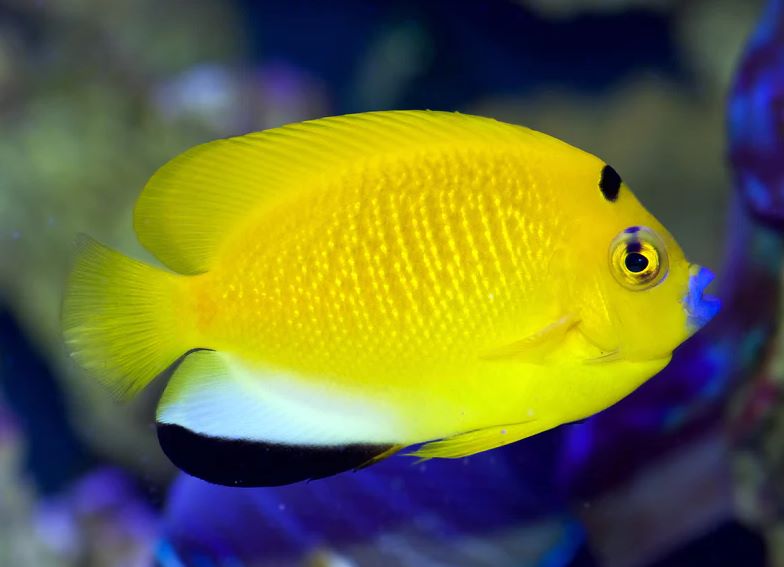
| Color Form | Creamy yellow with three black spots and a long dorsal fin |
| Diet | Omnivore |
| Reef Compatible | Not reef-safe |
| Water Conditions | sg 1.020–1.025, 72–78°F, pH 8.1–8.4, dKH 8–12, calcium 380–450 ppm |
| Max Size | 11″ |
| Family | Pomacanthidae |
| Minimum Tank Size | 125 gallons |
3-Day Guarantee
Approximate Purchase Size: Small: 1-2.5″; Medium: 2.5-3.75″; Large: 4-5″
Flagfin Angelfish
Also known as the Threespot Angelfish or Apolemichthys Angelfish
The Flagfin Angelfish is a stunning and relatively peaceful marine species that stands out among large angelfish for its elegant appearance and manageable temperament. This beautiful angel displays a creamy yellow to golden body with distinctive black spots and elegant elongated dorsal fin filaments that give it a regal, flag-like appearance. Native to the Indian Ocean, particularly around the Maldives, Sri Lanka, and the Red Sea, this species offers large angelfish beauty with somewhat less aggression than many Pomacanthus species, making it an attractive choice for experienced marine aquarists.
Key Features
- Scientific Name: Apolemichthys trimaculatus
- Common Names: Flagfin Angelfish, Threespot Angelfish, Cream Angelfish
- Adult Size: 8–10 inches (occasionally reaching 11 inches)
- Lifespan: 10–15+ years with proper care
- Temperament: Semi-aggressive; generally peaceful for a large angelfish but territorial
- Reef Compatibility: Not reef-safe – will nip at corals, especially soft corals and clams
- Minimum Tank Size: 125 gallons minimum (150+ gallons recommended for long-term care)
- Experience Level: Intermediate to advanced
Habitat & Tank Requirements
- Tank Environment: Provide substantial live rock structures with caves, overhangs, and hiding spots combined with open swimming areas. Flagfin Angels appreciate both secure refuges and space to cruise. They are active swimmers that patrol territories regularly but are less demanding of space than some other large angelfish species.
- Water Parameters:
- Temperature: 72–78°F (22–26°C)
- Salinity: 1.020–1.025
- pH: 8.1–8.4
- Ammonia/Nitrite: 0 ppm
- Nitrate: <20 ppm (lower is better)
- dKH: 8–12
- Calcium: 380–450 ppm
- Aquascape: Stable rockwork with multiple territories and visual barriers. Create diverse environments with caves, swim-throughs, and open areas. Good water movement and strong filtration are important given their size and feeding habits.
- Compatibility: Generally more peaceful than Pomacanthus species. Can coexist with other semi-aggressive fish, tangs, large wrasses, and peaceful triggers. Best kept as the only large angelfish unless the tank exceeds 200+ gallons. May be kept with dwarf angelfish in larger systems with adequate territory separation. Should be added after more passive species are established but before extremely aggressive fish.
Diet & Feeding
Flagfin Angelfish are omnivores requiring varied, high-quality nutrition:
- Meaty Foods: Mysis shrimp, enriched brine shrimp, chopped seafood (squid, clams, mussels, scallops), krill, marine fish flesh, frozen carnivore preparations
- Plant Matter: Marine algae sheets (nori, sea lettuce), spirulina, fresh vegetables (blanched spinach, zucchini), herbivore pellets and flakes
- Specialty Foods: Angelfish formulas containing natural sponge material (essential for long-term health—sponges are a significant part of their natural diet), color-enhancing foods with natural pigments
- Live Rock Grazing: Abundant live rock with natural algae growth and biofilm provides important dietary supplementation and foraging enrichment
- Variety is Key: This species benefits from maximum dietary variety to prevent nutritional deficiencies and maintain optimal coloration
- Feeding Schedule: Feed 2–3 times daily in moderate to substantial portions. They have healthy appetites and require consistent feeding for optimal health and color.
Notes & Considerations
- Behavior: Flagfin Angels are notably more peaceful than many large angelfish species, making them suitable for a wider range of community systems. They are active, curious, and often become quite personable, recognizing their owners and anticipating feeding times. While territorial, they are less aggressive toward tank mates compared to Pomacanthus or Holacanthus species. However, they will defend their territory against other angelfish and may show aggression toward new additions.
- Coral Compatibility: NOT reef-safe. It will nip at soft corals (leather corals, zoanthids, mushrooms), large-polyp stony corals, and can be particularly destructive to clam mantles. They also consume sponges and communicate. Best suited for fish-only or FOWLR (fish-only-with-live-rock) systems.
- Distinctive Appearance: Body coloration is creamy yellow to golden-yellow with a pearlescent quality. Three distinctive black spots give the species its “threespot” common name: one on the forehead, one on the body mid-side, and one at the base of the soft dorsal fin. The most striking feature is the elongated dorsal fin filament that extends well beyond the fin margin, creating a dramatic flag-like appearance. Fins are edged with electric blue to pale blue margins that provide beautiful contrast. The overall effect is elegant and graceful.
- Sexual Dimorphism: Like most angelfish, Flagfin Angels are protogynous hermaphrodites (females can become males). Visual sexing is extremely difficult with no reliable external differences. Males may be marginally larger with slightly more pronounced fin extensions.
- Acclimation Considerations: Generally hardy once acclimated, but take care during initial introduction. Use dim lighting initially. They can be somewhat shy for the first few days but typically settle quickly.
- Sponge Dependency: In nature, sponges form a major dietary component. Captive specimens require foods containing sponge material to prevent long-term nutritional deficiencies that can lead to lateral line erosion and other health issues.
- Personality Development: Once established, Flagfin Angels often develop engaging personalities, becoming bold and interactive. They frequently swim to the front of the tank during feeding and may learn to hand-feed.
Why Choose a Flagfin Angelfish?
Flagfin Angelfish offer specific advantages for large angelfish enthusiasts:
- Manageable Temperament: More peaceful than most large angelfish species, suitable for a wider range of community systems
- Elegant Beauty: Unique appearance with graceful coloration and distinctive flag-like dorsal fin extension
- Reasonable Size: At 8–10 inches, more manageable than 12–15 inch species while still providing impressive presence
- Active Personality: Engaging, interactive behavior with regular activity throughout the tank
- Smaller Tank Compatibility: Can thrive in 125–150 gallon systems that would be marginal for larger Pomacanthus species
- Community Friendly: Better compatibility with peaceful to semi-aggressive tank mates compared to more aggressive large angels
- Distinctive Species: Less commonly kept than Emperor or Queen Angels, providing a unique centerpiece that stands out
Our quarantined Flagfin Angelfish go through a careful health process that lasts at least 4–6 weeks. They are fed a variety of high-quality foods, treated for common diseases, and closely watched for normal behavior. This makes sure they arrive healthy, parasite-free, and eager to eat. They are beautiful, peaceful, and easy to care for, making them a stunning and friendly addition to your large reef or community tank that can live happily for many years.
| Service Level | Quarantined |
|---|
You must be logged in to post a review.
Reviews
There are no reviews yet.