
Passer Angelfish
$349.99
Holacanthus passer
| Care Level | Advanced |
| Temperament | Aggressive |
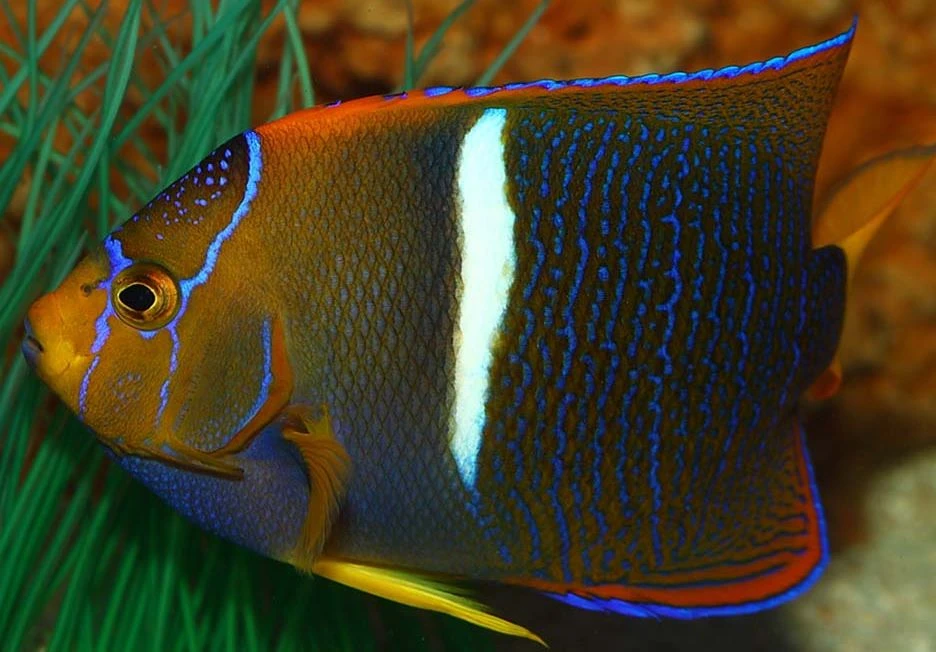
| Color Form | Dark blue-black body with white bars and yellow-orange fins |
| Diet | Omnivore |
| Reef Compatible | Not reef-safe |
| Water Conditions | sg 1.023-1.025, 72-78° F, pH 8.1-8.4 |
| Max Size | 14″ |
| Family | Pomacanthidae |
| Minimum Tank Size | 200 gallons |
3-Day Guarantee
Approximate Purchase Size: Small: 1-2.5″; Medium: 2.5-3.75″; Large: 4-5″
Description
Passer Angelfish
Also known as the King Angelfish or Passer Angel
The Passer Angelfish is a breathtaking marine species renowned for its dramatic coloration featuring vertical white bars on a dark blue to black body, with distinctive orange-yellow highlights on the pectoral fins and tail. Native to the Eastern Pacific, from the Gulf of California to Peru, this large and robust angelfish commands attention with its bold patterns and regal presence, making it a striking centerpiece for spacious marine aquariums.
Key Features
- Scientific Name: Holacanthus passer
- Common Names: Passer Angelfish, King Angelfish, Passer Angel
- Adult Size: Up to 12–14 inches
- Lifespan: 15–20+ years with proper care
- Temperament: Aggressive; highly territorial and dominant
- Reef Compatibility: Not reef-safe – will consume corals, anemones, clams, and sessile invertebrates
- Minimum Tank Size: 200 gallons (minimum); 250–300+ gallons preferred
- Experience Level: Advanced
Habitat & Tank Requirements
- Tank Environment: Requires extensive rockwork with large caves, overhangs, and substantial open swimming areas. Passer Angels are powerful, active swimmers that need both territories to claim and space to patrol. Strong water flow is appreciated.
- Water Parameters:
- Temperature: 72–78°F (22–26°C)
- Salinity: 1.023–1.025
- pH: 8.1–8.4
- Ammonia/Nitrite: 0 ppm
- Nitrate: <20 ppm
- dKH: 8–12
- Aquascape: Substantial live rock formations are essential for grazing, shelter, and territorial establishment. Rockwork must be extremely stable and secure to accommodate this large, powerful fish. Ensure adequate swimming space in the water column.
- Compatibility: Should be the only large angelfish in the system due to extreme territorial aggression toward other angels. Can coexist with other large, robust, semi-aggressive to aggressive fish such as tangs, large wrasses, triggers, groupers, and puffers, but even these tank mates must be carefully selected. Passer Angels are notably more aggressive than many other large angels. Avoid housing with peaceful species, other angels, or fish that cannot defend themselves. Best added as one of the last fish to minimize territorial disputes, though they will still likely dominate the tank.
Diet & Feeding
Passer Angelfish are omnivores with hearty appetites requiring substantial, varied nutrition:
- Meaty Foods: Mysis shrimp, chopped clams, mussels, squid, scallops, krill, prawns, marine fish flesh, silversides
- Plant Matter: Marine algae, nori sheets, spirulina flakes and pellets, fresh blanched vegetables (zucchini, broccoli, spinach)
- Specialty Items: High-quality angelfish preparations containing sponge material (essential for long-term health, preventing HLLE, and maintaining vibrant coloration)
- Commercial Foods: Large angelfish pellets, frozen angel and butterfly formulas
- Feeding Schedule: Feed 2–3 times daily in generous portions. Passer Angels have high metabolic demands and robust appetites, requiring frequent substantial feedings to maintain health and coloration.
Notes & Considerations
- Behavior: Passer Angels are among the most aggressive large angelfish species. They are bold, dominant, and territorial, often becoming the undisputed ruler of the aquarium. They display strong aggression toward new additions, particularly other angels or similarly shaped fish, and may harass tank mates during feeding. Once established, they are highly interactive, often recognizing their keeper and aggressively begging for food. Their confidence and personality make them engaging pets, but their aggression requires careful tank mate selection.
- Aggression Level: Notably more aggressive than other common large angels like Queens, Emperors, or French Angels. Passer Angels have a well-deserved reputation for dominance and can be challenging to house with other fish. Even large, aggressive species may be intimidated or harassed. This aggression should be carefully considered before purchase.
- Juvenile vs. Adult Coloration: Juveniles display dramatically different coloration, bright orange bodies with electric blue vertical bars and blue-edged fins. The transformation to adult coloration (dark body with white bars and orange accents) occurs gradually between 4–8 inches. Both juvenile and adult patterns are stunning but completely different in appearance.
- Coral Compatibility: Highly destructive to reef environments. Will readily consume soft corals, LPS, SPS, zoanthids, clam mantles, anemones, tube worms, and ornamental invertebrates. Suitable only for fish-only or FOWLR (Fish Only With Live Rock) systems.
- Tank Size Critical: Inadequate space exacerbates aggression and leads to stunted growth, stress, and health problems. These are large, powerful, active fish requiring substantial swimming room and mature, stable systems with excellent filtration.
- Acclimation: Generally hardy and robust once established. Proper acclimation and stable water quality are important, though Passer Angels are typically less delicate than some other large angel species. They adapt quickly and become bold within days.
- Gender: Sexual dimorphism is not externally visible. Passer Angels are protogynous hermaphrodites. Captive breeding is extremely rare and not commercially viable.
- Eastern Pacific Origin: Unlike most popular marine aquarium fish that come from the Indo-Pacific or Caribbean, Passer Angels are from the Eastern Pacific (Gulf of California, Mexico, and southward). This unique origin makes them less commonly available but highly sought after by collectors seeking something different.
- Growth Rate: Moderate to fast growers when well-fed. Can reach 8–10 inches within 2–3 years in optimal conditions with generous feeding.
- Disease Susceptibility: Generally hardy but susceptible to HLLE (Head and Lateral Line Erosion) if diet lacks proper nutrition with sponge material or if water quality declines. Can also develop ich and velvet under stress, though typically more resistant than delicate species.
- Water Quality: Appreciates excellent water quality and strong filtration due to large size and heavy feeding. Regular water changes and efficient protein skimming are important for maintaining health.
- Personality: Highly intelligent and interactive. Many develop strong bonds with their keepers, displaying begging behaviors, following movement outside the tank, and even allowing gentle interaction. Their bold, engaging personality is a major attraction, though it comes with management challenges.
- Tank Dominance: Will quickly establish itself as the alpha fish and may rearrange decor, chase tank mates during feeding, and defend prime territories aggressively. This dominance should be anticipated and planned for.
- Longevity Investment: With proper care, Passer Angels can live 15–20+ years, making them true long-term companions that will outlive many other aquarium inhabitants.
Why Choose a Quarantined Passer Angelfish?
Our quarantined Passer Angelfish are thoroughly conditioned, disease-screened, and feeding vigorously on varied prepared foods before being offered for sale. This extensive quarantine period ensures you receive a robust, parasite-free specimen displaying peak coloration and established eating habits. Given this species’ large size, aggressive nature, and long lifespan, starting with a healthy, well-adjusted specimen is critical for long-term success. Our quarantine process maximizes your investment in this magnificent but demanding species, providing you with a stunning, healthy angelfish ready to become the commanding centerpiece of your large fish-only system for decades to come.
Additional information
| Service Level | Quarantined |
|---|
Reviews (0)
You must be logged in to post a review.
Shipping & Delivery

Reviews
There are no reviews yet.