
The Truth About Purple Tangs: Beautiful Fish or Biggest Tank Bully?

The Truth About Purple Tangs: Beautiful Fish or Biggest Tank Bully?
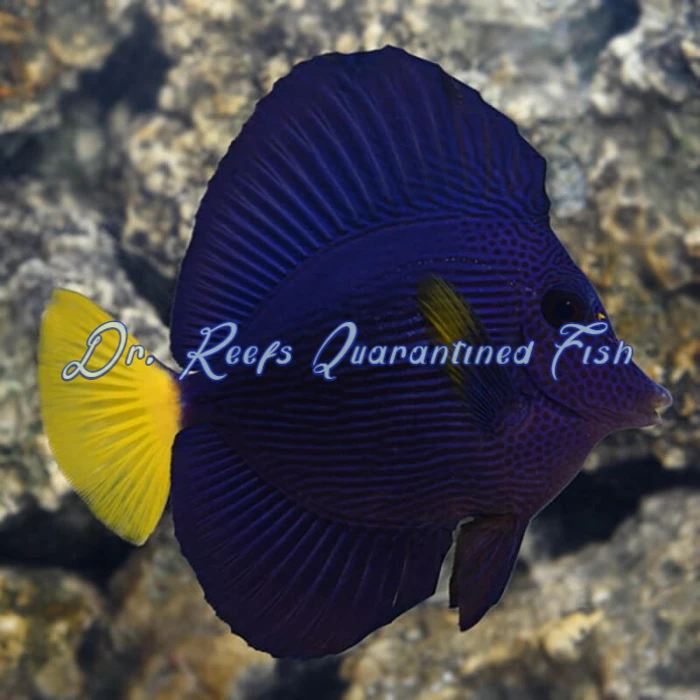
Few fish turn heads in a reef tank like the Purple Tang. That deep violet body, the bright yellow tail, the confident way it moves through the rockwork. It is easy to see why so many hobbyists dream about adding one. But ask around any reef forum, and you will also hear plenty of horror stories. Chased tankmates. Constant flaring. A fish that seems to declare war the moment it hits the tank. So which is it? Is the Purple Tang a showpiece or a bully? The honest answer is both, and the difference usually comes down to how the fish started its life with you.
A Stunning Fish With a Strong Personality
The Purple Tang, or Zebrasoma xanthurum, comes from the Red Sea and nearby waters of the Arabian Peninsula. In the wild, it spends its days grazing algae off open reef slopes, staying alert, and defending its feeding territory from other tangs. That territorial streak is not a flaw. It is simply how the species survives out on the reef.
In a home aquarium, that same instinct can show up as strong pushback against other tangs, especially ones with a similar body shape. Two Zebrasoma species in a tank that is too small is a common recipe for conflict. This is normal tang behavior, not a sign that something is wrong with the fish.
Where the “Bully” Reputation Really Comes From
Here is what a lot of owners miss. Much of the aggression people blame on Purple Tangs actually traces back to how the fish arrived and how it was introduced. A tang that is stressed, underfed, or added too early into an unstable tank does not have the resources to relax. It goes into defense mode instead.
Purple Tangs are also prone to ich, velvet, and other stress-related illnesses if they are not properly quarantined before landing in your display tank. A sick or itchy fish is far more likely to act erratically and territorially than a healthy one. Add a tank that is too small (Purple Tangs need at least 125 gallons, ideally more), and you have a fish with nowhere to retreat and nothing left to lose. Under those conditions, almost any tang starts to look like a bully.
The Difference a Proper Quarantine Makes
This is where Dr. Reef’s Quarantined Fish changes the outcome. Every Purple Tang goes through a real quarantine protocol, typically two to three weeks, before it ever ships out. During that time, the fish is monitored for parasites and disease. It is also conditioned to eat prepared foods like nori and spirulina pellets, so it is not arriving at your house hungry and stressed.
A Purple Tang that starts healthy behaves completely differently than one that starts sick or starving. It eats readily from day one. It explores the rockwork with curiosity instead of panic. It settles into a routine faster, which means less energy spent guarding territory and more energy spent simply being the vibrant showpiece it was meant to be.
There is a ripple effect here too. A calm, well-fed tang is far less likely to pick fights with wrasses, gobies, anthias, or chromis sharing its space. The whole tank tends to run more peacefully when the biggest, boldest fish in the room is not running on stress hormones.
What a Quarantined Purple Tang Costs
A quarantined Purple Tang from Dr. Reef currently runs $299.99. That price reflects the weeks of care, feeding, and health monitoring that go into every fish before it ships, not just the cost of the animal itself. Compared to the risk of introducing disease into an established reef tank, or watching a stressed tang terrorize thousands of dollars in fish and coral, it is a fair trade for peace of mind. You can check current availability on the Purple Tang product page, and if you want a slightly calmer temperament, the Captive Bred Purple Tang is also worth a look, since tank-raised individuals tend to be more tolerant of tankmates.
Setting Your Purple Tang Up for Success
A few habits make a real difference in how your Purple Tang behaves long term. Start with a tank of at least 125 gallons, since cramped quarters are one of the biggest triggers for aggression in this species. Add your tang after smaller, more peaceful fish are already established, rather than as one of the first residents. Feed nori or seaweed sheets daily, since a Purple Tang that is constantly grazing has far less reason to guard food. And avoid pairing it with other Zebrasoma tangs unless your tank is genuinely large enough to support them.
Before bringing one home, it is worth reviewing the compatibility chart to double-check your existing tankmates, and following the acclimation guide so the move from bag to tank goes smoothly.
If tangs in general interest you, the Doctorfish Tang care guide on the Dr. Reef blog covers another popular, semi-aggressive surgeonfish with a lot of the same tank size and diet considerations as the Purple Tang.
The Takeaway
Purple Tangs are not born bullies. They are bold, intelligent fish with a natural territorial streak, and that streak only turns into a real problem when the fish is stressed, sick, or crammed into too small a space. Start with a properly quarantined tang, like the ones raised through Dr. Reef’s Quarantined Fish program, give it room to thrive, and you get exactly what drew you to the species in the first place: a hardy, active, stunning centerpiece for your reef.
For more fish care guides like this one, visit the Dr. Reef blog.