
Why Do So Many Sixline Wrasses Become Aggressive? Here’s What Most Owners Miss

Why Do So Many Sixline Wrasses Become Aggressive? Here’s What Most Owners Miss
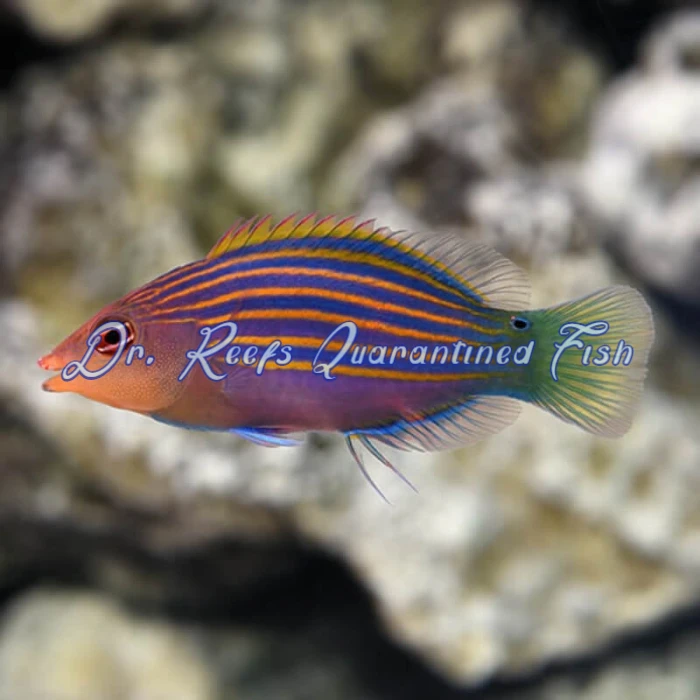
If you have ever kept a Sixline Wrasse, you know the story. This little fish shows up looking calm and colorful. A few weeks later, it is chasing your gobies, nipping at your shrimp, and acting like it owns the tank. Most reef keepers just shrug and say “that’s how Sixlines are.” But the real story is more interesting, and a lot more fixable, than most people think.
The Sixline Wrasse Reputation Isn’t the Whole Story
Sixline Wrasses (Pseudocheilinus hexataenia) have a reputation as one of the feistier small fish in the hobby. They are fast, curious, and territorial by nature. In the wild, they dart in and out of rubble and coral crevices. They are always on alert for predators. They also compete hard for the same tight hiding spots as other small reef fish. That instinct does not disappear just because they now live in a glass box in your living room.
So yes, some level of feistiness is simply part of who this fish is. But “feisty” and “aggressive troublemaker” are two very different things. When a Sixline Wrasse turns into a real problem, chasing tankmates nonstop or stressing out the whole tank, something else is usually going on under the surface.
What Most Owners Miss
Here is the part people overlook again and again. Sixline Wrasse aggression is often a stress response. It is not a fixed personality trait. A fish that arrives already run down from a rough trip tends to land in “survival mode” the moment it hits your tank. That survival mode often looks like nonstop territorial behavior. The fish is racing to grab food, space, and safety as fast as it can.
There is also a common mistake many hobbyists make. They add a Sixline Wrasse too early, into a young or lightly stocked tank. There are not enough tankmates or hiding spots yet. There is no pecking order in place. So the wrasse feels like it has to claim the whole aquarium for itself. This is not really about dominance. It is a stressed fish trying to feel safe in a strange new space.
Diet plays a role too. A Sixline Wrasse that isn’t fed consistently will spend more time and energy guarding food sources. That guarding instinct often shows up as chasing and nipping toward any fish it sees as competition.
Why a Healthy Start Changes Everything
This is exactly where the gap between a stressed fish and a settled fish becomes so visible. It is also why more hobbyists are choosing properly quarantined livestock instead of fish rushed straight from the ocean to the display tank.
Fish from Dr. Reef’s Quarantined Fish go through a real quarantine protocol before they ever reach your home. That means your fish already had time to decompress. It healed from the stress of shipping. It built up strength on a steady feeding schedule. A fish that starts life in your tank healthy, well fed, and parasite free is simply a calmer fish. It does not need to fight for survival. It was never left weak or starving in the first place.
This matters more than most people expect. A Sixline Wrasse from a solid quarantine background tends to explore its new home with curiosity instead of panic. It settles into a routine faster. It learns to recognize feeding time instead of guarding every scrap. It shows the confident, playful personality that made this species popular in the first place, without tipping over into constant aggression.
There is a ripple effect for the rest of the tank too. When one fish is calm, it is not spreading stress to its tankmates. A calm Sixline Wrasse tends to mean calmer clownfish and calmer gobies around it, and a more peaceful reef overall. That kind of stability is hard to put a price on if you have ever watched one stressed newcomer throw an entire tank into chaos.
What It Costs to Start Right
A quarantined Sixline Wrasse from Dr. Reef currently runs $59.99 to $68.99, depending on size and availability. Compared to the cost of a stressed fish harassing your other livestock, or worse, introducing disease into an established tank, it is a small price for real peace of mind. You can check current stock and pricing on the Sixline Wrasse product page, and browse other reef safe wrasses if you are planning out a full stocking list.
Setting Your Sixline Wrasse Up for Success
A few simple habits go a long way toward keeping your Sixline Wrasse on its best behavior. Start with a healthy, well-quarantined fish so it is not fighting an uphill battle from day one. Give it plenty of live rock and hiding spots so it never feels like it has to defend a single patch of the tank. Feed a varied diet on a steady schedule so food competition never becomes a trigger. And add your Sixline Wrasse after your tank already has some established residents, so it joins a community instead of trying to claim empty territory.
Before you add any new fish, it is worth checking a tankmate compatibility guide and reviewing the acclimation guide so the transition goes smoothly from bag to tank. If you run into questions along the way, the FAQ page covers most of the basics, and you can always reach out directly with anything it does not answer.
The Takeaway
Sixline Wrasses are not destined to become bullies. They are small, instinct-driven fish that respond strongly to stress, and a rough start in life is often the real cause of the aggression hobbyists complain about. Choosing quarantined, healthy stock, like the fish raised through Dr. Reef’s Quarantined Fish program, gives your Sixline Wrasse the foundation it needs to become the vibrant, active, and surprisingly personable addition to your reef that this species can truly be.
For more tips like this, check out the rest of the Dr. Reef blog.