

Harlequin Tusk Care Guide: Why This Fish Is a Favorite Among Collectors

Harlequin Tusk Care Guide: Why This Fish Is a Favorite Among Collectors
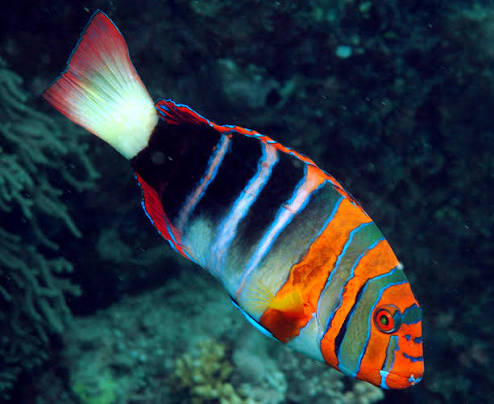
Ask a serious wrasse collector to name their favorite fish, and this comes up constantly
There’s a certain type of reef keeper who stops chasing color for color’s sake and starts chasing personality instead. For a lot of collectors, that shift eventually leads to the Harlequin Tusk. Orange-red bands, crisp white striping, and a mouth full of electric blue teeth make it visually unforgettable, but the real reason people keep coming back to this species has more to do with how it behaves. It learns faces. It anticipates feeding time. It has opinions about its tank, and it isn’t shy about expressing them.
If you’re browsing Harlequin Tusks for sale for the first time, here’s the full picture of what makes this fish so beloved, and what it actually takes to keep one thriving.
Three Ways to Buy a Tusk, and They’re Not Interchangeable
This is where a lot of first-time buyers get tripped up. There are three distinct options, and the differences go well beyond price.
The Harlequin Tusk (Aussie) sits at $349.99 and is widely regarded as the premium variant. Australian specimens tend to run larger, show noticeably more intense coloration, and are generally hardier than fish collected elsewhere in the species’ range.
The Harlequin Tusk (Indo) is priced at $199.99, making it the more accessible entry point. It carries the same striking pattern with somewhat less intensity, and it tends to be a bit more sensitive during the acclimation window, so patience matters more here.
Then there’s the Harlequin Tuskfish (Captive Bred) at $379.99. This is genuinely the safest bet for anyone newer to keeping large wrasses. Captive-bred specimens arrive already trained on prepared foods, skip the stress of wild collection entirely, and tend to settle into a display tank within hours rather than days.
If budget allows, the captive-bred option removes nearly all the guesswork. If you’re drawn to the deepest, most saturated coloration and don’t mind paying for a wild-collected fish, the Aussie variant is the one collectors talk about most.
What This Fish Actually Needs From Its Tank
Room to Patrol, Room to Hide
A Harlequin Tusk wants space, and not just for its eventual 10 to 12 inch adult size. This is an active swimmer that patrols the length of a tank throughout the day, so a minimum of 125 gallons gives it enough room to establish territory without feeling boxed in. Pair that open swimming space with extensive rockwork and caves, since this species also wants somewhere secure to retreat when it’s not on the move.
Sand Deep Enough to Disappear Into
Don’t skip the sand bed. Tusks bury themselves when stressed, threatened, or simply settling in for the night, and a shallow substrate leaves them with nowhere to go. Two to three inches minimum gives the fish what it needs to express this natural behavior comfortably.
Water Parameters Worth Getting Right
Keep temperature in the 72 to 78°F range, pH between 8.1 and 8.4, and salinity steady around 1.020 to 1.025. None of these numbers are unusual for a reef system, but consistency matters more than precision here. Sudden swings are far more likely to stress a Tusk than a parameter that’s simply on the lower or higher end of the acceptable range.
Feeding: Where the Blue Teeth Come In
Those brilliant blue teeth aren’t just for show. They’re modified canines that grow continuously throughout the fish’s life, and without regular access to hard-shelled prey, they can overgrow and cause real health problems down the line. Build a diet around snails, small crabs, shrimp with shells still on, and mussels, alongside frozen krill, mysis shrimp, and squid for variety. Feed once or twice daily, and expect an excellent appetite once the fish has settled in.
Temperament and Tank Mates
Harlequin Tusks are semi-aggressive and can become territorial, particularly toward other wrasses or fish with a similar body shape. They pair best with other large, robust tank mates that can hold their own without triggering constant conflict. This is not a reef-safe species; it will happily eat small hermit crabs, snails, shrimp, and any small fish it can catch, so plan for a fish-only or FOWLR system rather than a delicate invertebrate-heavy reef.
The Personality That Keeps Collectors Coming Back
Ask anyone who’s owned one for a while, and the conversation eventually turns away from coloration entirely. Harlequin Tusks are unusually intelligent for a wrasse, recognizing their owners, learning feeding routines, and often becoming bold enough to take food directly from a hand. That combination of striking looks and genuine personality is rare in the hobby, and it’s the real reason this species holds such a devoted following among experienced collectors.
Quarantine and Acclimation Set the Tone Early
A fish this intelligent and this visually distinct deserves a careful start. Every Harlequin Tusk we offer goes through a full quarantine protocol before it ships, confirming feeding response and screening for parasites well before it ever reaches your tank. Once your fish arrives, follow a slow drip acclimation and give it time to settle before expecting it to eat normally. Our acclimation guide covers the process step by step. If you’re planning a broader stocking list around this fish, our saltwater fish compatibility guide is worth reviewing before you finalize tank mates.
Is This the Right Fish for Your Collection
A Harlequin Tusk isn’t a fish you add on impulse, but for a keeper with the right tank and the patience to let its personality unfold, it becomes one of the most engaging additions in the entire hobby. Browse our current Harlequin Tusk availability across all three variants and choose the one that fits your budget and experience level.
Looking at smaller, reef-safe wrasse options instead? Our comparison of the Six Line Wrasse covers a different fish that fits a much wider range of reef tanks.