
Sebae Anemone for Sale: Care Requirements, Lighting Needs, and Clownfish Compatibility

Sebae Anemone for Sale: Care Requirements, Lighting Needs, and Clownfish Compatibility
Some additions to a reef tank change the whole feeling of the tank. A Sebae Anemone is one of them. The moment those long, tapered tentacles spread out across your rockwork, and a clownfish tucks itself into that flowing canopy, you stop seeing a tank and start seeing something alive in a way nothing else captures. If you have been looking for a Sebae Anemone for sale, Dr. Reef’s Quarantined Fish has one waiting for you at $99.99, quarantined and confirmed healthy before it ships to your door.
Here is everything you need to know before it arrives.
What Is the Sebae Anemone?
The Species and Its Common Names
The Sebae Anemone goes by the scientific name Heteractis crispa. You will also see it sold under the names Leather Anemone and Leathery Sea Anemone. Both names reference the slightly tougher, more textured feel of this anemone’s column compared to softer species. It is native to the shallow reef environments and sheltered lagoons of the Indo-Pacific region, where it anchors itself into rocky crevices and sandy substrate and spreads its tentacles wide to collect both light and passing prey.
Appearance and Color
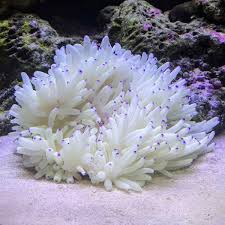
The tentacles of a healthy Sebae Anemone are long, slender, and tapered, often ending in a distinctive purple, blue, or violet tip that makes the animal immediately recognizable. The overall body color ranges across shades of brown, gray, green, and white depending on the health and zooxanthellae density of the individual specimen. A richly colored Sebae with deep brown or purple tones tells you the animal is photosynthetically active and thriving. A Sebae that appears fully white has lost its zooxanthellae and is in serious decline. Never purchase a white specimen regardless of price or how it is described.
Care Requirements
Tank Size and Setup
The Sebae Anemone grows to around 12 inches in diameter in a home aquarium, and it needs space to expand without pressing against corals or competing invertebrates. A minimum of 30 gallons works for a single specimen, but a larger tank with more stable water volume gives you a much easier time maintaining the consistency this animal demands.
This anemone needs both rocky surfaces and sandy areas to choose from. It anchors its muscular foot into crevices and substrate, and it will move until it finds a spot where lighting, flow, and substrate conditions all meet its preferences. Fighting that process causes more stress than simply letting the animal choose. Once it anchors and opens fully, it has found its place.
Protect all pump intakes with flow guards before this anemone goes in the tank. A wandering anemone near an unprotected powerhead is a situation that ends badly every time.
Water Quality
Stability is the single most important word in Sebae Anemone care. This species does not recover well from parameter swings. A pH between 8.0 and 8.4 and temperature between 77 and 82 degrees Fahrenheit cover the comfortable range for this animal. Salinity should match natural seawater at 1.025 to 1.026. Nitrates need to stay low and phosphates even lower. Weekly water changes and a well-functioning protein skimmer keep those numbers where they need to be.
This is not a beginner animal. It belongs in a tank that has been running for at least six months and has demonstrated water quality stability over time.
Feeding
The Sebae Anemone derives much of its energy from photosynthesis through its zooxanthellae, but supplemental feeding makes a measurable difference in growth, color, and overall condition. Target feed two to three times per week with meaty foods placed directly onto the tentacles. Silversides, pieces of raw shrimp, and mysis shrimp all work well. Feed during the evening when the tentacles are fully extended and the anemone is most receptive to accepting food.
Lighting Needs
Why Light Is Non-Negotiable
The Sebae Anemone is a photosynthetic animal. Its zooxanthellae need consistent, strong light to produce the energy that keeps the anemone alive and colored. Without adequate lighting, the zooxanthellae population declines, the anemone bleaches, and recovery becomes extremely difficult.
PAR Targets and Fixture Recommendations
Target a PAR level of 150 to 250 at the point in the tank where the anemone settles. High-output LED and T5 fixtures deliver this range reliably. If your anemone keeps relocating after placement, it is telling you the light at that spot does not meet its needs. Allow it to find its preferred zone rather than forcing placement under a fixture that does not cover that area of the tank adequately.
Clownfish Compatibility
Natural Partners
The Sebae Anemone is one of the most generous clownfish hosts in the hobby. In the wild, Heteractis crispa has been documented hosting up to 14 different species of clownfish. Its most natural partners include Clark’s Clownfish, the Saddleback Clownfish, and the Blue Striped Clownfish. These species share a long evolutionary history with this specific anemone and typically accept the pairing quickly after introduction.
Clownfish That Work in Captivity
In home aquariums, Ocellaris and Percula Clownfish also host in Sebae Anemones, though the pairing is not always immediate. Some fish investigate the anemone within hours of introduction. Others take days or weeks before making contact. Patience is necessary. Forcing contact by netting fish near the tentacles can cause injury and additional stress that makes the pairing less likely, not more. Let the relationship develop at its own pace.
Tank Safety Around the Anemone
The Sebae Anemone carries a meaningful sting. Small fish that stray into the tentacles are at genuine risk, and this animal will consume any slow-moving prey it can catch. Keep small gobies, dragonets, seahorses, and nano species away from a tank housing a Sebae Anemone unless your system is large enough to give those animals a completely separate territory. Clownfish are immune. Other fish generally are not.
Questions and Answers
Q: Is the Sebae Anemone suitable for beginners?
It is best kept by hobbyists who already have a stable, mature reef tank and experience maintaining consistent water parameters. The Sebae Anemone punishes instability quickly and does not offer many second chances once it begins to decline.
Q: What does a healthy Sebae Anemone look like?
A healthy specimen shows rich color in its body and tentacles, stays fully inflated and open during the day, responds to touch by pulling in tentacles, and accepts food actively. An unhealthy specimen appears pale, deflated, or white with no visible zooxanthellae pigment.
Q: How do I know if my lighting is strong enough?
If your anemone stays open, holds good color, and stops wandering after settling, your lighting is meeting its needs. If it continues moving around the tank even after weeks in your system, that is a reliable signal that it has not found a zone with adequate PAR.
Q: Will my Ocellaris Clownfish host in a Sebae Anemone?
It is possible but not guaranteed. Ocellaris and Percula Clownfish are not the natural partners of Heteractis crispa the way Clark’s or Saddleback Clownfish are. Many captive Ocellaris will accept it over time. Others never do. Having the anemone present and well-established in the tank gives the best chance for the pairing to develop naturally.
Q: Why buy from Dr. Reef’s Quarantined Fish?
Because the quarantine process changes the outcome. Every anemone sold through Dr. Reef’s goes through a full observation and quarantine period before it ships. You are receiving an animal that has already been confirmed eating, confirmed stable, and confirmed healthy by people who understand exactly what it takes to keep this species alive and thriving long term.
Bring a Sebae Anemone Into Your Reef Today
At $99.99, the Sebae Anemone from Dr. Reef’s Quarantined Fish is one of the most visually striking and biologically rewarding additions you can make to a mature reef tank. Pair it with a Clark’s or Saddleback Clownfish and watch a natural relationship unfold right inside your living room.
Visit Dr. Reef’s Quarantined Fish today and order yours.