
Volitan Lionfish Colored
Price range: $139.99 through $160.99
Pterois volitans
| Care Level | Intermediate to Advanced |
| Temperament | Peaceful but predatory |
| Color Form | Bold red and white banded body with dramatic flowing fins and fan-like pectoral fins |
| Diet | Carnivore |
| Reef Compatible | Reef safe with caution |
| Water Conditions | sg 1.020–1.025, 72–78°F, pH 8.1–8.4 |
| Max Size | 15″ |
| Family | Scorpaenidae |
| Minimum Tank Size | 120 gallons |
Volitans Lionfish (Colored)
Also known as Red Lionfish, Turkeyfish, Butterfly Cod, Volitan Lionfish
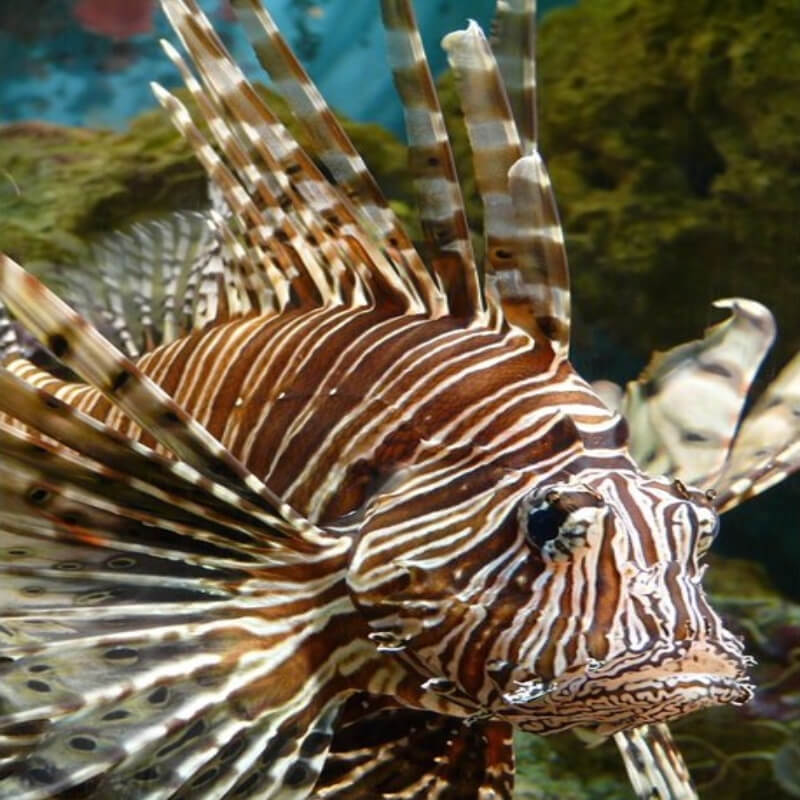
The Volitans Lionfish is one of the most spectacular and iconic marine fish species, featuring dramatic flowing fins, bold red and white banding, and elaborate fan-like pectoral fins. “Colored” specimens refer to particularly vibrant red morphs with intense coloration. This large, impressive predator is the quintessential lionfish and becomes a stunning centerpiece. While beautiful and personable, this species requires substantial space, careful handling due to venomous spines, and commitment to proper feeding practices.
Key Features
- Scientific Name: Pterois volitans
- Common Names: Volitans Lionfish, Red Lionfish, Turkeyfish, Butterfly Cod
- Adult Size: Up to 12-15 inches (including fins)
- Lifespan: 10-15+ years with proper care
- Temperament: Peaceful toward large fish; predatory toward small fish
- Reef Compatibility: Reef safe with caution; will eat small fish and shrimp
- Minimum Tank Size: 120 gallons minimum preferred
- Experience Level: Intermediate to Advanced; venomous and requires large system
Habitat & Tank Requirements
Tank Environment: Requires large tank with substantial open swimming space and extensive rockwork with caves, overhangs, and ledges for perching. Moderate to strong water flow. Subdued lighting preferred or provided shaded areas. Nocturnal tendencies; needs hiding spots.
Water Parameters:
- Temperature: 72-78°F (22-26°C)
- Salinity: 1.020-1.025
- pH: 8.1-8.4
- Excellent water quality essential (large predator)
Equipment Recommendations:
- High-capacity filtration system
- Large protein skimmer
- Strong water circulation
- Subdued or adjustable lighting
- Secure lid
These maintain water quality for this large predator.
Diet & Feeding
Volitans Lionfish are carnivorous ambush predators requiring substantial food.
Recommended foods include:
- Primary: Frozen silversides, frozen lance fish, frozen whole shrimp
- Live foods: Live ghost shrimp, live grass shrimp (for initial training if necessary)
- Frozen foods: Frozen krill, frozen squid, chopped marine fish, frozen prawns
- Variety: Various frozen seafood for balanced nutrition
- Training: May require live foods initially; train to frozen using feeding stick
Feeding Frequency: 2-3 times weekly; large meals
Special Note: DO NOT OVERFEED. This is the most common mistake with lionfish. Slow metabolism means 2-3 feedings weekly is sufficient. Overfeeding causes obesity, fatty liver disease, and premature death. Never feed live goldfish or freshwater feeders (causes thiaminase-related health issues).
Social Structure & Compatibility
- Tankmates: Compatible with large fish too big to swallow
- Peaceful: Non-aggressive toward appropriate-sized tankmates
- Highly Predatory: Will eat ANY fish small enough to fit in mouth
- Multiple Lionfish: Can sometimes coexist with other large lionfish in very large systems
- Reef Behavior: Safe with corals; will consume all small fish and shrimp
Notes & Considerations
- One of the most spectacular marine fish species available.
- “Colored” refers to vibrant red color morphs with intense coloration.
- Dramatic flowing fins create an impressive display.
- Bold red and white vertical banding pattern.
- Elaborate fan-like pectoral fins spread during hunting or display.
- Longer fin rays and more dramatic appearance than dwarf species.
- One of the most iconic and recognizable marine fish.
- VENOMOUS SPINES: Dorsal, anal, and pelvic spines contain potent venom.
- Spine stings are EXTREMELY painful; severe localized pain, swelling, possible systemic effects.
- Pain can be excruciating and last many hours to days.
- Nausea, vomiting, difficulty breathing are possible in severe cases.
- Medical attention strongly recommended for all stings; essential for severe reactions.
- EXTREME CAUTION REQUIRED AT ALL TIMES.
- Never handle with bare hands under any circumstances.
- Always use extreme care with nets and containers.
- Always know the exact lionfish location before putting hands in the tank.
- Multiple people stung during routine maintenance due to carelessness.
- Hot water immersion (as hot as safely tolerable) helps denature venom and relieve pain.
- Keep a first aid kit, hot water source, and emergency numbers readily available.
- Consider having antivenom information available (rarely needed but serious stings occur).
- Spines are defensive; fish are not aggressive but will defend if threatened.
- Slow-moving ambush predator; sits motionless for extended periods.
- Primarily nocturnal; most active during evening and night hours.
- Often rests in caves or under overhangs during bright daylight.
- Will eat ANY fish small enough to swallow: This cannot be overstated.
- Mouth expands dramatically; can swallow fish nearly half their own size.
- Has been documented eating fish up to 2/3 its own body length.
- Cannot be housed with: gobies, blennies, small wrasses, dartfish, small clownfish, cardinalfish, etc.
- Will consume ALL ornamental shrimp: cleaner, peppermint, fire, coral banded.
- Completely safe with all corals; does not nip or damage any coral species.
- Can be kept in reef aquariums with appropriate large tankmates only.
- It often requires live ghost shrimp or grass shrimp initially to stimulate feeding.
- Can be trained to frozen foods using a feeding stick and patience.
- Training on frozen foods is critical for proper nutrition.
- NEVER feed live goldfish, guppies, or freshwater feeders.
- Freshwater feeders contain thiaminase enzymes that cause vitamin B1 deficiency.
- Repeated feeding of goldfish causes severe neurological problems and death.
- Slow metabolism; 2-3 feedings weekly maximum.
- Overfeeding is the #1 cause of premature death in lionfish.
- Obese lionfish develop fatty liver disease and die years prematurely.
- Maintain a lean body condition; ribs should be barely visible.
- Can become quite tame and recognize the owner.
- May beg for food but resist overfeeding.
- Often perches majestically on rockwork in the hunting position.
- Spreads elaborate pectoral fins during hunting or when threatened.
- Uses pectoral fins to corner prey against rocks or glass.
- Absolutely mesmerizing to watch, hunt and display.
- Hardy once established a proper feeding schedule.
- Relatively disease-resistant; adapts well to aquarium life.
- Can jump when startled or during feeding; secure lid essential.
- Native to Indo-Pacific; invasive species in Atlantic/Caribbean (aquarium releases).
- Never release lionfish into wild waters under any circumstances.
- Grows large; requires substantial space throughout life.
- Long-lived; 10-15+ year commitment with proper care.
- Colored/red morphs command premium prices due to vibrant coloration.
- Spectacular centerpiece fish for large predator tanks.
- One of the most rewarding but demanding species to keep.
Why Choose a Quarantined Volitans Lionfish (Colored)?
Purchasing a quarantined specimen from us means you’re starting with a healthier, properly acclimated lionfish with vibrant coloration. All fish are observed, treated as needed, and most critically, trained to accept frozen foods before sale. Many volitans arrive requiring live foods, but our specimens are already weaned to frozen silversides and prepared foods, ensuring proper nutrition and preventing thiaminase-related health issues. Proper quarantine ensures disease-free, stress-free introduction. Given the size, venomous nature, and premium price of colored morphs, our quarantine provides essential value and safety. This provides the strongest foundation for long-term success with this magnificent species.
| Service Level | Quarantined |
|---|---|
| Extended Guarantee | 3 days (Included), 7 days, 14 days |
You must be logged in to post a review.
Related products
Achilles Tang
Price range: $549.99 through $649.99
Astraea Snail
Price range: $29.99 through $79.99
Blue Leg Hermit Crabs
Price range: $19.99 through $74.99
Midas Blenny
Price range: $99.99 through $114.99
Reviews
There are no reviews yet.