
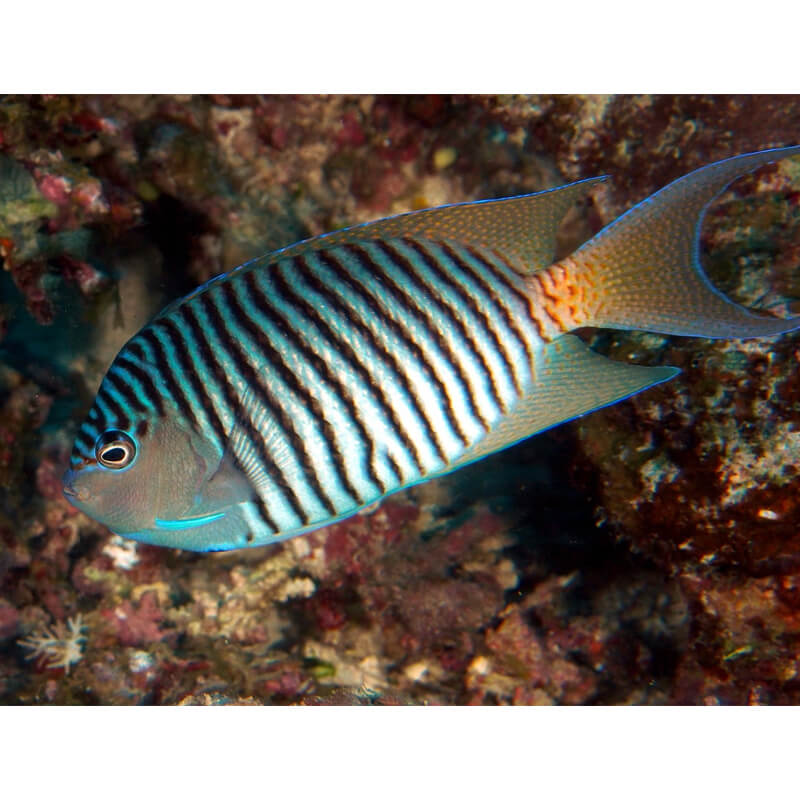
Swallowtail Zebra Angelfish (Male)
Price range: $239.99 through $275.99
Genicanthus melanospilos
| Care Level | Intermediate to Advanced |
| Temperament | Peaceful and active |
| Color Form | Pearly white to silver body with bold black horizontal zebra striping and an elongated black-edged lyretail fin (males display more dramatic finnage) |
| Diet | Carnivore |
| Reef Compatible | Yes |
| Water Conditions | sg 1.023–1.025, 74–80°F, pH 8.1–8.4 |
| Max Size | 8″ |
| Family | Pomacanthidae |
| Minimum Tank Size | 125 gallons |
Swallowtail Zebra Angelfish (Male)
Also known as the Lyretail Angelfish or Genicanthus melanospilos
The Swallowtail Zebra Angelfish is an exceptionally elegant and unique species that brings graceful swimming and distinctive coloration to marine aquariums. Native to the Western Pacific, from Indonesia to the Great Barrier Reef and Fiji, this stunning angelfish features bold black and white zebra striping with an elaborate lyretail fin unique among angelfish species. Males display more dramatic coloration and finnage than females, making them highly sought-after specimens. With their peaceful temperament, reef-safe nature, and active swimming behavior, male Swallowtail Zebra Angelfish make outstanding additions for intermediate to advanced aquarists with appropriately sized systems.
Key Features
- Scientific Name: Genicanthus melanospilos
- Common Names: Swallowtail Zebra Angelfish, Lyretail Angelfish, Blackspot Angelfish, Zebra Angelfish
- Adult Size: 7–8 inches (18–20 cm); commonly 6–7 inches in aquariums
- Lifespan: 10–15 years with proper care
- Temperament: Peaceful and active; excellent community fish
- Reef Compatibility: Completely reef-safe – one of the few truly reef-safe angelfish
- Minimum Tank Size: 125 gallons minimum (180+ gallons strongly recommended)
- Experience Level: Intermediate to Advanced – requires swimming space and proper feeding
Habitat & Tank Requirements
Natural Habitat: Found on outer reef slopes, drop-offs, and current-swept areas at depths of 30–150 feet. Typically observed in harems with one dominant male and multiple females swimming in open water above the reef, feeding on zooplankton.
Tank Environment:
- Extensive open swimming areas absolutely essential (lyretail requires space)
- Moderate rockwork providing some shelter without cluttering swimming space
- Strong, directional water flow mimicking outer reef currents
- Secure rockwork formations
- Long, rectangular tank shape strongly preferred over cube designs
- Tight-fitting lid with no gaps (excellent jumpers when startled)
- Compatible with reef or FOWLR systems
- Prefers well-lit environments
Water Parameters:
- Temperature: 74–80°F (23–27°C)
- Salinity: 1.023–1.025 specific gravity
- pH: 8.1–8.4
- Ammonia/Nitrite: 0 ppm
- Nitrate: <20 ppm
- Alkalinity: 8–12 dKH
Essential Equipment:
- Quality protein skimmer appropriate for tank size
- Powerful mechanical and biological filtration
- Strong circulation pumps for water movement (important for this species)
- UV sterilizer recommended
- Open aquascape design for cruising behavior
- Weekly water changes (20% minimum)
Diet & Feeding
Swallowtail Zebra Angelfish are planktivorous carnivores with different dietary requirements than typical angelfish species. They feed primarily on zooplankton in the wild rather than algae.
Recommended Foods:
- Zooplankton: Frozen mysis shrimp, brine shrimp, copepods (primary diet)
- Fresh/Frozen Meats: Chopped shrimp, fish, krill, cyclops
- Prepared Foods: High-quality marine carnivore pellets (small size for continuous feeding)
- Live Foods: Live brine shrimp, live copepods (beneficial but not required)
- Enrichment: Vitamin-soaked foods, omega-3 enriched preparations
- Important: Unlike other angelfish, does NOT require significant algae/vegetable matter
Feeding Schedule:
- Feed 2–3 times daily minimum (small, frequent meals preferred)
- Active swimmers with high metabolism require regular feeding
- Offer variety to ensure complete nutrition
- May hunt microfauna naturally throughout day
- Strong, enthusiastic feeder once established
- Readily accepts most prepared foods
Behavior & Compatibility
Temperament:
- Very peaceful and non-aggressive toward other species
- Active, graceful swimmer constantly cruising open water
- One of the most peaceful angelfish species available
- Bold and confident once established
- Highly social; can be kept with other Genicanthus species
- Males show no aggression toward dissimilar species
- Excellent community fish for large peaceful systems
Tank Mates:
- Compatible with: Tangs, butterflyfish, wrasses (peaceful), other angelfish (different genera), clownfish, anthias, cardinalfish, gobies, blennies, dartfish, triggerfish (peaceful), rabbitfish, foxface, virtually all peaceful to semi-aggressive community fish
- Can be kept with: Other Genicanthus angelfish (different species), female Swallowtail Zebra Angelfish (forms harems)
- Caution with: Very aggressive species that may harass, extremely territorial fish
- Avoid: Large predators that may view them as prey, multiple male Swallowtail Zebra Angelfish (will fight)
Social Behavior:
- Males establish loose territories but show minimal aggression
- Can be kept in harems with multiple females in tanks 180+ gallons
- Males display to females with elaborate swimming patterns
- Constantly swimming in open water rather than hiding
- Peaceful toward all dissimilar tankmates
- May form loose schools with other planktivorous fish
- Only one male per tank unless system is 300+ gallons
- Active throughout entire water column, especially mid to upper levels
Harem Dynamics: Genicanthus angelfish are protogynous hermaphrodites (females can transform into males). In the wild, they form harems with one dominant male and multiple females. If the male dies or is removed, the most dominant female will transform into a male over several weeks. Males are more colorful and have more elaborate finnage.
Reef Compatibility: Completely reef-safe – this is one of the few angelfish species that can be trusted 100% with all corals. They feed exclusively on zooplankton and show zero interest in coral polyps, clam mantles, or sessile invertebrates. Safe with all SPS, LPS, soft corals, zoanthids, anemones, clams, and ornamental invertebrates. Their planktivorous diet makes them ideal for mixed reef systems where typical angelfish would be risky.
Acclimation & Care Tips
Initial Acclimation:
- Use drip acclimation over 60–90 minutes for best results
- Float bag for temperature equalization (20–30 minutes)
- Dim lights during introduction to reduce stress
- Provide open swimming space immediately upon introduction
- May hide briefly but typically emerges within hours
- Generally adapts quickly to captive environments
- Strong swimmers; ensure adequate oxygen during acclimation
Health Considerations:
- Susceptible to marine ich, velvet, and bacterial infections when stressed
- Quarantine for 4–6 weeks strongly recommended before adding to display tank
- Generally hardy once established with proper diet
- Watch for labored breathing, loss of color, reduced appetite, or clamped fins
- Prone to jumping when startled – secure lid essential
- Less susceptible to lateral line erosion than typical angelfish
- Active swimmers may injure themselves on sharp rockwork during panic
Signs of a Healthy Specimen:
- Constant active swimming throughout water column
- Clear, bright eyes with alert demeanor
- Vibrant black and white striping with no fading
- Elaborate lyretail fin fully extended and undamaged
- Strong, aggressive feeding response
- Normal breathing without rapid gill movement
- Confident swimming behavior without hiding
- Interactive with environment and tankmates
Color & Development
Male Coloration Characteristics:
- Body: Pearly white to silver base coloration
- Striping: Bold black horizontal stripes running from head to tail (typically 10–12 stripes)
- Face: White with black stripes extending through eyes
- Fins: Dramatic black-edged fins with white/clear centers
- Lyretail: Elongated tail fin with extended upper and lower lobes creating distinctive swallowtail shape
- Dorsal Fin: Extended filaments on dorsal fin (more pronounced in males)
- Pectoral Fins: Large, constantly in motion for graceful swimming
Sexual Dimorphism: Males display more dramatic coloration and finnage compared to females:
- More pronounced black striping with sharper contrast
- Significantly more elaborate lyretail with longer extensions
- Extended dorsal fin filaments
- Generally larger body size
- More vibrant overall appearance
- Females show similar but less intense striping with shorter tail lobes
Color Intensity:
- High-quality varied diet maintains bright white base and deep black stripes
- Excellent water quality essential for preserving crisp striping
- Stress causes temporary fading of stripes
- Poor diet dulls overall coloration
- Proper lighting enhances contrast between black and white
- Males maintain stunning coloration throughout life with proper care
Size & Growth:
- Males typically available at 4–6 inches
- Moderate growth rate: 1–2 inches annually
- Reach adult size within 2–3 years in aquariums
- Males grow slightly larger than females
- Lyretail continues to develop and elongate with maturity
Swimming Behavior & Space Requirements
Unique Swimming Style: Swallowtail Zebra Angelfish display distinctive swimming behavior unlike typical angelfish. They swim constantly in open water with graceful, flowing movements, using their lyretail for elegant propulsion. They rarely hide or stay stationary, instead cruising continuously throughout the tank. This active lifestyle requires significantly more swimming space than similarly sized angelfish species. Cramped quarters lead to stress, reduced activity, and potential fin damage.
Planktivore Advantages
Why Planktivorous Matters: Unlike typical angelfish that graze on algae and sponges (and unfortunately coral polyps), Genicanthus species evolved as zooplankton feeders. This dietary specialization makes them completely reef-safe while also meaning they won’t help control nuisance algae like other angelfish. They’re opportunistic feeders that constantly pick at the water column, making them entertaining to watch and easy to feed once established.
Why Choose a Male Swallowtail Zebra Angelfish?
Male Swallowtail Zebra Angelfish represent the pinnacle of this species’ beauty, displaying the most dramatic coloration, elaborate finnage, and impressive size. Their bold black and white striping combined with the distinctive lyretail creates one of the most elegant and recognizable profiles in marine angelfish. Unlike typical angelfish that can be aggressive or coral-nippers, males are peaceful community members that are completely reef-safe—a rare combination.
Their constant, graceful swimming throughout the water column brings movement and life to large aquariums in ways that substrate-dwelling or rock-hugging fish cannot. Watching a male Swallowtail cruise elegantly through the tank with his elaborate tail flowing is mesmerizing, and their active nature means they’re always visible and engaging rather than hiding in caves.
The peaceful temperament allows them to coexist with virtually any non-predatory species, making them ideal centerpiece fish for large mixed reef or FOWLR systems. Their planktivorous diet means zero risk to expensive coral collections, while their bold personality and striking appearance ensure they command attention despite their peaceful nature.
Perfect for intermediate to advanced aquarists with large aquariums (125+ gallons) seeking an active, peaceful, reef-safe angelfish with spectacular appearance and graceful swimming behavior. Male Swallowtail Zebra Angelfish combine beauty, peace, and constant activity in a package that’s both visually stunning and completely trustworthy in reef environments—one of the true gentlemen of the angelfish family. An exceptional choice for those seeking elegance, movement, and reliability in a show-quality angelfish that won’t terrorize tankmates or destroy corals.
| Service Level | Quarantined |
|---|---|
| Extended Guarantee | 3 days (Included), 7 days, 14 days |
You must be logged in to post a review.
Related products
Aiptasia Eating Filefish
Price range: $99.99 through $114.99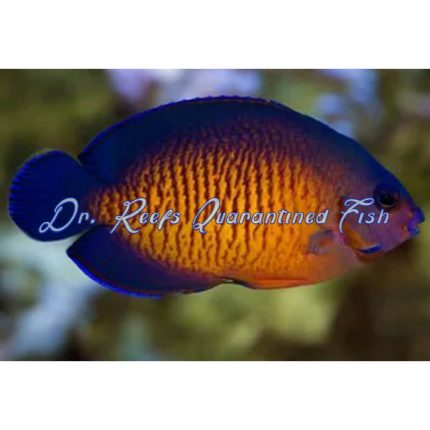
Coral Beauty Angelfish
Price range: $79.99 through $91.99
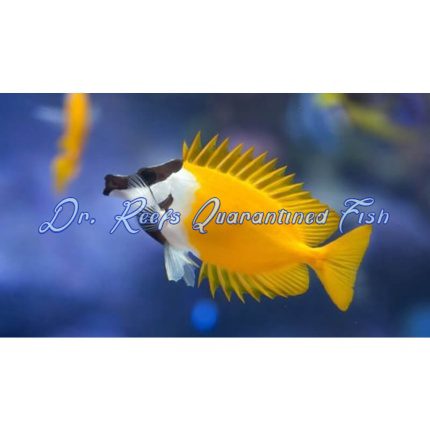
Foxface
Price range: $149.99 through $172.99
Margarite Snail
Price range: $11.99 through $54.99
Nassarius Snail Large
Price range: $19.99 through $69.99
Reviews
There are no reviews yet.