
Swallowtail Tiger Angelfish (Female)
$699.99
Genicanthus melanospilos
| Care Level | Moderate |
| Temperament | non-aggressive |
| Color Form | Silvery-white to light blue body with thin horizontal black stripes; black dorsal fin with yellow/orange leading edge; translucent blue-tinted tail. |
| Diet | planktivorous |
| Reef Compatible | Reef- safe |
| Water Conditions | sg 1.020-1.025, 72-78° F, dKH 8-12, pH 8.1-8.4 |
| Max Size | 7″ |
| Family | Pomacanthidae |
| Minimum Tank Size | 125 gallons |
Swallowtail Zebra Angelfish (Female)
Also known as the Bellus Angelfish, Ornate Angelfish, or Bellus Lyretail Angelfish
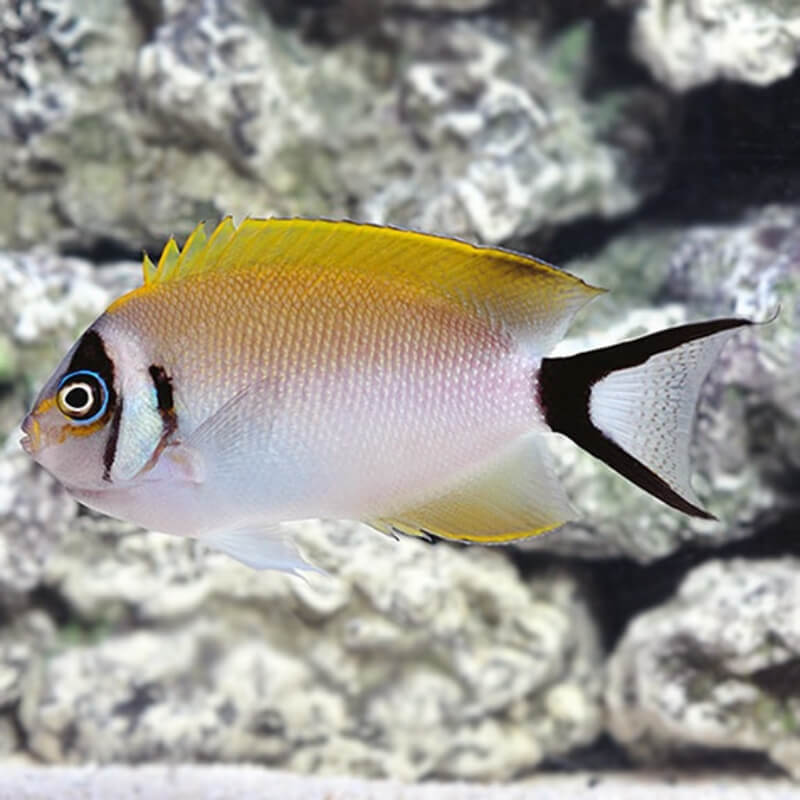
The Swallowtail Zebra Angelfish is a stunning and highly sought-after marine species known for its elegant elongated fins, distinctive deeply lunate (crescent-shaped) caudal fin, and remarkable sexual dimorphism. The female displays an ornate pattern of white, black, and blue horizontal stripes that transition into vertical bars near the head, with striking black dorsal and ventral fins edged in brilliant blue, and yellow to orange coloring on the dorsal fin. Native to the Eastern Indian Ocean and Western Pacific from southern Japan to the Great Barrier Reef, this species is one of the true reef-safe angelfish, a planktivore that feeds in open water above the reef and does not nip at corals or sessile invertebrates. While collected from deep waters and commanding premium prices, the female Bellus is often considered even more beautiful than the male and makes an exceptional addition to established reef aquariums.
Key Features
- Scientific Name: Genicanthus melanospilos
- Common Names: Bellus Angelfish, Ornate Angelfish, Bellus Lyretail Angelfish, Swallowtail Angelfish
- Adult Size: Up to 7 inches (18 cm)
- Lifespan: 10+ years with proper care; documented cases of 7+ years in captivity
- Temperament: Peaceful; non-aggressive toward most tank mates
- Reef Compatibility: Yes – one of the true reef-safe angelfish species, will not nip at soft corals, stony corals, or sessile invertebrates
- Minimum Tank Size: 125–180 gallons (pairs or small harems)
- Experience Level: Moderate to difficult (requires careful acclimation due to deep-water collection)
Habitat & Tank Requirements
- Tank Environment: Requires a mature, well-established aquarium (6+ months old) with extensive live rock arranged into overhangs, caves, and crevices for security, especially during acclimation. This active species requires abundant wide-open swimming space, they are active midwater swimmers that patrol the water column rather than perch on rocks. Being deep-water fish not accustomed to bright light, they provide plenty of dimly lit areas and shaded overhangs to help with acclimation.
- Water Parameters:
- Temperature: 72–78°F (22–28°C)
- Salinity: 1.020–1.025
- pH: 8.1–8.4
- dKH: 8–12
- Aquascape: Extensive live rock for grazing algae and providing shelter, with ample open swimming areas. Structure should include shady overhangs and dark hiding spots. Good water flow is essential, this species thrives in moderate to strong current that mimics their natural reef slope habitat. Initially dim lighting during acclimation, gradually increasing to normal reef lighting over several weeks.
- Compatibility: Exceptionally peaceful species. Can be kept singly, as a male-female pair, or one male with a harem of several females (multiple females should be added simultaneously). Avoid housing two males together or with other Genicanthus species of similar appearance, male-male aggression can be extreme. Generally ignores placid Centropyge dwarf angelfish but should be observed carefully. Compatible with peaceful to semi-aggressive fish. May pick on small plantivores such as anthias, fairy wrasses, flasher wrasses, and firefish, avoiding housing with these species. Perfectly safe with soft corals, stony corals, clams, and most invertebrates. Should not be housed with overly aggressive species or boisterous feeders that may outcompete them for food.
Diet & Feeding
Swallowtail Zebra Angelfish are planktivores with small mouths adapted for feeding on zooplankton in the water column:
- Natural Diet: Primarily zooplankton and pelagic tunicates. Unlike other angelfish genera, they do not graze on sponges or substrate. Feed in open water above the reef.
- Captive Diet:
- Meaty Foods: Frozen mysis shrimp (staple), enriched brine shrimp (especially spirulina-enriched), finely chopped seafood, high-quality frozen angelfish preparations
- Plant Matter: Spirulina, marine algae, nori sheets, dried seaweed, Chlorella
- Premium Foods: High-quality flake foods containing spirulina, pellets designed for planktivores and angelfish
- Supplemental: Angel Formula, Formula 1, Formula 2, cyclop-eeze, various frozen preparations
- Feeding Schedule: Feed small portions at a minimum 3 times daily. When newly added, offer several feedings throughout the day to quickly acclimate to surroundings and encourage consistent feeding behavior. Multiple small feedings are critical for this species—they are active swimmers with high metabolic rates. Once acclimated and when the aquarium provides natural food sources (copepods, microplankton), less frequent feeding may be acceptable, but continue multiple daily feedings for optimal health.
- Feeding Behavior: Not aggressive competitive feeders. Require dedicated feeding time without interruption from boisterous tank mates. Always swimming and active, constantly patrolling the water column searching for food.
Notes & Considerations
- Female Appearance Details: The female Bellus displays an ornate and intricate color pattern that many aquarists consider more beautiful than the male. The body is predominantly pale white to blue-grey with striking horizontal black, white, and blue stripes running along the body that transition into vertical bars at the head. The dorsal fin is predominantly black with yellow to orange coloring (varies by collection locale—can be red to orange). The ventral (anal) fin is also black. Both dorsal and ventral fins are edged in brilliant electric blue. A distinctive black horizontal band runs near the lateral line. The deeply lunate (crescent-shaped) caudal fin with long filamentous extensions on both lobes creates the signature “swallowtail” appearance. The dorsal, ventral, and top and bottom of the caudal fin are edged in purple and blue. The face features baby blue and black markings on the lips.
- Sexual Dimorphism: Males look completely different from females. Males are predominantly grey to light brown with a bright yellow to orange stripe running horizontally across the body along the lateral line and a yellow stripe that runs along the base of the dorsal fin. The dorsal fin in males is orange, and they have blue markings on the face and tail fin. The dramatic difference between male and female coloration is one of the most striking examples of sexual dimorphism in marine angelfish.
- Sex Change Capability: This species is a protogynous sequential hermaphrodite, all fish are born female, and males are derived from sex-changed females. If no male is present, the dominant female will change sex to male. This process happens fairly quickly in as little as two weeks, a mature female under the influence of testosterone can shed her colors and adopt male coloration, becoming a fully functional male. Interestingly, Genicanthus can also change from male back to female if a more dominant male is introduced. In the absence of males or other dominant females, a female can develop into what hobbyists call a “superfemale” growing larger and developing more intense female coloration than typical specimens.
- Behavioral Traits: Very peaceful and active throughout the day, constantly swimming in the water column. Can be quite shy when first introduced, especially depending on tank mates, and may hide extensively in caves and crevices for several days to weeks. Patience is essential during acclimation. Once established and associating humans with food, becomes more confident and swims openly. Dimming lights initially during acclimation dramatically improves success rates. Always on the move—this species does not perch or rest on rocks like other angelfish.
- Social Structure: In the wild, found in small groups or harems on steep outer reef slopes and drop-offs, with one male and several females. Adopts a haremic or lek mating style. Can be successfully kept as pairs or small harems (one male with 2-4 females) in aquariums of 125+ gallons. Multiple females should be added simultaneously. If keeping a single female and hoping for sex change, provide a large tank with no other Genicanthus or dominant angelfish present.
- Deep-Water Collection Challenges: Bellus Angelfish are found on deep reef slopes and drop-offs at depths of 150+ feet (50+ meters). At some locations like Cenderawasih Bay, depth ranges are 80–360 feet (typically 160–320 feet). Collection from these depths poses significant risks fish can suffer from decompression issues if not properly handled. Specimens with buoyancy problems will display swollen abdomens and swim just below the surface looking downward, which is extremely stressful and painful. NEVER purchase any Genicanthus showing signs of swim bladder damage or decompression issues. Only buy specimens swimming normally and horizontally in the water. Due to collection depth and decompression handling requirements, Bellus Angelfish commands premium prices ($100-$200+ depending on size and gender). Males typically cost significantly more than females.
- Acclimation Critical: Juveniles adapt much better to captivity than wild adult specimens. Wild adult males often don’t adapt well and may refuse to eat. Always observe the fish eating multiple times before purchase or request eating guarantees. A quarantine period with dim lighting and stress-free environment is highly recommended. Takes time to settle, some individuals may refuse food initially but eventually acclimate with patience. Providing natural planktonic foods during quarantine (live brine shrimp, copepods) can help trigger feeding response.
- Reef Compatibility: Truly reef-safe a rarity among angelfish. Will not nip at soft corals, stony corals (SPS or LPS), sessile invertebrates, Tridacna clams, zoanthids, or coral polyps. Their planktivorous diet and midwater feeding behavior means they have no interest in substrate-dwelling invertebrates. Makes them ideal centerpiece fish for reef aquariums. Some isolated reports exist of specimens occasionally picking at LPS corals, but this is extremely rare and not typical behavior.
- Cheek Spines Warning: Like all angelfish, Bellus Angelfish possess cheek spines along the edge of their gill covers. Exercise caution when handling—never use a net for capture, as they can become stuck, tangled, or suffer severe gill damage. Use a container instead.
- Breeding: Several aquarists have successfully spawned this species in home aquariums. Spawning typically occurs as illumination dims for the night. The male follows the female around, nudging her underside, before eggs and milt are released simultaneously into open water. There is no parental care. However, there are no reports of successfully raising fry in captivity—larval rearing remains extremely challenging.
- Health Considerations: Generally hardy and adapts well to aquarium life once properly acclimated. Can be susceptible to common marine diseases such as cryptocaryon (marine ich) and velvet when stressed. Maintaining pristine water quality with stable parameters is essential. UV sterilizer and protein skimmer are recommended.
- Geographic Range: Found in the Eastern Indian Ocean and Western Pacific Ocean. Distribution extends from southern Japan (Tanabe Bay) south through Philippines, Indonesia, Papua New Guinea, Palau, Guam, Marshall Islands, Tonga, Cook Islands, Tahiti (Society Islands), Great Barrier Reef, Coral Sea, and weakly into the Indian Ocean at Cocos-Keeling and Christmas Island. Bellus has the largest distribution of all Genicanthus species. Inhabits deep reef slopes and drop-offs. Non-migratory species.
- Tank Size Considerations: While a single specimen can survive in 70 gallons, this is the absolute minimum and not ideal for long-term health. These are very active swimmers that require substantial open water—125 gallons minimum is strongly recommended for singles, and 180+ gallons for pairs or harems.
Why Choose a Quarantined Swallowtail Zebra Angelfish (Female)?
Our quarantined female Swallowtail Zebra Angelfish are carefully acclimated, monitored, and conditioned through a stress-free process, ensuring they arrive healthy, parasite-free, and actively feeding on a variety of foods. This thorough quarantine maximizes their chances for long-term success as beautiful, reef-safe additions to your tank.
| Service Level |
Quarantined |
|---|
You must be logged in to post a review.
Related products
Aiptasia Eating Filefish
Price range: $99.99 through $114.99
Flame Hawkfish
Price range: $99.99 through $114.99
Margarite Snail
Price range: $11.99 through $54.99
Nerite Snail
Price range: $14.99 through $69.99
Ocellaris Clownfish
Price range: $29.99 through $57.99
Reviews
There are no reviews yet.