

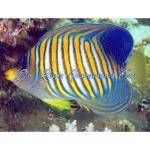
Regal Angelfish (Red Sea)(Yellow Belly)
Price range: $399.99 through $469.99
Pygoplites diacanthus
| Care Level | Moderate to High |
| Temperament | Docile to semi-aggressive |
| Color Form | Red Sea yellow belly, white and orange vertical stripes edged in blues and blacks, with a distinctive bright yellow to orange breast and belly |
| Diet | Omnivore |
| Reef Compatible | With Caution |
| Water Conditions | 72–82°F (22–28°C), Sg 1.020–1.025, pH: 8.1–8.4 |
| Max Size | 10″ |
| Family | Pomacanthidae |
| Minimum Tank Size | 125 gallons |
Live Arrival Guarantee
Approximate Purchase Size: Medium: 2.5-3.75″; Large: 4-5″; XL: 5-6″
Regal Angelfish (Red Sea)(Yellow Belly)
Also known as the Royal Angelfish, Royal Empress Angelfish
The Regal Angelfish is one of the most stunning and iconic marine species in the hobby, known for its vivid vertical stripes of blue, white, yellow, and orange edged in black, along with its flowing fins and regal presence. Native to the Red Sea and Indian Ocean regions, the Red Sea yellow belly variant (Pygoplites diacanthus flavescens) displays a distinctive bright yellow to orange breast, the most sought-after color morph among Regal Angelfish. Red Sea specimens are prized not only for their vibrant coloration but also for their superior hardiness and adaptability compared to Indo-Pacific grey belly variants, largely due to exceptional collection and handling practices in the region.
Key Features
- Scientific Name: Pygoplites diacanthus (Red Sea/Indian Ocean subspecies)
- Common Names: Regal Angelfish, Royal Angelfish, Royal Empress Angelfish
- Adult Size: Up to 10 inches (25 cm); typically 9-10 inches in captivity
- Lifespan: 10–15 years with proper care; can live 14+ years in optimal conditions
- Temperament: Docile to semi-aggressive; shy and cautious by nature
- Reef Compatibility: With caution – generally considered one of the more reef-safe large angelfish species, but may nip at LPS corals, soft corals, and clam mantles
- Minimum Tank Size: 125–180 gallons (minimum); larger tanks recommended
- Experience Level: Intermediate to advanced
Habitat & Tank Requirements
- Tank Environment: Requires a mature, well-established tank (6+ months old) with abundant live rock, plenty of caves, rocky crevices, and hiding places. A reef-type aquarium with rocky reef structure is highly preferred, as it provides security and natural grazing opportunities. Regal Angelfish are naturally cautious and need secure hiding spots to feel comfortable.
- Water Parameters:
- Temperature: 72–82°F (22–28°C); mature specimens can tolerate 76–78°F
- Salinity: 1.020–1.025
- pH: 8.1–8.4 (minimum 8.1 required)
- Nitrates: Keep as close to zero as possible
- Aquascape: Extensive live rock formations with caves and ledges are essential. Provide ample swimming space while maintaining structural complexity. The tank must be pristine with stable water parameters – this species is extremely sensitive to parameter swings and immature aquariums.
- Compatibility: Not aggressive fish and do not fare well with larger, more aggressive species or boisterous feeders. Should be introduced first to establish territory. Can be territorial with other large angelfish (Pomacanthus, Holacanthus species) and should not be housed with them. Even aggressive Centropyge species may harass small Regals. Compatible with peaceful, similar-sized fish. Do not house multiple Regals together, even opposite sexes. Best kept in low-traffic, quiet areas with subdued lighting initially.
Diet & Feeding
Regal Angelfish are Omnivores with specific dietary requirements focused on sponges and tunicates in the wild:
- Natural Diet: Primarily sponges and tunicates, supplemented with jellyfish, filamentous algae, and benthic invertebrates
- Captive Diet:
- Meaty Foods: Frozen Mysis shrimp, enriched brine shrimp (especially spirulina brine shrimp), chopped clams, mussels, scallops, fresh shrimp, krill, squid, bloodworms
- Plant Matter: Spirulina, marine algae, nori sheets (red seaweed), Pro-V gelatin food (frozen seaweed and vegetables in gelatin base)
- Specialty Items: High-quality marine angelfish preparations containing sponge matter (now available from several manufacturers), angelfish-specific frozen foods
- Premium Pellets: Easy Reefs DKI pellets, Masstick, TDO pellets (for well-acclimated specimens)
- Feeding Schedule: Feed small portions 3–5 times daily, especially for juveniles and new arrivals. Multiple small feedings are critical – this species is not an aggressive, competitive eater and will be outcompeted by planktivores and fast feeders. Use feeding clips for nori and gelatin foods. Well-fed Regals are less likely to nip at corals and invertebrates.
- Feeding Technique: Since Regals graze on immobile invertebrates (sponges and sea squirts) in the wild, offering food that is stationary rather than floating in the water column can improve feeding success. Use feeding clips or place food on rocks.
Notes & Considerations
- Appearance Details: The Red Sea yellow belly variant features white and orange vertical stripes edged in blues and blacks, with a distinctive bright yellow to orange breast and belly—the most vibrant coloration among all Regal Angelfish variants. Red Sea specimens typically display a “cleaner” face with darker, more defined blue markings and slightly straighter vertical stripes compared to Indonesian variants. Dorsal and anal fins are striped in blue and orange. The rear portion of the dorsal fin is black with blue spots or scribbles. The caudal fin is completely yellow, and all fins are edged in brilliant neon blue. Juveniles are more orange than yellow and display a distinct false eyespot (ocellus) on the soft dorsal fin, which fades as they mature.
- Subspecies Differences: The Red Sea and Indian Ocean yellow belly form (P. d. flavescens) displays a bright yellow to orange belly and breast, while the Indo-Pacific grey belly form (P. d. diacanthus) from Bali and Indonesia has a blue-grey chest. Red Sea and Indian Ocean (particularly Maldives) variants are more sought-after due to their vibrant coloration and superior adaptability to captivity.
- Collection Advantage: Red Sea specimens have an excellent reputation for hardiness compared to Pacific variants. This has less to do with the fish itself and more to do with superior collection, handling, and shipping methods employed in the Red Sea region. Red Sea fish are harvested and handled with exceptional care, resulting in specimens that are good shippers and normally adapt more easily to home aquariums. If a supplier offers a variety of Red Sea fish (Purple Tangs, Sohal Tangs, Semicircle Angelfish, etc.) alongside their Regals, it’s more likely to be a genuine Red Sea specimen.
- Behavioral Traits: Naturally cautious and shy – will hide when approached but should not be hovering near the surface, breathing heavily, twitching, or scratching (signs of parasitic/bacterial infection). Once acclimated and associating humans with food, they become more confident. Not competitive feeders – require peaceful tank mates and dedicated feeding time without interruption. May be shy when first introduced but will establish territory as they acclimate.
- Health Screening: Never purchase specimens showing “pinching” in the dorsal musculature (region above and behind the head) – this indicates prolonged starvation, and fish rarely recover. Avoid specimens not swimming normally or that refuse food. Only purchase fish that you’ve observed eating or that come with eating guarantees.
- Reef Considerations: Considered “reef safe” by many as their diet is primarily sponges and does not include corals. However, they may nip at large-polyped stony corals (especially Trachyphyllia), certain soft corals (Xenia, Zoanthus), clam mantles, and coral mucus. Generally safer than most Pomacanthus and Centropyge species with corals. SPS corals typically fare better, though they may take out prized LPS specimens. Keeping the fish well-fed reduces coral-nipping behavior, though this tactic is not foolproof. A “reef safe” Regal can transform into a coral nipper overnight, so the risk is always present. If attempted in reef tanks, use large systems (180+ gallons) where damage to any particular invertebrate is less likely.
- Quarantine Critical: This species almost requires a quarantine period to become accustomed to aquarium conditions and receive medicinal treatment if necessary. A 4-6 week quarantine period is highly recommended. A refugium-style quarantine tank works exceptionally well, providing natural foods and good water quality. Minimum 20-gallon quarantine with hiding places. Maintain a stress-free, low-traffic environment during acclimation. Body flukes are common among angelfish – PraziPro or similar praziquantel-based medications are well-tolerated and may be used as a preventative measure.
- Feeding Critical Period: Getting the fish to quickly start eating prepared foods during quarantine is critical. Be prepared with a large selection of fresh meaty foods (mysid shrimp, clams, bloodworms, etc.) before the fish arrives. Don’t put yourself in the position of having to run out to the LFS or wait for an online order once the fish is already starving.
- Cheek Spines: Angels possess cheek spines along the edge of their gill covers. Exercise caution when handling them and refrain from using a net for capture, as they could become entangled or injured during removal.
- Pattern Variation: Regal Angelfish occasionally display “misbar” aberrant patterns with imperfect or branching stripes, though wild specimens typically have uniform vertical bars.
- Breeding: Royal angelfish reproduce by spawning, usually at dusk or at night. Extremely difficult to breed in captivity. Males and females are visually indistinguishable (not sexually dichromatic). This species is a protogynous hermaphrodite. Found in pairs or small groups in the wild.
- Tank Size for Juveniles: While small juveniles may be raised in smaller aquariums, adults can grow up to 10 inches and need a minimum of 125 gallons with plenty of swimming room. Larger systems (180+ gallons) are preferred.
- Avoid Discounted Fish: Never purchase discounted or “sale” Regal Angelfish, they are typically subpar and unhealthy.
Why Choose a Quarantined Regal Angelfish (Red Sea)?
Our quarantined Regal Angelfish from the Red Sea are acclimated, monitored, and conditioned before being offered for sale. Red Sea specimens are renowned for their superior hardiness and vibrant yellow belly coloration, the most sought-after variant among Regal Angelfish. These fish benefit from exceptional collection and handling practices in the Red Sea region, making them significantly easier to acclimate than Indo-Pacific grey belly variants. We ensure all our Regals are eating high-quality pellets and frozen foods before being offered, and only source from reputable Red Sea suppliers with ethical collection practices. This ensures they arrive healthy, parasite-free, and actively feeding, giving you peace of mind and the best possible chance for long-term success with this spectacular species.
| Service Level |
Quarantined |
|---|---|
| Size |
Medium ,Large ,XL |
You must be logged in to post a review.
Related products
Astraea Snail
Price range: $29.99 through $79.99
Cerith Snail
Price range: $14.99 through $69.99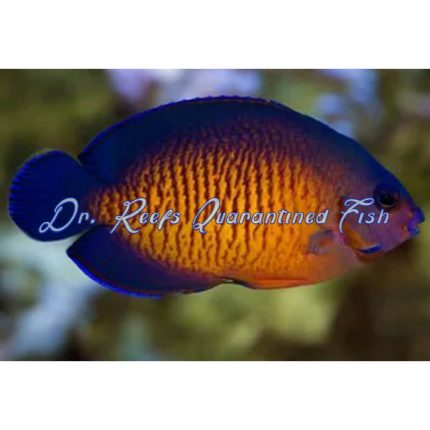
Coral Beauty Angelfish
Price range: $79.99 through $91.99
Mandarin – Blue/Green (Wild Caught)
Price range: $79.99 through $91.99
Margarite Snail
Price range: $11.99 through $54.99
Reviews
There are no reviews yet.