
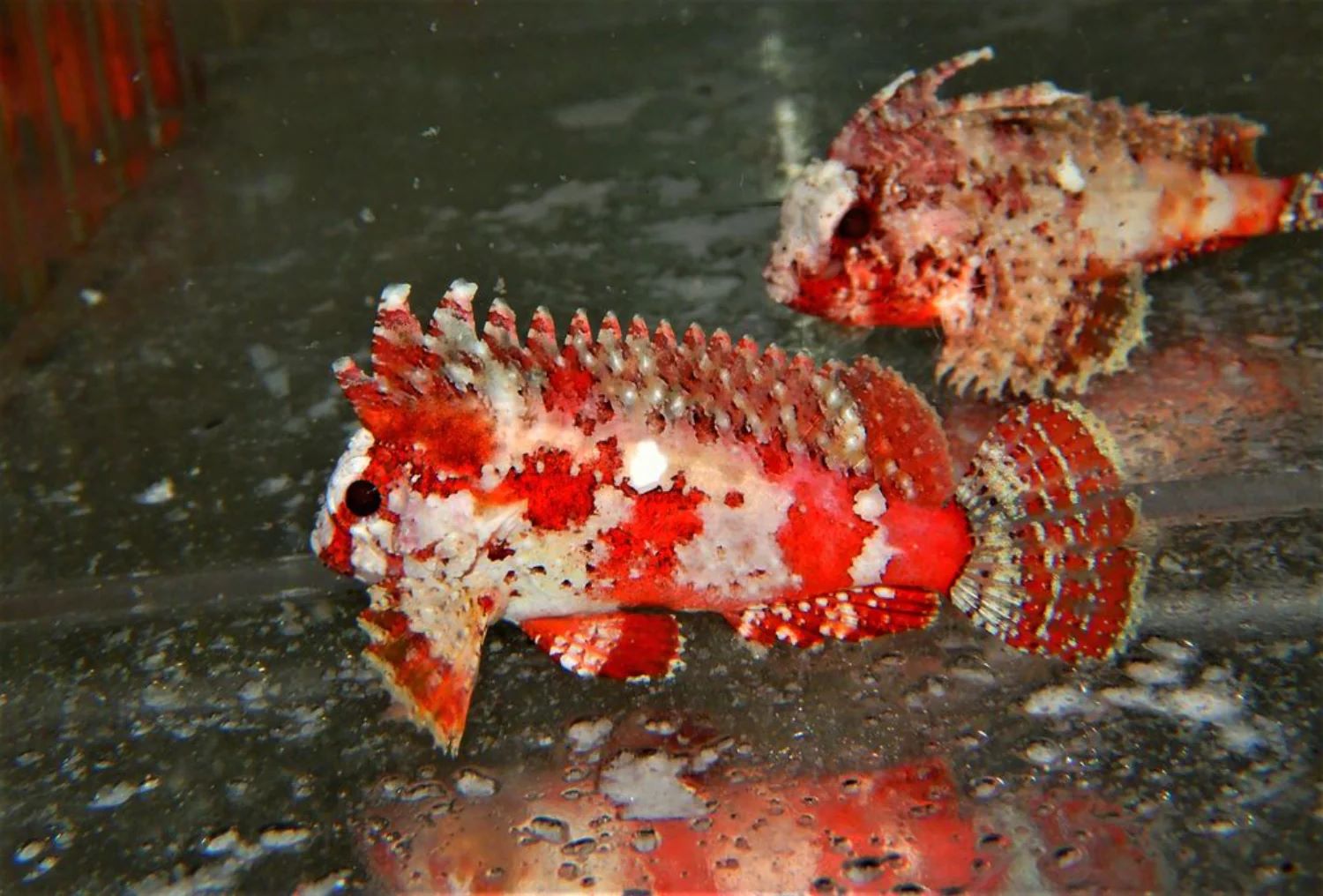
Pygmy Red Rooster Waspfish
$129.99
Hypodytes rubripinnis
| Care Level | Expert |
| Temperament | Ambush predator; peaceful but will eat small fish |
| Color Form | Variable red, brown, orange, and mottled patterns with elaborate rooster-like fin extensions |
| Diet | Carnivore |
| Reef Compatible | Not reef-safe |
| Water Conditions | sg 1.023–1.025, 74–80°F, pH 8.1–8.4 |
| Max Size | 4“ |
| Family | Tetrarogidae |
| Minimum Tank Size | 30 gallons |
Description
Pygmy Red Rooster Waspfish
Also known as the Cockatoo Waspfish or Pygmy Waspfish
The Pygmy Red Rooster Waspfish is an extraordinary and unusual species that brings bizarre appearance and fascinating predatory behavior to marine aquariums. Native to the Indo-Pacific region, from Indonesia to the Philippines and Papua New Guinea, this tiny ambush predator features elaborate fin extensions resembling a rooster’s comb and cryptic coloration for camouflage. With their venomous spines, specialized feeding requirements, and diminutive size, Pygmy Red Rooster Waspfish are challenging additions for expert aquarists seeking rare, unusual species with captivating hunting behaviors.
Key Features
- Scientific Name: Hypodytes rubripinnis
- Common Names: Pygmy Red Rooster Waspfish, Cockatoo Waspfish, Pygmy Waspfish, Rooster Scorpionfish
- Adult Size: 3–4 inches (7–10 cm); commonly 2.5–3.5 inches in aquariums
- Lifespan: 3–5 years with proper care
- Temperament: Ambush predator; will consume fish approaching their size
- Reef Compatibility: Not reef-safe – predatory toward small fish and mobile invertebrates
- Minimum Tank Size: 30 gallons minimum (40+ gallons recommended)
- Experience Level: Expert only – venomous species requiring specialized care
Habitat & Tank Requirements
Natural Habitat: Found on coral reefs, rubble areas, and sandy bottoms at depths of 10–100 feet. Sits motionless on substrate or rocks, relying on camouflage to ambush prey.
Tank Environment:
- Rockwork with perching spots
- Sandy or rubble substrate
- Peaceful environment for hunting
- Moderate to subdued lighting
- Low to moderate water flow
- Secure lid recommended
- Compatible with FOWLR systems
Water Parameters:
- Temperature: 74–80°F (23–27°C)
- Salinity: 1.023–1.025 specific gravity
- pH: 8.1–8.4
- Ammonia/Nitrite: 0 ppm
- Nitrate: <20 ppm
- Alkalinity: 8–12 dKH
Diet & Feeding
Recommended Foods:
- Live feeder fish, live grass shrimp (most readily accepted)
- Fresh/frozen fish, shrimp (may require training)
- Live ghost shrimp, live mollies (quarantined)
- Extremely difficult to wean onto frozen foods
- Most specimens require live foods indefinitely
Feeding Schedule:
- Feed 2–3 times weekly once feeding established
- May refuse food for extended periods initially
- Patient feeding attempts essential
- Use feeding stick to present food near mouth
- Remove uneaten live food promptly
Behavior & Compatibility
Tank Mates:
- Compatible with: Fish too large to swallow (6+ inches), non-competitive species, other scorpionfish (with caution in larger tanks)
- Caution with: Fish 2–4 inches (potential prey depending on waspfish size)
- Avoid: ALL small fish (under 2 inches), ornamental shrimp, small crabs, aggressive species that may harass, fast competitive feeders
Social Behavior:
- Ambush predator that sits motionless
- Will consume any fish that fits in mouth
- Extremely cryptic; blends with surroundings
- Best kept as single specimen
- Primarily nocturnal but hunts opportunistically
- Fascinating stalking and strike behavior
- Can swallow surprisingly large prey
Venomous Warning: CRITICAL: Waspfish possess venomous spines that can inflict extremely painful stings. Use extreme caution during maintenance. Never handle it directly. Stings cause intense pain, swelling, and potential allergic reactions. Keep hands away from fish, use tools for tank work, inform others of venomous species presence, and have emergency medical contact information ready. Seek medical attention if stung.
Reef Compatibility: Not reef-safe; will consume small fish and mobile invertebrates. Generally ignores corals but may damage them by sitting on fronds. Best suited for fish-only with live rock (FOWLR) or species-specific setups.
Color & Development
Coloration: Highly variable cryptic coloration from red, brown, orange, white, to mottled patterns; elaborate fin extensions on head resembling rooster’s comb; body may show striping, spots, or mottling; can change color slightly to match surroundings; absolutely bizarre and unique appearance.
Color Intensity:
- Coloration varies dramatically between individuals
- Pattern helps with camouflage against substrate
- Can adjust shade slightly based on background
- Color remains variable throughout life
- Elaborate head extensions characteristic of species
Size & Growth:
- Specimens typically available at 2–3 inches
- Very slow growth rate
- Often near adult size when collected
- Remains small throughout life
Why Choose a Quarantined Pygmy Red Rooster Waspfish?
A properly quarantined Pygmy Red Rooster Waspfish is a specimen that has been observed and assessed for critical feeding behavior. Our quarantine protocol includes 6–8 weeks minimum observation (extended for feeding assessment), preventative parasite treatment, feeding establishment verification with live foods (most critical factor), safe handling protocols, and stress reduction procedures.
Additional information
| Service Level | Quarantined |
|---|
Reviews (0)
You must be logged in to post a review.
Shipping & Delivery
Reviews
There are no reviews yet.