

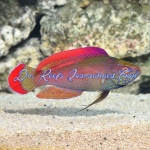
Purple Masked Angelfish (Captive Bred)
Original price was: $239.99.$199.99Current price is: $199.99.
Centropyge venusta
| Care Level | Intermediate to Advanced |
| Temperament | Semi-aggressive |
| Color Form | White to light lavender body with purple face and fin edges |
| Diet | Omnivore |
| Reef Compatible | Not reef-safe |
| Water Conditions | sg 1.023–1.025, 72–78°F, pH 8.1–8.4, dKH 8–12 |
| Max Size | 10″ |
| Family | Pomacanthidae |
| Minimum Tank Size | 70 gallons |
7-Day Guarantee
Purple Masked Angelfish (Captive Bred)
Also known as the Masked Angelfish or Personifer Angelfish
The captive-bred Purple Masked Angelfish represents the pinnacle of marine aquaculture achievement and aquarium rarity. This extraordinarily beautiful species features a pearlescent white body with vibrant purple facial markings and fin edges, creating an ethereal, almost otherworldly appearance. Found naturally only in the remote Northwestern Hawaiian Islands at extreme depths, wild specimens are nearly impossible to obtain and prohibitively expensive. Captive breeding has made this ultimate collector’s species accessible while eliminating deep-water collection challenges and supporting conservation of this rare population.
Key Features
- Scientific Name: Centropyge venusta
- Common Names: Purple Masked Angelfish, Masked Angelfish, Personifer Angelfish, Personatus Angelfish
- Adult Size: Up to 8–10 inches
- Lifespan: 12–20+ years with proper care (potentially longer than wild specimens)
- Temperament: Semi-aggressive; moderately territorial
- Reef Compatibility: Not reef-safe – will nip at corals, clam mantles, and sessile invertebrates
- Minimum Tank Size: 70+ gallons preferred
- Experience Level: Intermediate to advanced
Habitat & Tank Requirements
- Tank Environment: Provide extensive rockwork with caves, overhangs, and hiding spots. While captive-bred Purple Masked Angels are bolder than their deep-water wild counterparts, they still appreciate secure territories and sheltered areas.
- Water Parameters:
- Temperature: 72–78°F (22–26°C) – captive-bred specimens adapt to normal reef temperatures
- Salinity: 1.023–1.025
- pH: 8.1–8.4
- Ammonia/Nitrite: 0 ppm
- Nitrate: <20 ppm
- dKH: 8–12
- Aquascape: Substantial live rock formations with multiple caves and swimming routes. Rockwork should provide both security and open areas for patrolling behavior.
- Compatibility: Can coexist with semi-aggressive to moderately aggressive tank mates including tangs, large wrasses, groupers, and other robust fish. Best kept as the only large angelfish, though may tolerate peaceful dwarf angels in very large systems. Avoid housing with overly aggressive species (large triggers, lionfish) or very peaceful fish that may be intimidated. Generally less aggressive than species like Emperors or Passers but more territorial than Genicanthus species.
Diet & Feeding
Captive-bred Purple Masked Angelfish are trained on prepared foods from an early age, eliminating feeding challenges:
- Meaty Foods: Mysis shrimp, vitamin-enriched brine shrimp, chopped clams, mussels, squid, krill, finely chopped seafood, quality marine pellets
- Plant Matter: Marine algae, nori sheets, spirulina flakes and pellets, blanched vegetables
- Specialty Items: High-quality angelfish preparations containing sponge material (essential for long-term health and maintaining stunning coloration)
- Commercial Foods: Premium angelfish pellets, frozen angel and butterfly formulas
- Prepared Food Acceptance: Captive-bred specimens readily accept all types of frozen and dry prepared foods from introduction—a critical advantage
- Feeding Schedule: Feed 2–3 times daily in moderate to generous portions. Consistent varied feeding maintains the spectacular pearlescent coloration and purple highlights.
Notes & Considerations
- Extreme Rarity & Value: Wild Purple Masked Angelfish are among the rarest and most expensive marine aquarium fish in existence, historically commanding prices of $20,000–$30,000+ when available (which is almost never). Found only in the remote Northwestern Hawaiian Islands (Midway Atoll region) at depths of 150–600+ feet, wild collection is exceptionally difficult, dangerous, and now essentially impossible due to protected status. Captive breeding represents the only viable way for aquarists to obtain this legendary species.
- Captive-Bred Revolution: The successful captive breeding of Purple Masked Angelfish represents one of the most significant achievements in marine ornamental aquaculture history. This species was considered the “holy grail” of marine angelfish for decades—seen in only a handful of public aquariums and elite private collections. Captive breeding has transformed it from an impossible dream into an attainable (though still premium) reality.
- Behavior: Captive-bred Purple Masked Angels are confident, active, and visible, dramatically different from the reclusive behavior expected from deep-water wild specimens. They swim openly, explore their environment, and display normal angelfish behaviors without the extreme shyness that would affect wild-caught individuals (if any were available). Once established, they become personable and interactive.
- Captive-Bred Advantages:
- Eliminates Impossible Collection: No barotrauma, decompression injuries, or deep-water collection trauma—wild specimens face severe mortality from extreme depth collection
- Superior Hardiness: Raised in normal aquarium conditions, making them far more resilient than wild fish adapted to deep, cool waters
- Immediate Feeding: Pre-trained on all prepared foods; no feeding difficulties
- Temperature Tolerance: Adapted to standard reef temperatures (74–78°F) rather than requiring cooler deep-water conditions
- Bold Behavior: Actually visible and active rather than perpetually hiding
- Disease Resistance: Raised in controlled, parasite-free environments with strong immune systems
- Accessibility: Makes this legendary species actually obtainable rather than effectively impossible
- Ethical & Legal: Eliminates deep-water collection concerns and respects protected Northwestern Hawaiian Islands status
- Consistent Quality: Raised with optimal nutrition, resulting in exceptional coloration and robust health
- Longevity: Expected to outlive wild specimens significantly due to absence of collection trauma
- Conservation Impact: Reduces any pressure on extremely limited wild populations
- Coloration: Displays breathtaking pearlescent white to pale lavender body with vibrant purple facial mask, purple fin edging, and subtle iridescent highlights. The coloration is ethereal and unique among marine angelfish, truly spectacular. Well-fed captive-bred specimens maintain exceptional color intensity. The purple markings intensify with age and optimal care.
- Acclimation: Straightforward compared to the theoretical nightmare of acclimating a deep-water wild specimen. Standard drip acclimation is sufficient. Captive-bred Purple Masked Angels typically begin feeding and exploring within hours, displaying minimal stress.
- Coral Compatibility: Not reef-safe. Will nip at soft corals, LPS, SPS, zoanthids, and clam mantles. This species should be housed in fish-only or FOWLR (Fish Only With Live Rock) systems. The spectacular appearance makes them worthy centerpieces for non-reef setups.
- Gender: Sexual dimorphism is minimal externally. Purple Masked Angels are protogynous hermaphrodites. Successful captive breeding has been achieved by specialized marine fish breeders—a groundbreaking accomplishment that makes this species available at all.
- Comparison to Similar Species: Sometimes compared to other Chaetodontoplus species, but the purple facial markings and pearlescent body coloration are absolutely unique. No other angelfish looks like a Purple Masked Angel, it’s instantly recognizable and unmistakable.
- Light Sensitivity: Unlike wild deep-water specimens that would require dim lighting, captive-bred fish adapt well to moderate reef lighting. They remain visible and active under normal aquarium conditions.
- Availability & Pricing: Captive-bred Purple Masked Angelfish remain among the most expensive aquacultured marine fish due to breeding difficulty and limited production. However, pricing is a fraction of what wild specimens commanded (when available at all), making them accessible to serious collectors rather than only institutional or ultra-high-end private aquariums. Expect significant investment, but far less than the five-figure prices of wild fish.
- Collector’s Status: Owning a captive-bred Purple Masked Angelfish represents the pinnacle of marine angelfish collecting. This species carries legendary status in the hobby, and captive-bred specimens allow dedicated aquarists to keep a fish that was previously available only to the wealthiest collectors or major public aquariums.
- Social Behavior: Can sometimes be kept in pairs if raised together and introduced simultaneously to very large systems (250+ gallons), though success varies. Most are kept as solitary specimens to ensure optimal display and reduce territorial conflicts.
- Tank Maturity: Best added to established systems (3–6+ months old) with stable parameters, though captive-bred specimens are far more tolerant than wild fish would be.
- Disease Resistance: Excellent disease resistance compared to wild deep-water fish. Standard quarantine protocols are recommended as best practice, though captive-bred specimens are generally robust.
- Growth Rate: Moderate growth rate. Juveniles may take 2–3 years to reach full adult size and peak coloration intensity with proper nutrition.
- Historical Significance: For decades, the Purple Masked Angelfish was the ultimate unattainable species, featured in books and documentaries but seen by virtually no one in person. Captive breeding has rewritten this narrative, making one of the ocean’s rarest and most beautiful fish actually keepable. This represents a triumph of aquaculture science.
Why Choose a Captive-Bred & Quarantined Purple Masked Angelfish?
Our captive-bred Purple Masked Angelfish are a breakthrough in marine aquaculture. Raised from larvae and carefully tested, these fish eat prepared foods easily, are bold, healthy, and have stunning colors. They were once impossible to own, only available to the very wealthy or big institutions. Now, thanks to breeding efforts, anyone can get this beautiful and rare fish. Choosing captive-bred helps protect wild populations and supports sustainability. These angelfish are a true masterpiece, a symbol of beauty and innovation in the hobby.
| Service Level | Quarantined |
|---|
You must be logged in to post a review.
Related products
Astraea Snail
Price range: $29.99 through $79.99
Chalk Bass (Wild Caught)
Price range: $49.99 through $57.99
Mandarin – Blue/Green (Wild Caught)
Price range: $79.99 through $91.99
Nassarius Snail Large
Price range: $19.99 through $69.99
Nerite Snail
Price range: $14.99 through $69.99
Reviews
There are no reviews yet.