
Majestic Angelfish
Price range: $299.99 through $459.99
Pomacanthus navarchus
| Care Level | Moderate to high |
| Temperament | Semi-aggressive |
| Color Form | Blue, Yellow, Orange, Black |
| Diet | Omnivore |
| Reef Compatible | Not reef-safe |
| Water Conditions | 72–78°F (22–26°C) Sg 1.023–1.025, pH: 8.1–8.4, dKH: 8–12 |
| Max Size | 12″ |
| Family | Pomacanthidae |
| Minimum Tank Size | 180 gallons |
3-Day Guarantee
Approximate Purchase Size: Small: 1-2.5″; Medium: 2.5-3.75″; Large: 4-5″
Majestic Angelfish
Also known as the Blue Girdled Angelfish or Euxiphipops navarchus
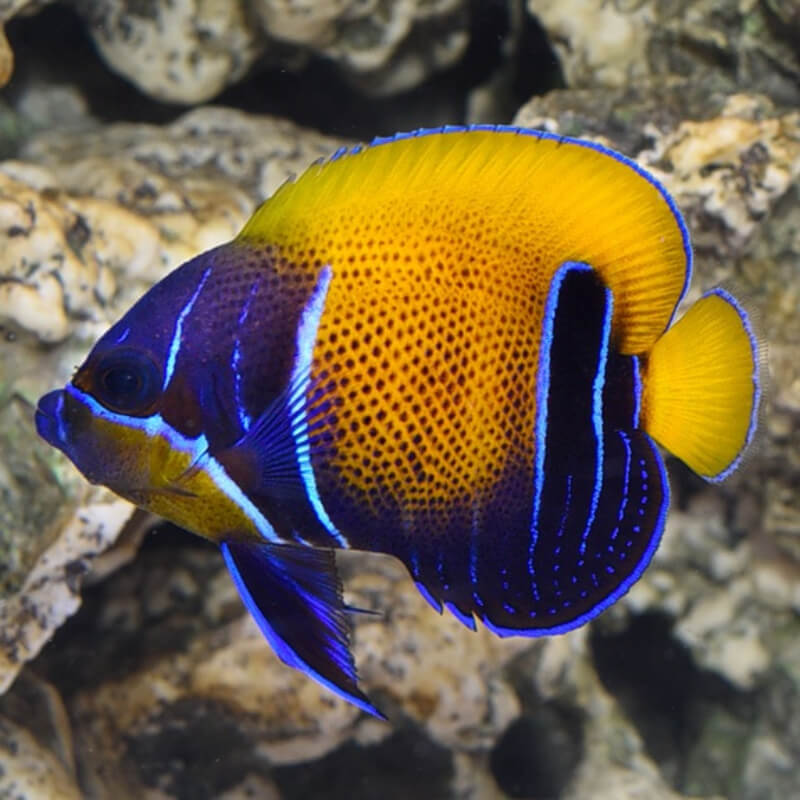
The Majestic Angelfish is one of the most stunning and sought-after marine species in the aquarium hobby, featuring a dramatic color palette of deep blue to purple with brilliant yellow-orange markings across the face, tail, and posterior body. Native to the Indo-Pacific region, this spectacular angelfish lives up to its regal name with bold contrasting colors and an impressive presence that makes it a true showpiece in large marine aquariums.
Key Features
- Scientific Name: Pomacanthus navarchus (formerly Euxiphipops navarchus)
- Common Names: Majestic Angelfish, Blue Girdled Angelfish, Navarchus Angelfish
- Adult Size: Up to 10–12 inches
- Lifespan: 15–20+ years with proper care
- Temperament: Semi-aggressive; can be shy initially but territorial once established
- Reef Compatibility: Not reef-safe – will nip at corals, clams, and sessile invertebrates
- Minimum Tank Size: 180 gallons (minimum); 220+ gallons preferred
- Experience Level: Advanced
Habitat & Tank Requirements
- Tank Environment: Provide extensive rockwork with multiple caves, overhangs, and hiding spots. Majestic Angels can be initially shy and require secure territories. Include both sheltered areas and open swimming space for this moderately active species.
- Water Parameters:
- Temperature: 72–78°F (22–26°C)
- Salinity: 1.023–1.025
- pH: 8.1–8.4
- Ammonia/Nitrite: 0 ppm
- Nitrate: <20 ppm
- dKH: 8–12
- Aquascape: Dense live rock formations are essential for grazing on natural algae, providing shelter, and establishing territory. Rockwork should be stable and create various hiding spots to reduce stress.
- Compatibility: Best kept as the only large angelfish in the system. Can coexist with semi-aggressive tank mates such as tangs, large wrasses, triggers (cautiously), and groupers. Avoid housing with other angels or overly aggressive species that may stress this initially timid fish. Should be added after establishing other peaceful tank mates but before highly aggressive species.
Diet & Feeding
Majestic Angelfish are omnivores requiring a rich, varied diet for optimal health and coloration:
- Meaty Foods: Mysis shrimp, vitamin-enriched brine shrimp, chopped clams, mussels, squid, scallops, krill, prawns, marine fish flesh
- Plant Matter: Marine algae, nori sheets, spirulina flakes and pellets, fresh blanched vegetables (zucchini, broccoli)
- Specialty Items: High-quality angelfish preparations containing sponge material (absolutely essential for maintaining health, preventing HLLE, and preserving vibrant coloration)
- Commercial Foods: Premium angelfish pellets, frozen angel and butterfly formulas
- Feeding Schedule: Feed 2–3 times daily in moderate portions. Consistent, varied feeding is crucial for bringing out the spectacular coloration this species is known for and maintaining long-term health.
Notes & Considerations
- Behavior: Majestic Angels often exhibit shy, reclusive behavior initially, spending considerable time hiding in rockwork. With patience and consistent care, they typically become bolder and more confident, though they may remain more reserved than other large angels. Once established, they can display territorial behavior, especially toward similarly shaped or colored fish.
- Acclimation Challenges: Widely considered one of the more delicate large angelfish species, particularly during acclimation and the first few weeks in captivity. Requires:
- Pristine water quality with stable parameters
- Stress-free introduction without aggressive tank mates
- Patient approach to feeding—may take several days to begin eating
- Secure hiding spots to reduce anxiety
- Dim lighting initially can help reduce stress
- Feeding Difficulties: Some individuals can be finicky eaters initially, refusing prepared foods. Offer live foods (live brine shrimp, black worms) if necessary to initiate feeding response, then gradually transition to frozen and prepared foods. Once feeding regularly, they typically become eager eaters.
- Coral Compatibility: Not reef-safe. Will nip at soft corals, LPS, SPS, zoanthids, clam mantles, and tube worms. Suitable only for fish-only or FOWLR (Fish Only With Live Rock) systems.
- Juvenile vs. Adult Coloration: Juveniles display similar but slightly different patterns with more extensive blue coloration and less defined yellow regions. Adult coloration intensifies with age and proper nutrition, with the yellow-orange becoming more vibrant.
- Geographic Variations: Some regional color variations exist, with specimens from different areas showing slightly different intensities of blue and yellow coloration.
- Gender: Sexual dimorphism is not readily apparent. Majestic Angels are protogynous hermaphrodites. Captive breeding is extremely rare and not commercially viable.
- Disease Susceptibility: Particularly prone to:
- Marine ich (Cryptocaryon) and velvet (Amyloodinium) during acclimation stress
- HLLE (Head and Lateral Line Erosion) if diet lacks proper nutrition or water quality declines
- Bacterial infections if stressed or in poor conditions
- Quarantine is strongly recommended for this sensitive species
- Water Quality Demands: More sensitive to declining water quality than many other large angels. Requires excellent filtration, stable parameters, and regular maintenance. Ammonia and nitrite spikes can be particularly harmful.
- Tank Maturity: Best added to mature, established systems (6+ months old) with stable biological filtration and natural food sources on live rock.
- Long-term Success: While challenging initially, Majestic Angels that successfully acclimate and begin feeding well often thrive for many years, developing into magnificent specimens that justify their premium status and demanding care requirements.
Why Choose a Quarantined Majestic Angelfish?
Our quarantined Majestic Angelfish have undergone extensive conditioning and health screening to overcome this species’ notorious acclimation challenges. Each specimen is feeding eagerly on varied prepared foods, has been treated preventatively for parasites, and has demonstrated stability in aquarium conditions before being offered for sale. This comprehensive quarantine period dramatically increases success rates with this delicate species, providing you with a healthy, established specimen displaying peak coloration and reducing the stress and risk associated with newly imported Majestic Angels. Given this species’ sensitivity, proper quarantine is not just recommended, it’s essential for long-term success.
| Service Level | Quarantined |
|---|---|
| Size | Small, Medium, Large, XL |
You must be logged in to post a review.
Related products
Astraea Snail
Price range: $29.99 through $79.99
Blue Leg Hermit Crabs
Price range: $19.99 through $74.99
Chromis
Price range: $19.99 through $39.99
Nerite Snail
Price range: $14.99 through $69.99
Pajama Cardinal (Captive Bred)
$39.99
Reviews
There are no reviews yet.