
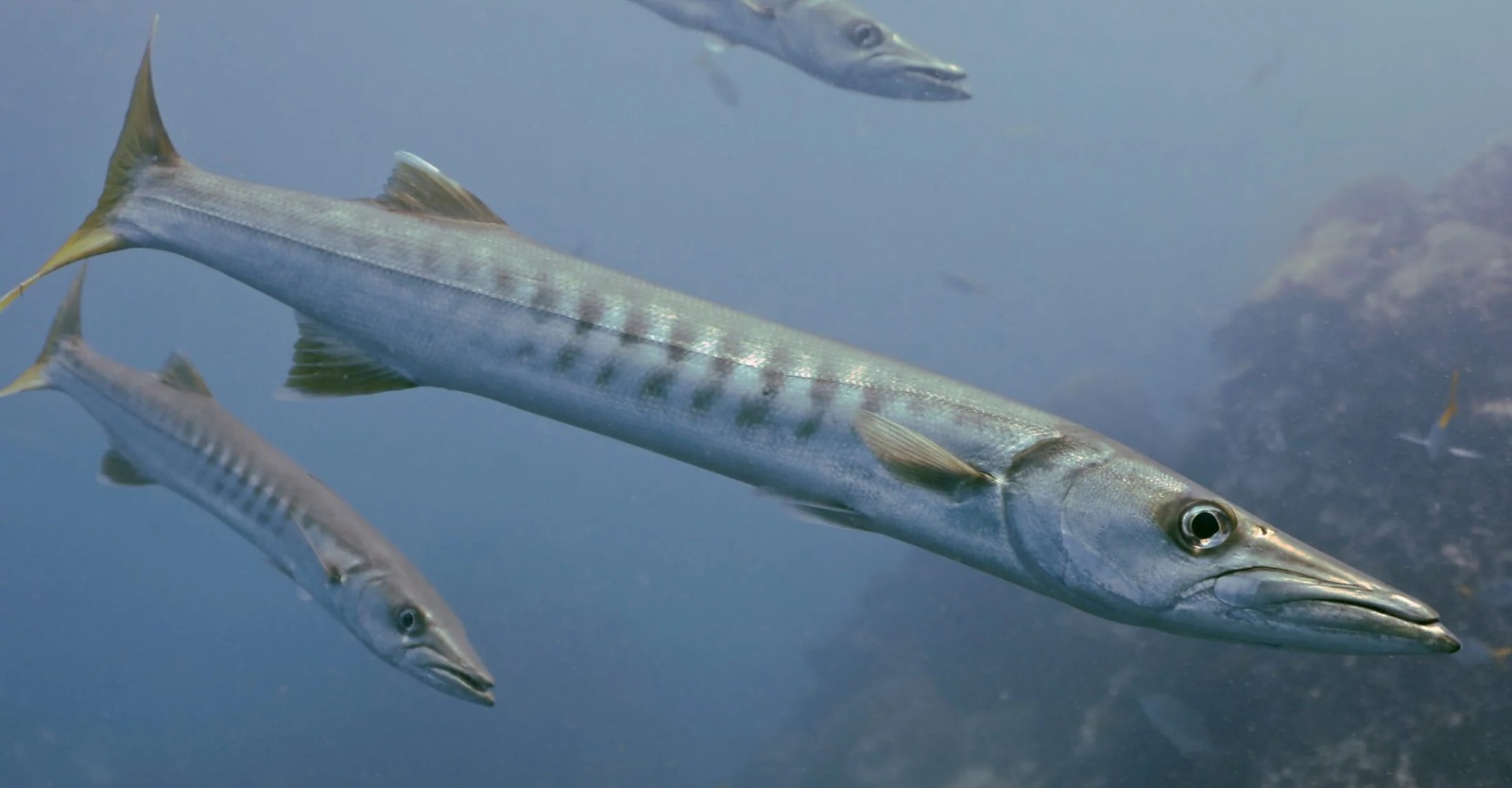
Great Barracuda
Price range: $299.99 through $344.99
Sphyraena barracuda
| Care Level | Expert |
| Temperament | Highly aggressive and predatory |
| Color Form | Silver to gray body with dark vertical bars and metallic sheen |
| Diet | Carnivore |
| Reef Compatible | Not reef-safe |
| Water Conditions | sg 1.023–1.026, 72–82°F, pH 8.1–8.4 |
| Max Size | 60“ |
| Family | Sphyraenidae |
| Minimum Tank Size | 300 gallons |
Great Barracuda
Also known as the Giant Barracuda or Common Barracuda
The Great Barracuda is a powerful, predatory fish species that commands attention in any large aquarium. Native to tropical and subtropical waters worldwide, including the Atlantic, Pacific, and Indian Oceans, this sleek hunter features an elongated, torpedo-shaped body with distinctive dark barring and a formidable set of razor-sharp teeth. While their predatory nature and substantial size make them suitable only for experienced aquarists with very large systems, they offer unmatched presence and fascinating behaviors for those equipped to house them properly.
Key Features
Scientific Name: Sphyraena barracuda
Common Names: Great Barracuda, Giant Barracuda, Common Barracuda
Adult Size: 24–60 inches (60–150 cm); commonly 36–48 inches in aquariums
Lifespan: 10–15+ years with proper care
Temperament: Highly aggressive and predatory; will consume fish smaller than half their body length
Reef Compatibility: Not reef-safe – predatory toward fish and potentially disruptive to invertebrates
Minimum Tank Size: 300 gallons minimum (500+ gallons strongly recommended for adults)
Experience Level: Expert only – requires specialized care and substantial resources
Habitat & Tank Requirements
Natural Habitat: Found in open ocean waters, coastal reefs, lagoons, and mangrove areas at depths ranging from surface waters to 300+ feet. Juveniles inhabit shallow coastal waters while adults patrol deeper reef edges and open water.
Tank Environment:
- Spacious open swimming areas are essential
- Minimal decorations; rockwork should be secured to tank walls
- Strong, directional water flow mimicking ocean currents
- Extremely secure, heavy lid with no gaps (barracudas are powerful jumpers)
- Long, rectangular tank shape preferred over tall or cube designs
- Open water column for cruising behavior
Water Parameters:
- Temperature: 72–82°F (22–28°C)
- Salinity: 1.023–1.026 specific gravity
- pH: 8.1–8.4
- Ammonia/Nitrite: 0 ppm
- Nitrate: <20 ppm (excellent filtration required)
- Alkalinity: 8–12 dKH
Essential Equipment:
- Oversized protein skimmer rated for 2x tank volume
- Powerful mechanical and biological filtration
- UV sterilizer recommended
- Chiller may be necessary in warm climates
- Regular large water changes (20–30% weekly minimum)
- Heavy-duty lid with locking mechanism
Diet & Feeding
Great Barracudas are obligate carnivores requiring substantial protein intake and live or fresh foods for optimal health.
Recommended Foods:
- Fresh/Frozen Fish: Whole silversides, mackerel, sardines, squid, shrimp (primary diet)
- Live Foods: Live feeder fish (quarantined), live shrimp (occasional)
- Prepared Foods: Large marine carnivore pellets (supplementary once established)
- Whole Prey: Whole fish including bones for calcium and nutrients
- Enrichment: Vitamin-supplemented foods, omega-3 enriched preparations
Feeding Schedule:
- Feed 3–4 times weekly for adults
- Juveniles require daily feeding
- Offer appropriately sized whole foods (1–2 inches for juveniles, 4–6 inches for adults)
- Fast one day per week to prevent obesity
- Remove uneaten food within 15–20 minutes
Behavior & Compatibility
Temperament:
- Highly predatory with lightning-fast strike speed
- Territorial toward similar-shaped fish
- Will hunt and consume tankmates smaller than half their length
- Curious and intelligent; observes movement outside tank
- May become aggressive during feeding time
Tank Mates:
- Compatible with: Large tangs (12+ inches), large angelfish, large groupers, lionfish (similar size), large triggerfish, large pufferfish
- Caution with: Any fish small enough to swallow, slow-moving species, long-finned fish
- Avoid: All small fish, invertebrates as food items, multiple barracudas unless tank is 1000+ gallons, aggressive species that may damage fins
Social Behavior:
- Best kept as solitary specimens in home aquariums
- Juveniles may tolerate conspecifics temporarily
- Adults are typically aggressive toward other barracudas
- Establishing a feeding routine reduces aggression
Reef Compatibility:
- Not reef-safe due to predatory nature and large size
- Will consume ornamental shrimp, crabs, and small fish
- May knock over unsecured corals and decorations
- Best suited for fish-only with live rock (FOWLR) systems
Acclimation & Care Tips
Initial Acclimation:
- Use extended drip acclimation over 90–120 minutes
- Float bag for temperature equalization (20–30 minutes)
- Keep lights off for 24–48 hours after introduction
- Minimize sudden movements near tank during acclimation period
- Have appropriately sized food available immediately
Health Considerations:
- Susceptible to marine ich (Cryptocaryon), marine velvet (Amyloodinium), and bacterial infections when stressed
- Mandatory quarantine for 4–6 weeks before adding to display tank
- Watch for rapid breathing, lethargy, loss of appetite, or cloudy eyes
- Prone to jumping when startled or chasing prey
- May injure mouth on tank walls during feeding frenzies
Signs of a Healthy Specimen:
- Active, alert swimming with smooth movements
- Clear, bright eyes with focused gaze
- Intact teeth with no broken or missing fangs
- Streamlined body with no visible injuries
- Strong feeding response
- Even, rhythmic gill movement
- Sleek appearance with vibrant silver coloration
Color & Development
Coloration Characteristics:
- Body: Brilliant silver-gray with metallic sheen
- Barring: Dark gray to black vertical bars or blotches along sides (18–23 bars)
- Underside: White to pale silver
- Fins: Dusky gray with darker edges
- Jaw: Prominent lower jaw with visible teeth even when mouth closed
Color Intensity:
- High-protein diet maintains metallic sheen
- Stress causes temporary darkening or fading
- Poor water quality dulls coloration
- Proper lighting enhances natural silver brilliance
Size & Growth:
- Juveniles typically available at 6–12 inches
- Rapid growth rate: 6–12 inches annually when well-fed
- Reach 24–36 inches within 2–3 years in aquariums
- Maximum size in captivity typically 48–60 inches
- Growth rate slows significantly after 36 inches
Hunting & Predatory Behavior
Natural Hunting Style:
- Ambush predator with explosive acceleration
- Uses speed rather than stealth for prey capture
- Excellent vision allows tracking of fast-moving prey
- Typically cruises slowly then strikes with sudden bursts
- May follow movement outside tank with intense focus
Feeding Behavior:
- Strikes prey with sideways head slashing motion
- Sharp teeth can inflict serious wounds
- Excitement during feeding; use feeding stick or tongs
- Never hand-feed barracudas
- May initially refuse prepared foods; patience required during transition
Why Choose a Quarantined Great Barracuda?
A properly quarantined Great Barracuda is a healthier, less stressed specimen that has been observed, treated, and conditioned for aquarium life. Our quarantine protocol includes extended health observation (4–6 weeks minimum), preventative parasite treatment, dietary conditioning to accept frozen and prepared foods, temperament assessment to ensure manageable aggression levels, and proper acclimation to human presence and tank environments.
This provides you with confidence that your barracuda has been professionally evaluated and prepared for the unique demands of home aquarium life. These magnificent predators represent the ultimate challenge for expert aquarists, combining power, intelligence, and striking appearance in a species that demands respect, substantial resources, and unwavering commitment to their specialized care requirements.
| Service Level | Quarantined |
|---|---|
| Extended Guarantee | 3 days (Included), 7 days, 14 days |
You must be logged in to post a review.
Related products
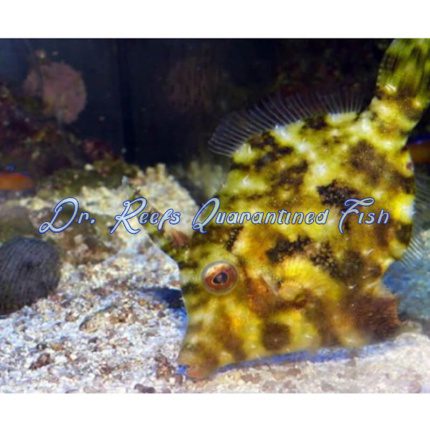
Aiptasia Eating Filefish
Price range: $99.99 through $114.99
Astraea Snail
Price range: $29.99 through $79.99
Cerith Snail
Price range: $14.99 through $69.99
Margarite Snail
Price range: $11.99 through $54.99
Nassarius Snail Large
Price range: $19.99 through $69.99
Pajama Cardinal (Captive Bred)
Price range: $39.99 through $45.99
Reviews
There are no reviews yet.