
Goldflake Angelfish (Captive Bred)
$499.99
Apolemichthys xanthopunctatus
| Care Level | Moderate to High |
| Temperament | Semi-aggressive |
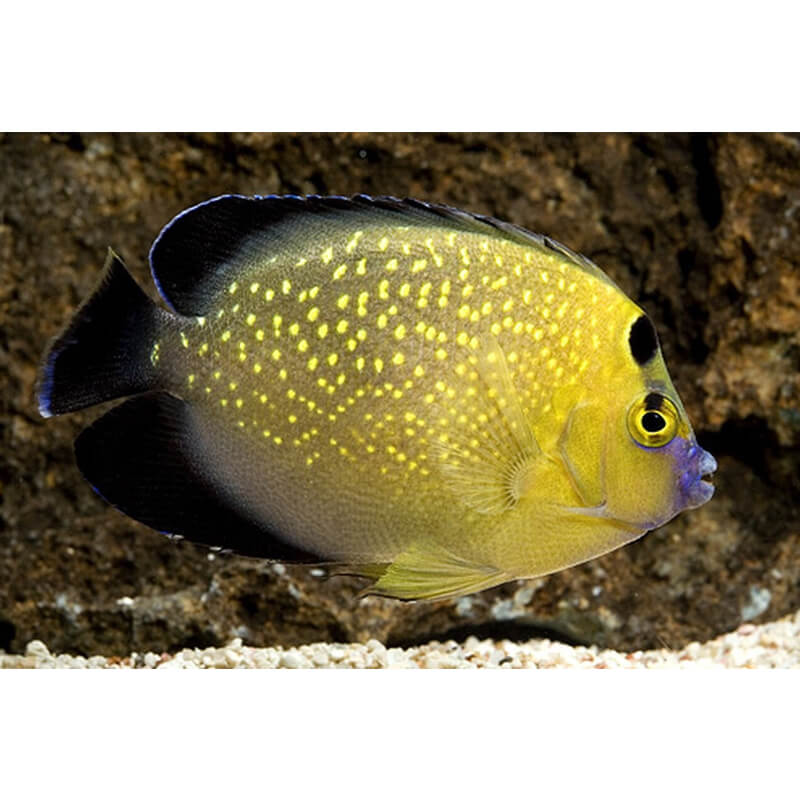
| Color Form | Body golden yellow with numerous small blue “gold flakes”; face with a black mask; dorsal fin rimmed in electric blue; tail usually white to pale yellow. |
| Diet | Omnivore |
| Reef Compatible | Not reef safe |
| Water Conditions | 72–78°F (22–26°C), Sg 1.020–1.025, pH: 8.1–8.4, dKH: 8–12 |
| Max Size | 10″ |
| Family | Pomacanthidae |
| Minimum Tank Size | 125 gallons |
Live Arrival Guarantee
Approximate Purchase Size: Tiny to small
Goldflake Angelfish (Captive Bred)
Also known as the Gold-Spangled Angelfish or Goldflake Angel
The Captive-Bred Goldflake Angelfish is an extraordinarily beautiful and highly sought-after species featuring stunning deep blue to black body coloration adorned with numerous golden-yellow spots that create a spectacular starry-night effect. Captive breeding has made this once rare and challenging species significantly more accessible, offering specimens with superior hardiness, disease resistance, and adaptability that wild-caught fish cannot match. Native to the Western Pacific, particularly around Fiji, Samoa, and the Cook Islands, this species represents one of the most visually striking large angelfish available to dedicated marine aquarists.
Key Features
- Scientific Name: Apolemichthys xanthopunctatus
- Common Names: Goldflake Angelfish, Gold-Spangled Angelfish, Yellow-spotted Angelfish
- Adult Size: 8–10 inches (occasionally reaching 11 inches)
- Lifespan: 10–15+ years with proper care (captive-bred specimens often exceed 15 years)
- Temperament: Semi-aggressive; territorial but generally peaceful for a large angelfish
- Reef Compatibility: Not reef-safe – will nip at soft corals, LPS, and clams
- Minimum Tank Size: 125 gallons minimum (150+ gallons strongly recommended)
- Experience Level: Intermediate to advanced (captive-bred hardiness makes them more accessible than wild-caught)
Habitat & Tank Requirements
- Tank Environment: Provide substantial live rock structures with caves, overhangs, and hiding spots combined with ample open swimming areas. Goldflake Angels appreciate both secure refuges and space to patrol. They are moderately active swimmers that establish territories but are less demanding than some large angelfish species.
- Water Parameters:
- Temperature: 72–78°F (22–26°C)
- Salinity: 1.020–1.025
- pH: 8.1–8.4
- Ammonia/Nitrite: 0 ppm
- Nitrate: <20 ppm (lower is optimal)
- dKH: 8–12
- Calcium: 380–450 ppm
- Aquascape: Complex rockwork with multiple caves and territories. Create environments with visual barriers and distinct zones. Good water movement and strong filtration are important given their size and feeding requirements. Stable water quality is particularly important for captive-bred juveniles during growth phases.
- Compatibility: Generally more peaceful than many large angelfish species. Can coexist with other semi-aggressive fish, tangs, large wrasses, and peaceful triggers. Best kept as the only large angelfish unless the tank exceeds 200+ gallons. May be kept with dwarf angelfish in larger systems with adequate territory separation. Should be added after more passive species but before extremely aggressive fish. Captive-bred specimens often display even more moderate temperaments than wild-caught fish.
Diet & Feeding
Captive-bred Goldflake Angelfish are trained from early development to accept diverse prepared foods:
- Meaty Foods: Mysis shrimp, enriched brine shrimp, chopped seafood (squid, clams, mussels, scallops), krill, marine fish flesh, high-quality frozen carnivore preparations
- Plant Matter: Marine algae sheets (nori, sea lettuce), spirulina, fresh vegetables (blanched spinach, zucchini), herbivore pellets and flakes
- Specialty Foods: Angelfish formulas containing natural sponge material (essential for long-term health, sponges form a significant part of their natural diet), color-enhancing foods with natural pigments to maintain golden spot intensity
- Prepared Foods Advantage: Captive-bred specimens readily accept high-quality marine pellets and diverse prepared foods from juvenile stage, making feeding significantly easier than wild-caught specimens which can be notoriously finicky
- Live Rock Grazing: Abundant live rock with natural algae growth and biofilm provides important dietary supplementation and behavioral enrichment
- Feeding Schedule: Feed 2–3 times daily in moderate to substantial portions. They have healthy appetites and require consistent, varied feeding for optimal health, growth, and color maintenance.
Notes & Considerations
- Behavior: Captive-bred Goldflake Angels are notably peaceful for large angelfish, making them suitable for a wider range of community systems. They are active, curious, and often become quite personable, recognizing owners and anticipating feeding times. While territorial, they display considerably less aggression than Pomacanthus or Holacanthus species. They actively patrol their territory but rarely harass tank mates aggressively. Once established, they become confident and visible throughout the aquarium.
- Coral Compatibility: NOT reef-safe. It will nip at soft corals (leather corals, zoanthids, mushrooms, xenia), large-polyp stony corals, and can be destructive to clam mantles. They also consume sponges, tunicates, and other sessile invertebrates. Best suited exclusively for fish-only or FOWLR (fish-only-with-live-rock) systems.
- Spectacular Appearance: The Goldflake Angelfish displays one of the most beautiful colorations in the angelfish family. The body is deep blue to blue-black or sometimes charcoal-gray, providing a dramatic dark background. Scattered across the entire body, head, and fins are numerous small golden-yellow to bright yellow spots or “flakes” that create a stunning starry-night or gold-dusted effect. Each spot is precisely defined, creating a speckled pattern unique to each individual. The face shows yellow highlights around the mouth and eyes. Fins display blue margins with golden spotting extending onto fin surfaces. The overall appearance is elegant, refined, and absolutely stunning—a true showpiece species.
- Color Variation and Maintenance: Spot intensity and distribution vary among individuals. Some specimens display more densely packed golden spots while others show more scattered patterns. Captive-bred specimens fed premium diets with color enhancers often maintain exceptional spot brilliance. Optimal nutrition including foods with natural carotenoids and spirulina is important for maintaining vibrant golden coloration.
- Sexual Dimorphism: Like most angelfish, Goldflake Angels are protogynous hermaphrodites (females can become males). Visual sexing is extremely difficult with no reliable external differences. Males may be marginally larger with slightly more intense spot coloration, but differences are subtle.
- Captive-Bred Advantages for This Species: Wild-caught Goldflake Angels have historically been challenging to acclimate and notoriously finicky feeders, with high initial mortality rates. Captive-bred specimens eliminate these challenges entirely, they are pre-adapted to aquarium foods, handle shipping stress excellently, and begin feeding immediately upon arrival. This represents a dramatic improvement in success rates for this species.
- Sponge Dependency: In nature, sponges constitute a major dietary component. Captive specimens require foods containing sponge material to prevent long-term nutritional deficiencies that can lead to lateral line erosion and immune system compromise.
- Personality Development: Once acclimated, Goldflake Angels often develop engaging personalities, becoming bold and interactive. They frequently swim to the front of the tank during feeding and may learn to hand-feed with patience.
Why Choose Captive-Bred Goldflake Angelfish?
Captive-bred specimens offer transformative advantages for this historically challenging species:
- Revolutionary Hardiness: Captive breeding has transformed the Goldflake from a notoriously difficult species with high mortality rates into a hardy, reliable aquarium fish, one of the most dramatic success stories in marine aquaculture
- Guaranteed Feeding: Pre-trained on diverse prepared, frozen, and pelleted foods from larval stage, completely eliminating the notorious feeding challenges that plagued wild-caught specimens
- Superior Disease Resistance: Raised in pathogen-controlled facilities with optimal nutrition, resulting in robust immune systems far exceeding wild-caught fish
- Immediate Acclimation: No collection trauma or decompression issues—captive-bred specimens adapt instantly to aquarium conditions and begin feeding within hours
- Consistent Quality: Breeding programs produce specimens with optimal coloration, excellent body condition, and proven genetic lines
- Environmental Responsibility: Protects limited wild Pacific populations from collection pressure, wild Goldflakes are relatively rare and collected from deeper reefs
- Predictable Temperament: Generally display manageable, moderate aggression suitable for community systems
- Proven Longevity: Captive-bred specimens show excellent long-term survival with proper care, regularly achieving 12–18+ year lifespans
- Beginner Accessibility: Superior hardiness and feeding reliability make captive-bred Goldflakes accessible to intermediate aquarists, whereas wild specimens require expert care
- Supporting Innovation: Purchasing captive-bred Goldflakes encourages continued breeding of challenging species and advances marine aquaculture technology
Quarantine Benefits
Quarantined captive-bred Goldflake Angelfish provide essential benefits:
- Final Health Verification: Confirms continued excellent health through shipping and wholesale holding
- Feeding Confirmation: Validates enthusiastic acceptance of your specific food brands and feeding schedule
- Stress Recovery: Allows complete recovery from any shipping stress in peaceful environment
- Growth Monitoring: For juveniles, confirms proper growth rate and development
- Behavioral Assessment: Observation ensures normal swimming patterns, foraging behavior, and social interactions
- Disease Prevention: Gentle prophylactic treatments eliminate any potential parasites from wholesale facilities
- Color Evaluation: Stress-related spot fading resolves, revealing true coloration intensity
- Investment Protection: Protects your investment in a premium specimen
Our captive-bred Goldflake Angelfish undergo a thorough 4-6 week quarantine with premium nutrition, gentle treatments, and careful monitoring, ensuring they arrive healthy, parasite-free, vibrant, and confident, transforming this challenging species into a hardy, reliable, and stunning addition to your aquarium, supported by advanced captive breeding for long-lasting beauty and ease of care.
| Service Level | Quarantined |
|---|
1 review for Goldflake Angelfish (Captive Bred)
You must be logged in to post a review.
cwkelleher –
After a disastrous experience with an lfs resulting in a total loss of our fully stocked tank we regrouped and decided purchasing quarantined fish was our best option to safeguard against disease introduction. Our experience with Dr. Reef has been outstanding. When it came time to add a “show fish” the goldflake Angel was an easy choice. She arrived as a little baby, healthy, eating and gorgeous. 9 months later she is the queen of the tank. Would not hesitate to buy another rare fish from Dr. Reef. All of our fish in our 110 gallon have come from Dr Reef and their health and quality are second to none.