


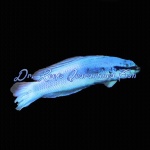
Golden-lined Rabbitfish (Captive Bred)
$39.99
Siganus lineatus
| Care Level | Intermediate |
| Temperament | Peaceful; may be territorial toward other rabbitfish |
| Color Form | Silvery-blue body with intricate blue and gold wavy lines covering entire body |
| Diet | Herbivore |
| Reef Compatible | Reef safe with caution |
| Water Conditions | sg 1.020–1.025, 72–78°F, pH 8.1–8.4 |
| Max Size | 16“ |
| Family | Siganidae |
| Minimum Tank Size | 125 gallons |
Golden-lined Rabbitfish (Captive Bred)
Also known as Blue-lined Rabbitfish, Decorated Rabbitfish, Orange-lined Spinefoot
The captive-bred Golden-lined Rabbitfish is a spectacular species featuring intricate blue and gold wavy lines creating a stunning pattern across the entire body. This hardy, peaceful herbivore is an exceptional algae controller and displays vibrant coloration. Captive-bred specimens are significantly hardier, better adapted to aquarium life, and more sustainable than wild-caught fish. The complex pattern and excellent grazing behavior make this one of the most desirable rabbitfish species.
Key Features
- Scientific Name: Siganus lineatus
- Common Names: Golden-lined Rabbitfish, Blue-lined Rabbitfish, Orange-spotted Spinefoot
- Adult Size: Up to 16 inches
- Lifespan: 10-15 years with proper care
- Temperament: Peaceful; may be territorial toward other rabbitfish
- Reef Compatibility: Reef safe with caution; generally leaves corals alone when well-fed
- Minimum Tank Size: 125 gallons minimum; 180+ gallons strongly preferred
- Experience Level: Intermediate; venomous spines require careful handling
Habitat & Tank Requirements
Tank Environment: Provide ample open swimming space with substantial live rock formations for grazing and shelter. Include caves and overhangs for nighttime resting. Strong water flow and excellent water quality. Established systems with natural algae growth ideals. Complex aquascaping provides grazing surfaces.
Water Parameters:
- Temperature: 72-78°F (22-26°C)
- Salinity: 1.020-1.025
- pH: 8.1-8.4
- Stable, pristine water conditions essential
Equipment Recommendations:
- Quality filtration system
- Protein skimmer
- Strong water circulation
- Natural algae growth encouraged
These maintain optimal conditions for this active herbivorous species.
Diet & Feeding
Golden-lined Rabbitfish are primarily herbivores requiring frequent feeding.
Recommended foods include:
- Primary: Marine algae sheets (nori, dried seaweed)
- Fresh Foods: Fresh marine macroalgae (Gracilaria, Caulerpa, Ulva)
- Staples: Spirulina flakes, herbivore pellets, algae wafers
- Supplemental: Veggie-based frozen foods, blanched vegetables
- Occasional: Small amounts of meaty foods (mysis shrimp, spirulina-enriched brine shrimp)
Feeding Frequency: 2-3 times daily minimum; constant grazing species
Special Note: Outstanding algae eater; will consume hair algae, bubble algae, turf algae, and other nuisance species. Must have constant access to algae or frequent feedings to prevent coral nipping.
Social Structure & Compatibility
- Tankmates: Peaceful toward most fish species; excellent community fish
- Territorial Behavior: May be aggressive toward other rabbitfish or similar species
- Pairs: Can be kept in pairs if introduced simultaneously in large systems
- Reef Safety: Generally reef safe but may occasionally sample soft corals if severely underfed
Notes & Considerations
- Captive-bred advantages: Hardier, better adapted, disease-resistant, sustainable.
- Absolutely stunning pattern: intricate blue and gold wavy lines covering the entire body.
- One of the most beautiful rabbitfish species available.
- Patterns vary individually; each specimen is unique.
- Captive-bred specimens acclimate faster than wild-caught.
- Already trained on prepared foods; easier feeding transition.
- More resistant to common diseases than wild specimens.
- Supports sustainable aquaculture practices.
- Excellent algae controller for large reef systems.
- Eagerly consumes hair algae, bubble algae, and various nuisance species.
- One of the best fish for natural algae control.
- VENOMOUS SPINES: Dorsal, anal, and pelvic spines contain potent venom.
- Stings are extremely painful; can cause severe localized pain and swelling.
- Pain can last several hours; medical attention may be needed in severe cases.
- Always use extreme caution when handling or maintaining a tank.
- Never attempt to handle it with bare hands.
- Use nets or containers; be aware of spine locations.
- Hot water immersion (as hot as tolerable) helps break down venom and relieve pain.
- Keep first aid supplies available.
- Spines are purely defensive; fish are not aggressive.
- Generally very peaceful toward other species.
- May become territorial toward other rabbitfish; best kept singly unless the tank is very large.
- Pairs can coexist peacefully in 180+ gallon systems if added together.
- Very active swimmer; constantly patrols tank grazing.
- Picks at all rock surfaces searching for algae.
- Generally leaves corals alone when well-fed; proper feeding is critical.
- Rarely nips at SPS corals; may occasionally sample soft corals if starving.
- Reef-safe with caution; ensure adequate food supply.
- Displays dramatic color change at night: develops a mottled brown pattern while sleeping.
- Color change is completely normal; reverts to a vibrant pattern in the morning.
- Often sleeps wedged into rockwork or caves.
- Hardy and disease-resistant, especially captive-bred specimens.
- Grows large; plan for adult size from beginning.
- Native to the Indo-Pacific region.
- Captive-bred specimens becoming more available; strongly recommended over wild-caught.
- Long-lived with proper care; 10-15+ years.
Why Choose a Quarantined Golden-lined Rabbitfish (Captive Bred)?
Purchasing a quarantined captive-bred specimen from us means you’re starting with an exceptionally healthy, sustainable fish. Captive-bred specimens are already hardier than wild-caught, and our quarantine process further ensures optimal health. All fish are observed, preventatively treated, and confirmed to accept varied prepared foods before sale. Captive breeding supports sustainable practices and produces superior aquarium specimens. This provides the absolute best foundation for long-term success with this magnificent species. Always exercise extreme caution around venomous spines.
| Service Level | Quarantined |
|---|
You must be logged in to post a review.
Related products
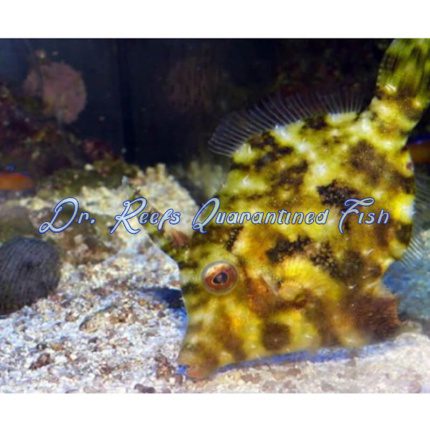
Aiptasia Eating Filefish
$99.99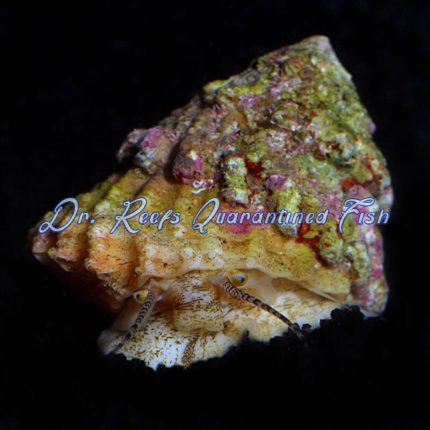
Astraea Snail
Price range: $29.99 through $79.99
Coral Beauty Angelfish
$79.99
Moorish Idol
$179.99
Reviews
There are no reviews yet.