
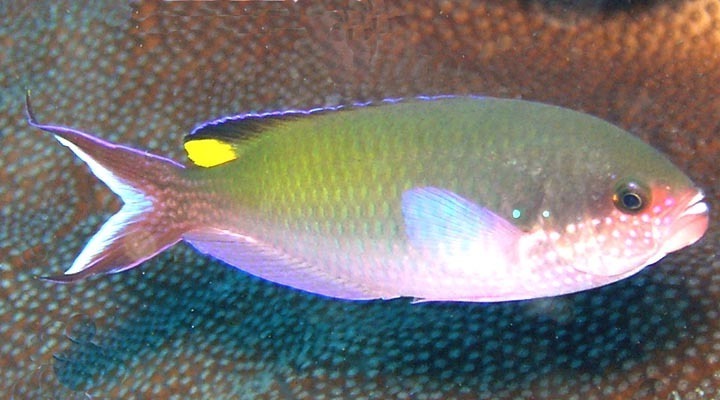
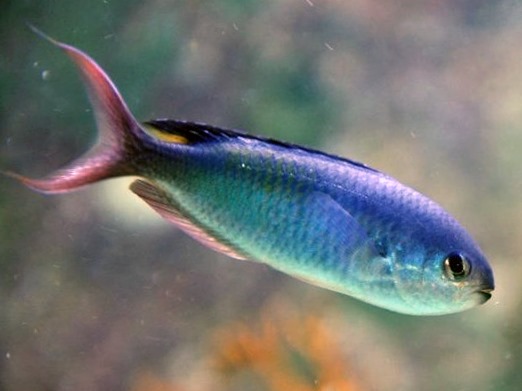

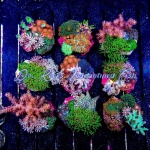
Fusilier Damselfish
$44.99
Lepidozygus tapeinosoma
| Care Level | Moderate |
| Temperament | Peaceful to semi-aggressive |
| Color Form | Greenish, grey, or yellowish-green coloration and a subtle silvery sheen |
| Diet | Omnivore |
| Reef Compatible | Reef-safe |
| Water Conditions | 75–80 °F (24–27 °C), Sg1.023–1.025, pH: ~8.1–8.4 |
| Max Size | 4″ |
| Family | Pomacentridae |
| Minimum Tank Size | 50 gallons+ |
3-Day Guarantee
Approximate Purchase Size: Small to medium
Fusilier Damselfish
Also known as Fusilier Damsel, Fusilier Demoiselle, Red-Wing Coral Damsel.
The Fusilier Damselfish is a sleek, streamlined reef fish from the tropical Indo-Pacific. With a slender body often shimmering with greenish, yellowish, or silvery hues and a calm social nature, it brings graceful movement and subtle beauty to reef or FOWLR aquariums. It is less aggressive than many damselfish, yet hardy and active. This makes it a great pick for aquarium hobbyists who want a peaceful midwater fish that adapts well to community tanks.
Key Features
Scientific Name: Lepidozygus tapeinosoma
Common Names: Fusilier Damselfish, Fusilier Damsel, Red-Wing Coral Damsel
Adult Size: up to ~4.0 in (≈ 10.5 cm)
Lifespan: ~5–7+ years with good care
Temperament: Peaceful to semi-aggressive; generally social, enjoys small groups or shoals
Reef Compatibility: Reef-safe and does not typically harm corals or invertebrates
Minimum Tank Size: 50+ gallons recommended due to active swimming and shoaling behavior
Experience Level: Beginner to Intermediate; fairly hardy, accepts prepared foods, needs sufficient space and stable water conditions
Habitat & Tank Requirements
Natural Habitat:
Tropical coral reefs and lagoons of the Indo-Pacific, often around sloping reef slopes or outer reef zones at depths of 1–30 m.
Tank Environment:
- Plenty of open swimming space. They are streamlined and active swimmers, so wide and unobstructed midwater areas are important.
- Some live rock or reef structures for hiding, refuge, and grazing when stressed or resting.
- Moderate water flow to mimic natural reef currents and improve oxygenation.
- A stable, mature aquarium is recommended. Avoid introducing them into very new tanks.
Water Parameters:
- Temperature: ~75–80 °F (24–27 °C)
- Salinity: ~1.023–1.025 specific gravity
- pH: ~8.1–8.4
- Regular maintenance with good filtration, periodic water changes, and stable water quality
Diet & Feeding
In the wild, Fusilier Damselfish feed mainly on zooplankton, often swimming high above the reef and picking small planktonic foods from the water column.
Recommended Diet in Aquariums:
- Frozen or live foods such as mysis shrimp, brine shrimp, zooplankton, and finely chopped seafood
- Marine omnivore flakes or pellets
- Occasional algae or plant-based foods such as spirulina
Feeding Schedule:
- Feed multiple small meals per day (2–3 times).
- Offer portions they can consume quickly to avoid overfeeding.
Behavior & Compatibility
Social Behavior:
- They are naturally social shoaling fish in the wild.
- In captivity, they do best when kept in small groups rather than alone.
Temperament:
- Generally peaceful compared to many other damselfish species.
- May show mild caution or nipping if stressed or kept in very small tanks.
Tank Mates:
Well-suited to peaceful reef fish, anthias, chromis, gobies, and other non-aggressive species.
Avoid overly aggressive fish or very small and delicate invertebrates.
Reef Compatibility
Fusilier Damselfish are reef-safe. They do not dig, farm algae, or harass corals and invertebrates under normal circumstances.
Their natural diet focuses on zooplankton and small animals, so they are unlikely to damage corals or invertebrates.
Acclimation & Care Tips
- Introduce them into a well-cycled, stable aquarium.
- Provide open swimming space and moderate flow.
- Feed small amounts several times per day.
- Ensure good filtration and consistently stable water quality.
Signs of a Healthy Specimen
- Active swimming and exploring midwater and reef areas
- Bright and clear coloration with greenish, yellowish, or silvery tones
- Strong appetite; accepts frozen, pellet, or flake foods
- Smooth fins without tears
- Clear eyes and normal, responsive behavior
- No visible spots, lesions, fungus, or excess mucus
Color & Development
Coloration & Appearance:
- Slender body shape with greenish, grey, or yellowish-green coloration and a subtle silvery sheen
- Rear dorsal fin may show a yellow patch; fins may have blue highlights
- Color can shift depending on behavior; feeding shows more silvery or green tones, while resting they appear darker
Size & Growth:
- Typical adult size: up to ~4 inches (≈ 10.5 cm)
- Growth depends on diet, tank conditions, and social environment
Special Considerations
- They are naturally shallow and prefer midwater swimming. They need enough open swimming space.
- Avoid keeping just one or placing them in too small a group.
- Use a tight-fitting lid due to their active swimming and jumping tendencies.
- Provide a balanced diet for optimal health.
Breeding Potential
Breeding Fusilier Damselfish in home aquariums is very rare. In the wild, they gather in groups and feed on zooplankton, which helps stimulate reproduction. In captivity, successful breeding would require a very large tank, stable water conditions, and a group of fish, so they are not commonly bred in home aquariums.
Why Choose a Quarantined Fusilier Damselfish?
A quarantined Fusilier Damselfish arrives healthy, stress-tested, and ready to thrive in your aquarium. Quarantine ensures the fish adapts quickly to the tank, accepts prepared foods, and greatly reduces the risk of introducing diseases. It is a peaceful, reef-safe, social fish ideal for well-maintained marine tanks.
| Service Level | Quarantined |
|---|
You must be logged in to post a review.
Related products
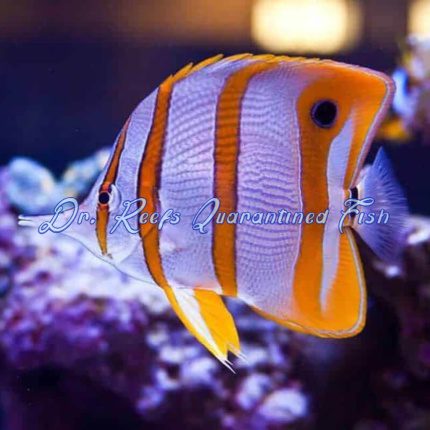
Copperband Butterflyfish
Price range: $149.99 through $189.99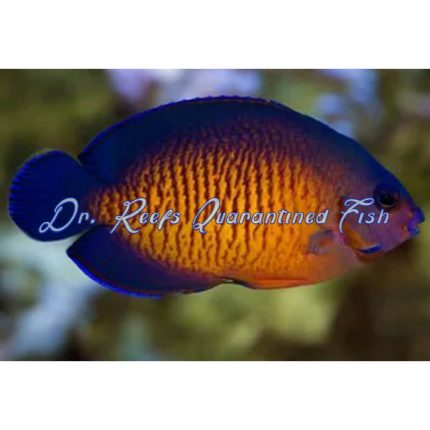
Coral Beauty Angelfish
$79.99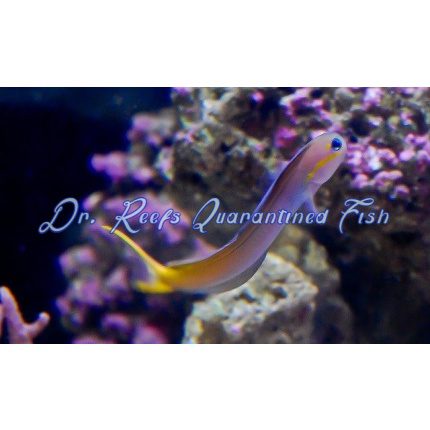
Midas Blenny
$99.99
Nerite Snail
Price range: $14.99 through $69.99

Reviews
There are no reviews yet.