
Blue Spot Puffer
$89.99
Canthigaster solandri
| Care Level | Intermediate |
| Temperament | Peaceful for a puffer; may nip fins |
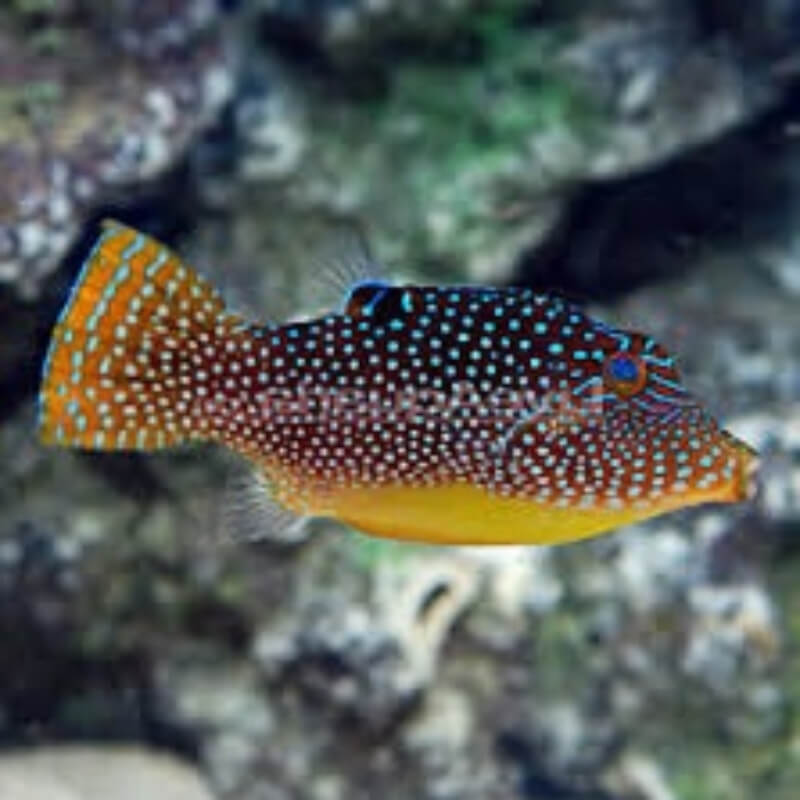
| Color Form | Tan to brown body with bright blue spots and blue facial lines |
| Diet | Carnivore |
| Reef Compatible | Yes, with caution |
| Water Conditions | sg 1.020–1.025, 72–78°F, pH 8.1–8.4 |
| Max Size | 4“ |
| Family | Canthigastridae |
| Minimum Tank Size | 50 gallons |
Description
Blue Spot Puffer
Also known as Blue Spotted Puffer, Bluespotted Toby
The Blue Spot Puffer is a small, charming species featuring a tan to brown body adorned with distinctive bright blue spots and blue lines on the face. This peaceful, personable puffer is one of the smallest and most reef-compatible puffer species available. With its curious personality, manageable size, and relatively peaceful nature, this species is an excellent choice for aquarists seeking puffer character without the aggression and size of larger species.
Key Features
- Scientific Name: Canthigaster solandri
- Common Names: Blue Spot Puffer, Blue Spotted Toby, Spotted Sharpnose Puffer
- Adult Size: Up to 3-4 inches
- Lifespan: 5-8 years with proper care
- Temperament: Peaceful for a puffer; may nip at tankmates
- Reef Compatibility: Reef safe with caution; may nip at some invertebrates and coral polyps
- Minimum Tank Size: 50 gallons preferred
- Experience Level: Intermediate; requires varied diet and monitoring
Habitat & Tank Requirements
Tank Environment: Provide open swimming areas with live rock formations featuring caves and hiding spots. Appreciates moderate water flow. Include various territories and visual barriers. Secure all decorations as puffers are curious and investigative.
Water Parameters:
- Temperature: 72-78°F (22-26°C)
- Salinity: 1.020-1.025
- pH: 8.1-8.4
- Good water quality essential
Equipment Recommendations:
- Quality filtration system
- Protein skimmer
- Moderate water circulation
- Secure lid (can jump when startled)
These maintain healthy conditions for this small predator.
Diet & Feeding
Blue Spot Puffers are carnivores with hearty appetites and continuously growing teeth.
Recommended foods include:
- Primary: Frozen mysis shrimp, frozen krill, chopped seafood
- Hard-shelled foods: Small snails, small shrimp with shells, clams (ESSENTIAL for tooth wear)
- Variety: Squid, scallops, mussels, marine fish
- Supplements: Vitamin-enriched foods weekly
Feeding Frequency: Once or twice daily
Special Note: MUST have regular access to hard-shelled foods (snails, shrimp shells) to wear down continuously growing teeth. Without proper hard foods, teeth overgrow and fish cannot eat, leading to starvation.
Social Structure & Compatibility
- Tankmates: Best with peaceful to semi-aggressive fish; avoid long-finned or slow fish
- May Nip: Can nip at fins of angelfish, butterflyfish, or other slow-moving tankmates
- Territorial: May be aggressive toward other puffers or similar species
- Reef Caution: May nip at coral polyps, clam mantles, tube worms, and small invertebrates
Notes & Considerations
- One of the smallest and most manageable puffer species.
- Beautiful blue spots covering tan to brown body.
- Intricate blue lines on the face create an attractive pattern.
- Very curious and personable; recognizes the owner quickly.
- Often follows the owner around the tank and begs for food.
- Peaceful for a puffer but still may nip fins occasionally.
- Can be kept in smaller tanks compared to larger puffers.
- Teeth grow continuously throughout life; hard foods are mandatory.
- Will consume small ornamental shrimp and snails.
- May nip at tube worms, feather dusters, and clam mantles.
- Can occasionally nip at soft coral polyps or LPS tentacles.
- Generally leaves SPS corals alone.
- Reef-safe with caution; monitor behavior carefully.
- Best in fish-only or FOWLR systems for guaranteed compatibility.
- Very intelligent and interactive fish.
- Can learn to hand-feed with patience.
- May rearrange small decorations while exploring.
- Produces toxins (tetrodotoxin) when extremely stressed; dangerous to other fish.
- Generally does not release toxins unless near death.
- Use caution if fish appear to be dying in the display tank.
- Remove immediately if showing signs of severe distress.
- Hardy once established; relatively disease-resistant.
- Susceptible to ich and marine velvet; copper-safe treatment possible.
- May become stressed and refuse food if harassed by tankmates.
- Can jump when startled; secure lid recommended.
- Native to Indo-Pacific coral reef regions.
- Generally peaceful with appropriately sized tankmates.
- Avoid keeping with other puffers unless the tank is large.
- Excellent puffer for those wanting small, interactive species.
- Long-lived with proper dental care and nutrition.
Why Choose a Quarantined Blue Spot Puffer?
Purchasing a quarantined specimen from us means you’re starting with a healthier, well-acclimated puffer. All fish are observed, treated as needed, and trained to accept varied foods including essential hard-shelled items for tooth maintenance before sale. Proper quarantine ensures teeth are healthy and the fish is eating properly. This provides the best foundation for long-term success with this charming small puffer.
Additional information
| Service Level | Quarantined |
|---|
Reviews (0)
You must be logged in to post a review.
Shipping & Delivery
Reviews
There are no reviews yet.