Chromis
Price range: $19.99 through $39.99
Chromis viridis (commonly) / Chromis cyanea (Blue Reef Chromis)
| Care Level | Easy to Moderate |
| Temperament | non-aggressive |
| Color Form | Blue-green, Deep sapphire blue |
| Diet | Omnivore |
| Reef Compatible | Reef safe |
| Water Conditions | 24–28 °C (75–82 °F), Sg: 1.023–1.026, pH: 8.1–8.4 |
| Max Size | 4″ |
| Family | Pomacentridae |
| Minimum Tank Size | 30+ gallons |
3-Day Guarantee
Approximate Purchase Size: Small: <1.25″; Medium: 1.25-2.25″; Large: 2.25-3.25″
Chromis
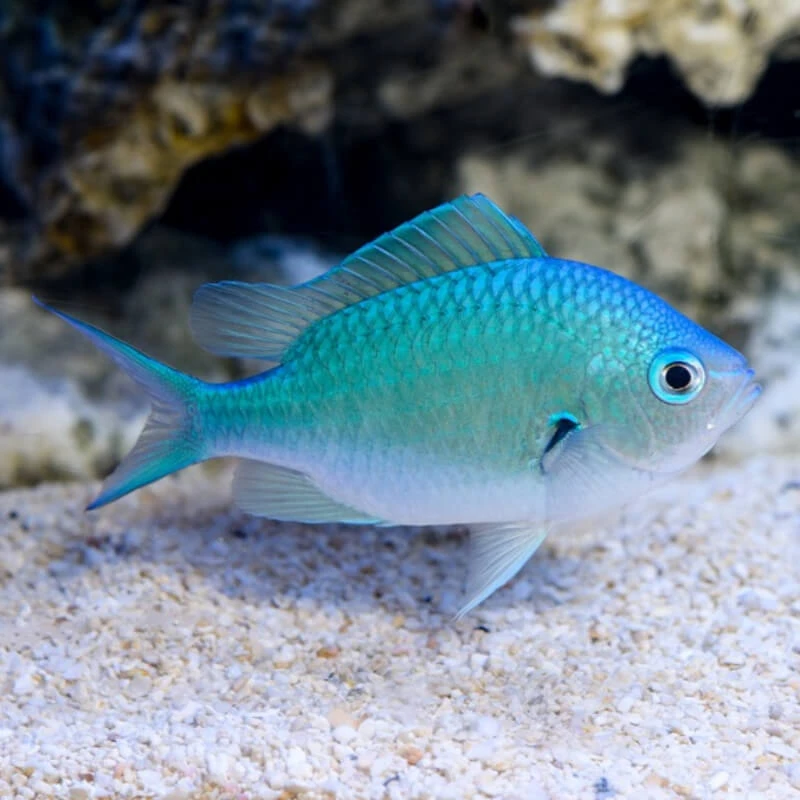
Also known as the Blue Reef Chromis or Green Chromis.
The chromis fish are loved by many beginners because of their unique quality and peaceful nature. They live in Indo-Pacific areas and are found in shallow regions where sunlight easily reaches them, allowing them to eat algae that grow nearby. They do not harm corals while eating small shrimp or invertebrates. They are known as schooling fish because they love to swim around in small groups, which makes them feel safe and secure. With their bright blue-green colors, they attract customers in a wide range.
Key Features
Scientific Name: Chromis viridis (commonly) / Chromis cyanea (Blue Reef Chromis).
Common Names: Chromis, Blue Reef Chromis, Green Chromis.
Adult Size: ~3–4 inches (≈ 7.5–10 cm).
Lifespan: Up to 8–15 years in well-maintained aquariums, commonly 5–10 years.
Temperament: Peaceful schooling fish that may defend small territories when stressed.
Reef Compatibility: Reef-safe; does not nip at corals or invertebrates.
Minimum Tank Size: 30+ gallons for a small group, larger tanks recommended for proper schooling behavior.
Experience Level: Beginner, hardy species that tolerates a variety of aquarium conditions and diets.
Habitat & Tank Requirements
Natural Habitat:
Chromis live in shallow reefs and lagoon areas throughout the Indo-Pacific, usually swimming above branching corals or rocky outcrops in mid-water groups.
Tank Environment:
- Provide live rock structures for hiding and shelter.
- Ensure open swimming space in the mid to upper water column.
- Use moderate water flow to mimic reef currents.
- Introduce them into a well-established tank (ideally 2+ months old).
Water Parameters:
- Temperature: 24–28 °C (75–82 °F).
- Salinity: 1.023–1.026 specific gravity.
- pH: 8.1–8.4.
Maintain good filtration and regular water changes to keep nitrates low.
Diet & Feeding
Chromis naturally eat plankton and small organisms. They are reef-safe and do not harm corals.
In aquariums, they accept a wide variety of foods.
Recommended Foods:
- Pellets or flakes formulated for marine omnivores, including spirulina-based flakes.
- Frozen or live foods like mysis shrimp, brine shrimp, copepods, and marine plankton.
- Occasional algae or plant-based supplements such as marine algae sheets and spirulina flakes.
Feeding Schedule:
- Feed 2–3 small meals per day rather than one large feeding.
- Provide small portions so food is consumed quickly, reducing waste and preserving water quality.
Behavior & Compatibility
Social Behavior:
- Chromis are schooling fish and are happiest when kept in groups of 5–10 or more.
- They are peaceful and community-friendly.
- When kept singly or in very small numbers, they may become shy or stressed.
Tank Mates:
Good tank mates include clownfish, gobies, blennies, wrasses, cardinalfish, and other peaceful community fish.
Avoid large aggressive predators or very nippy fish.
Ideal Grouping:
Groups of 5–10 or more in a large enough tank to encourage natural schooling behavior.
Reef Compatibility
Chromis are strongly reef-safe. They do not nip at corals or disturb invertebrates. Their peaceful, schooling nature and non-destructive habits make them one of the best starter fish for mixed reef aquariums.
Acclimation & Care Tips
- Provide open swimming space, moderate flow, and some live rock for shelter.
- Feed small portions multiple times a day.
- Keep water parameters stable.
- Quarantine new specimens for 2–3 weeks before adding them to the main tank.
Signs of a Healthy Specimen
- Active mid-water swimming and schooling.
- Bright shimmering blue-green coloration.
- Smooth fins and intact scales.
- Clear eyes and responsive behavior.
- Eats readily and accepts flakes, pellets, and frozen foods.
Color & Development
- Body is shimmering blue-green with iridescence.
- Juveniles are usually brighter than adults.
- Adults grow to around 3–4 inches.
- Growth depends on diet, tank conditions, and group dynamics.
Special Considerations
- They thrive as a school, so avoid keeping just one or two.
- They need open space, and small or overcrowded tanks may stress them.
- Filtration and water quality must be well maintained, especially in larger schools.
- Avoid overly aggressive tankmates.
Breeding Potential
Chromis reproduce by laying eggs. The male prepares a flat surface on rock or coral where the female lays eggs. The male protects the eggs and fans them with his fins to prevent fungus and ensure oxygen flow until they hatch.
Why Choose a Quarantined Chromis?
A quarantined chromis ensures that the fish is healthy and well-adjusted. They are kept in a separate tank for a few weeks and monitored closely to make sure they are disease-free. They are gradually introduced to foods, helping them adapt better. This reduces stress and makes them more comfortable once quarantine is over, allowing them to show their bright blue-green colors and get along well with other fish in a reef tank.
| Service Level | Quarantined |
|---|---|
| Size | Small, Medium, Large |
Related products
Achilles Tang
Price range: $549.99 through $649.99
Blue Throat Triggerfish (Male)
Price range: $179.99 through $239.99
Nassarius Snail Large
Price range: $19.99 through $69.99
Nerite Snail
Price range: $14.99 through $69.99