
Pink-Streaked Wrasse: The Perfect Nano Reef Fish

Pink-Streaked Wrasse: The Perfect Nano Reef Fish
A two-inch pest controller that hunts flatworms and pyramidellid snails without threatening a single one of your prized invertebrates
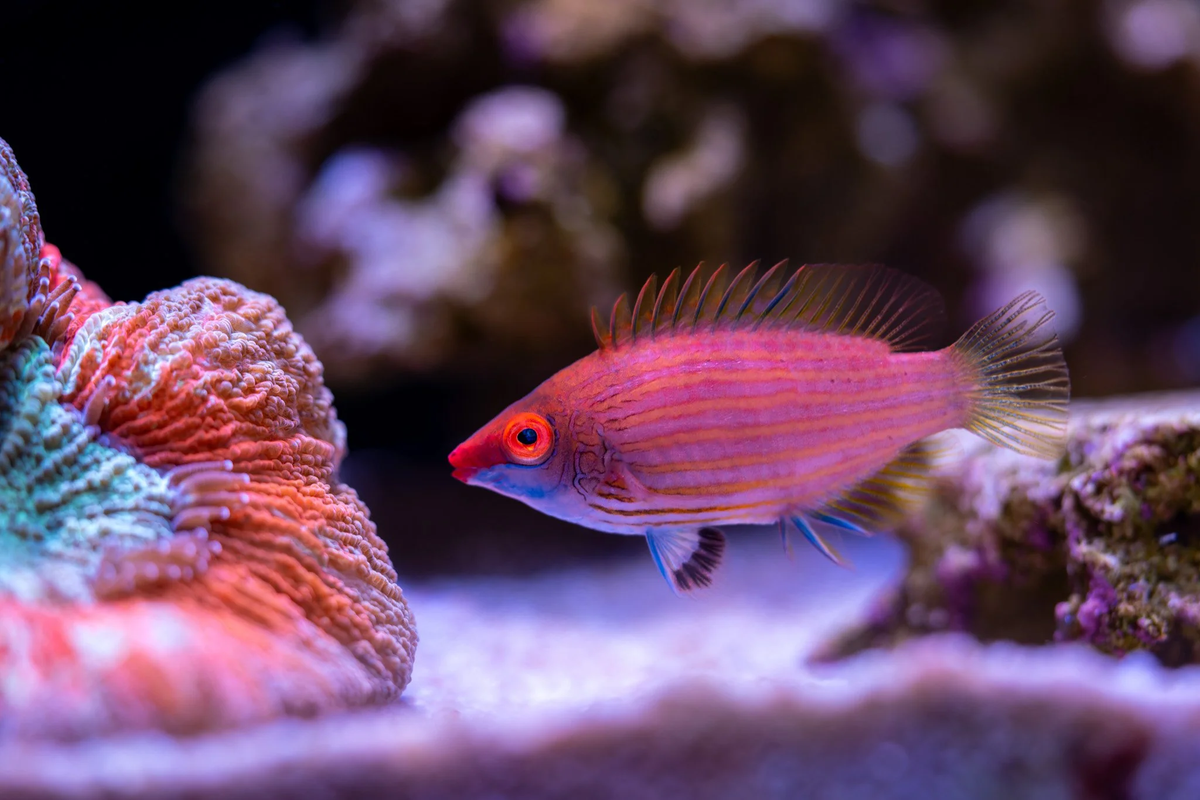
Nano reef tanks come with a short list of fish that actually fit them, and an even shorter list of fish that do real work while they are in there. The Pink Streaked Wrasse checks both boxes. At barely two and a half inches fully grown, Pseudocheilinops ataenia is small enough for a 10 or 20-gallon reef, yet it hunts with the same drive as wrasses three times its size.
If you have been searching for a nano-safe fish that also earns its keep, here is what makes this one worth the hunt.
A Big-Impact Pest Control Fish in a Tiny Package
Also known as the pelvic-spot wrasse or midget wrasse, this species is native to shallow, low-current reef flats across the western Pacific. In the wild, it picks through rubble and coral branches hunting tiny invertebrates all day long, a habit that translates directly into one of the most useful skills a reef fish can have: cleaning up planarian flatworms and other pests before they get out of hand.
Several long-time keepers report the same result: a Pink Streaked Wrasse added specifically to knock down a flatworm outbreak, doing exactly that within days of settling in.
Pink Streaked Wrasse Size and Why It Suits Nano Tanks
Topping out around 2.5 inches, this is one of the smallest true wrasses available in the trade. Unlike larger Halichoeres or Cirrhilabrus species that eventually outgrow anything under 90 gallons, the Pink Streaked Wrasse stays proportionate to a nano setup for its entire life. That makes it one of the rare wrasse species you can stock in a small tank without planning an eventual upgrade.
Natural Habitat and Behavior
This wrasse favors quiet, low-flow reef environments with plenty of rubble and small crevices to dart into. It spends its day weaving through rockwork rather than swimming in open water, which suits the tight quarters of a nano aquarium far better than a species built for long, open cruising lanes.
Ideal Nano Reef Tank Setup
Minimum Tank Size
A 10-gallon tank is workable, though a 20-gallon long gives this wrasse more rockwork to explore and generally leads to bolder, more visible behavior. Larger is always better if you have the option, but this is genuinely one of the few wrasses that does not demand a big footprint to thrive.
Rockwork and Hiding Spots
Dense rock with small gaps and crevices matters more here than open swimming space. This species is a rubble hunter by nature, and a tank that mimics that structure, rather than one built around wide-open sand, will keep it active and confident rather than stressed and constantly hiding.
Diet and Pest Control Benefits
The Pink Streaked Wrasse is a dedicated micro-predator. In addition to planarian flatworms, it targets small pest snails and other unwanted hitchhikers that arrive on live rock and coral frags, while leaving snails, shrimp, and other beneficial invertebrates alone. That selectivity is exactly what makes it valuable in a nano reef, where a single aggressive predator can wipe out a cleanup crew overnight.
Once settled, it readily accepts:
- Enriched frozen mysis and brine shrimp, chopped small
- High-quality marine pellets sized for a small mouth
- Live copepods and amphipods as a natural supplement
Why This Fish Has a Reputation as a Difficult Shipper
Be aware going in that this species does not always ship as smoothly as hardier wrasses. It is frequently listed as hard to acquire, and stock is often sourced on request rather than kept consistently on hand. Buying from a supplier that quarantines and conditions the fish before it ships matters more here than with almost any other small wrasse, since a fish that is already eating and stable before departure has a much better shot at surviving the trip.
Give extra attention to a slow, careful introduction once the fish arrives. The Acclimation Guide covers the drip method and temperature matching that give a sensitive shipper like this one the best possible start.
Tankmates for a Nano Reef
Peaceful, similarly sized fish make the best companions. Avoid larger, boisterous wrasses or aggressive dottybacks that could bully a fish this small out of feeding. If you are pairing it with another pest-control specialist, the Melanurus Wrasse is a common combination, though tank size and existing stock should always be checked first.
Before finalizing a nano stocking list, it is worth reviewing What Makes a Fish Truly Reef Safe? so every addition, not just this one, is a safe fit for your invertebrates.
Availability and Pricing
Because it is sourced on request rather than kept in constant stock, pricing on the Pink Streaked Wrasse can shift depending on availability, typically landing between $139.99 and $169.99. Given the limited supply, ordering ahead through Dr. Reef’s Quarantined Fish rather than waiting for a display tank listing is usually the more reliable route to actually getting one.
Is the Pink Streaked Wrasse Right for Your Nano Reef?
If you are running a small, established reef and dealing with a flatworm problem, or simply want a genuinely nano-appropriate wrasse that will not outgrow the tank, this species is worth the wait. It stays small, hunts pests without touching your invertebrates, and brings real personality to a footprint most wrasses cannot fit into. Just plan for its limited availability and give it the quarantine and acclimation care it needs to make the trip successfully.