
Lineatus Wrasse: The Ultimate Showpiece Fish for Large Reef Tanks

Lineatus Wrasse: The Ultimate Showpiece Fish for Large Reef Tanks
Why the Lineatus Fairy Wrasse’s electric red and purple coloring makes it the centerpiece fish serious reef keepers build tanks around
Some fish blend into a reef tank. The Lineatus Wrasse commands it. Scientifically known as Cirrhilabrus lineatus, this is one of the most sought-after fairy wrasses in the hobby, and once you see a mature male patrolling open water under strong lighting, it is easy to understand why. This fish belongs in our full Wrasses Reefsafe collection, and it is consistently one of the first fish experienced reef keepers ask about when planning a large display tank.
Here is what makes the Lineatus Wrasse worth the investment, and what a big reef tank needs to bring out its full potential.
What the Lineatus Wrasse Looks Like
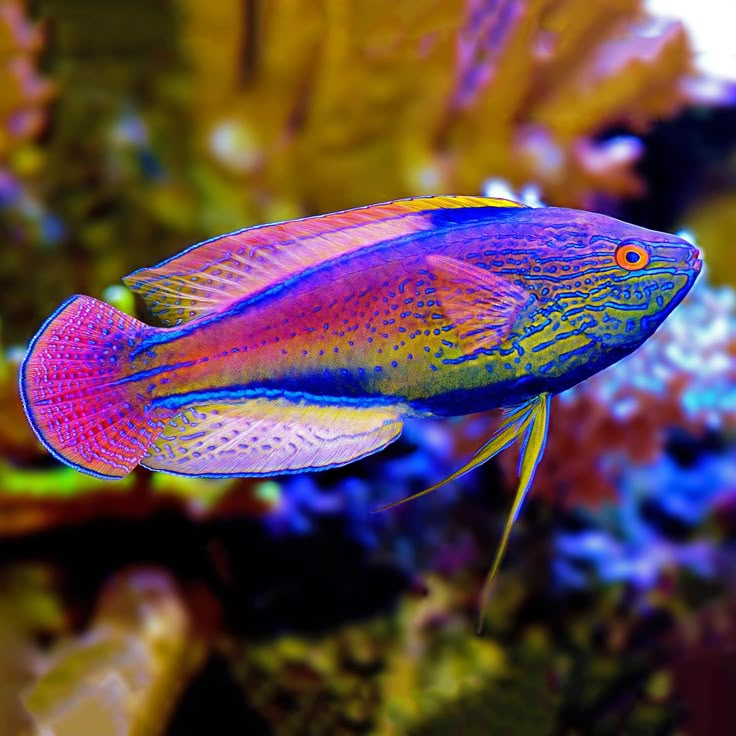
A mature male Lineatus Wrasse carries a deep purple-violet body crossed with bold, distinctive red horizontal stripes that intensify further during courtship displays and moments of excitement. Females and juveniles wear a softer pink-purple tone with faint striping, attractive in their own right but nowhere near as dramatic as a fully colored male.
This species is native to the Coral Sea, where it lives along deeper reef slopes off the eastern coast of Australia, typically in small groups with one dominant male displaying to a harem of females. That natural social structure is part of what makes this fish so rewarding to keep, because a well-settled male will show off the same competitive, showy behavior in a home aquarium that he would on a wild reef.
Lineatus Wrasse Size and Growth
Adults typically reach five to six inches, placing this fish comfortably in the mid-size range for fairy wrasses. It is neither a tiny nano fish nor an oversized bruiser, which is part of why it fits so well as a centerpiece species in a large, established reef.
Why Large Reef Tanks Bring Out the Best in This Fish
A Lineatus Wrasse needs room to patrol, display, and establish territory the way it would on a natural reef. A minimum tank size of 90 gallons is recommended, and larger systems consistently produce better long-term results. Cramped tanks tend to produce dull, stressed males that rarely show their full coloration.
Give this fish plenty of open swimming space combined with structured live rock offering caves and overhangs. That combination lets a male patrol actively during the day while still having secure retreats to duck into when startled.
A secure, tight-fitting lid is not optional. Fairy wrasses in general, and this species specifically, are capable jumpers, especially in the first few weeks after introduction while they are still adjusting to a new environment.
Male, Female, or Super Male: Choosing Your Lineatus Wrasse
Dr. Reef’s Quarantined Fish offers the Lineatus Wrasse in three forms, each suited to a different reef-keeping goal.
The standard Lineatus Fairy Wrasse (Male) already displays the signature purple and red pattern and is priced at $339.99, making it one of the more accessible ways to bring this species into a display tank. For keepers who want to build a small harem, the Lineatus Fairy Wrasse (Female) pairs naturally with a male and can be kept in small groups without conflict. Aquarists chasing the most intense possible coloration should look at the Lineatus Fairy Wrasse (Super Male), which shows deeper, more saturated color than a standard male and is priced at $439.99, occasionally listed from $459.99.
For a deeper look at the species, including its natural habitat and full behavior profile, the dedicated Lineatus Fairy Wrasse species page covers everything in one place.
Feeding the Lineatus Wrasse
This species is a carnivorous planktivore and, compared to sand-dwelling wrasses, is genuinely easy to feed once settled. A varied diet keeps color and energy levels high:
- High-quality marine pellets and enriched flakes as a daily staple
- Enriched frozen mysis shrimp, brine shrimp, copepods, and cyclops
- Live brine shrimp or copepods during the first week to ease acclimation
Because this fish adapts to prepared foods far more readily than a Leopard or Mandarin type species, it is a realistic option even for aquarists who are newer to keeping fairy wrasses, provided the tank itself is large enough.
Temperament and Tankmates
The Lineatus Wrasse is generally peaceful and can coexist well with other calm wrasse species, though a mature male will actively patrol his territory and may not tolerate a second male of the same or a closely related species. Before combining it with other fish, it is worth confirming compatibility using the site’s Compatibility Chart, especially in tanks that already house other centerpiece fish competing for the same open swimming space.
This species is completely reef safe and will not bother corals or sessile invertebrates, making it a strong fit for a mixed reef display built around color and movement rather than aggression.
Sourcing a Healthy, Quarantined Lineatus Wrasse
Fairy wrasses in general handle shipping better than sand specialists, but that does not mean quarantine and conditioning can be skipped. A fish that has been observed for weeks, treated preventatively, and confirmed feeding on a variety of prepared foods before it ships arrives with far better odds of thriving from day one.
It helps to understand why that observation period matters so much in the first place. How Long Should Saltwater Fish Stay in Quarantine? explains the reasoning behind the timeline, and How to Build a Disease-Free Reef Aquarium From Day One covers how a single unquarantined fish can undo months of careful reef keeping.
Once your fish arrives, take the acclimation step just as seriously as the quarantine behind it. How to Acclimate Saltwater Fish Without Killing Them walks through drip acclimation and temperature matching so a healthy fish stays that way through its first hours in your tank.
If you are still finalizing your stocking list before adding a centerpiece fish like this one, The Ultimate Saltwater Fish Buying Checklist Every Hobbyist Needs is a useful gut check before you order.
Final Thoughts
The Lineatus Wrasse earns its reputation as a showpiece fish honestly. Give it a large, mature tank with room to patrol, a varied diet, and a quiet, quarantined start, and a mature male will reward you with color and personality that few other reef fish can match. For a large display tank looking for a true centerpiece, few species make a stronger case than this one.