
Cleaner Shrimp

Cleaner Shrimp for Sale: Why Every Reef Tank Needs These Helpful Invertebrates
Few additions to a reef tank deliver the combination of practical value and visual appeal that cleaner shrimp bring. Vivid coloration, fascinating interactive behavior, genuine biological utility, and near-universal compatibility with reef systems make them one of the most recommended invertebrates in the hobby across all experience levels. Whether you are setting up your first reef or adding to an established system, a healthy, properly sourced cleaner shrimp from Dr. Reef’s Quarantined Fish is one of the best investments you can make in the long-term health and vitality of your aquarium.
The Species: What Is a Cleaner Shrimp?
The term cleaner shrimp refers to several species that perform cleaning station behavior in the wild, but in the reef aquarium hobby it most commonly applies to two species: the Scarlet Skunk Cleaner Shrimp (Lysmata amboinensis) and the Blood Red Fire Shrimp (Lysmata debelius). Both belong to the genus Lysmata and share similar care requirements, though they differ significantly in appearance and behavioral boldness.
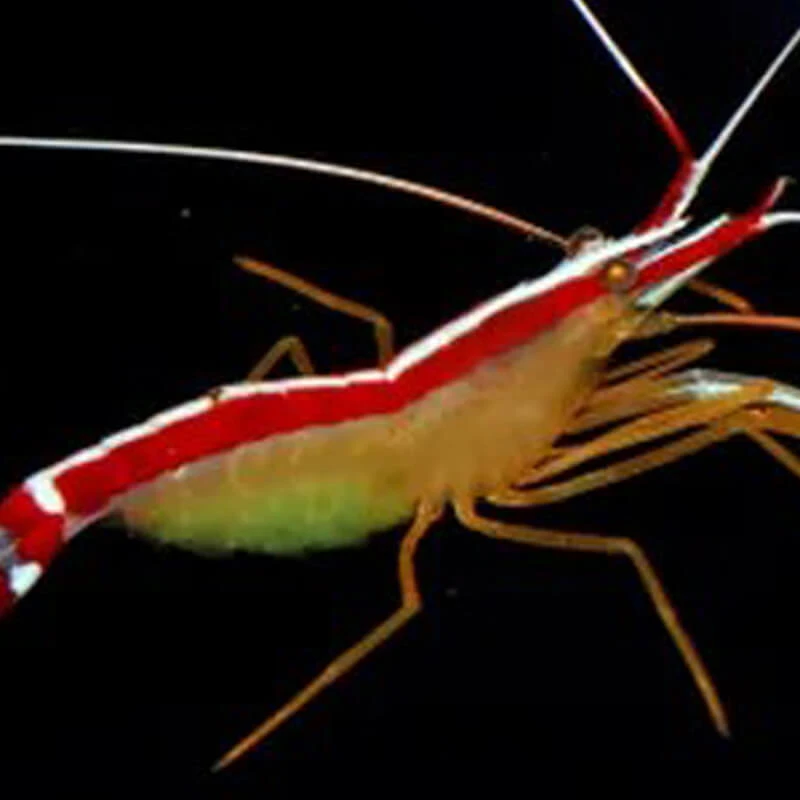
The Scarlet Skunk Cleaner Shrimp is the more commonly kept of the two, displaying a vivid red and white striped body with long white antennae that can reach twice the body length. It is an active, confident species that establishes cleaning stations openly in the aquarium and will approach fish proactively to perform cleaning behavior. The Blood Red Fire Shrimp is more visually dramatic, with a deep crimson body covered in white spots and white antennae, but tends to be more reclusive, often retreating into caves and overhangs and emerging primarily at feeding time. Both species reach roughly 2 to 3 inches in body length at adulthood.
A third species occasionally available in the hobby is the Peppermint Shrimp (Lysmata wurdemanni), valued primarily for its appetite for aiptasia rather than cleaning behavior. While useful in the right context, the Peppermint Shrimp is a different animal with different behavioral characteristics from the true cleaner species.
What Cleaner Shrimp Actually Do
The cleaning station behavior of Lysmata species is one of the most remarkable examples of mutualistic symbiosis in the marine world. In the wild, cleaner shrimp establish fixed locations on the reef where fish actively seek them out, adopting submissive postures to signal their willingness to be cleaned. The shrimp then move across the fish’s body, gills, and mouth, removing parasites, dead tissue, bacteria, and food debris. Fish that would normally prey on shrimp this size tolerate and even actively solicit this service, a behavioral truce driven entirely by mutual benefit.
In a home aquarium, this behavior translates directly into a functional parasite management tool. Cleaner shrimp actively reduce the ectoparasite load on fish in the system, picking off ich and other parasites before infestations can establish. This is not a substitute for proper quarantine or disease treatment when needed, but as an ongoing maintenance mechanism it meaningfully reduces the baseline parasite pressure in a healthy reef system. Fish quickly learn to recognize their cleaner shrimp and will present themselves at the cleaning station regularly, often with the distinctive tilted, frozen posture that signals cleaning solicitation.
Beyond their biological utility, cleaner shrimp are extraordinarily engaging to observe. The long, sweeping antennae constantly probing the water column, the precise and deliberate movement across a fish’s body during a cleaning session, and the confident approach to even much larger tankmates make them one of the most behaviorally interesting invertebrates available in the hobby.
Care Requirements
Cleaner shrimp are among the more straightforward invertebrates to keep in a well-maintained reef system, but they do have specific requirements that must be met for long-term health and successful molting.
Water quality should reflect the parameters of a healthy established reef. Target salinity of 1.025 to 1.026 specific gravity, temperature of 72 to 78 degrees Fahrenheit, and ammonia and nitrite permanently at zero. The single most important parameter for cleaner shrimp beyond basic water quality is iodine availability. Iodine is essential for successful molting in shrimp, and deficiency leads to failed molts, which are a common cause of loss in captive specimens. Regular water changes with a quality salt mix that includes trace elements replenish iodine naturally in most systems. Dedicated iodine supplementation can be considered in tanks with very infrequent water changes, though overdosing is a genuine risk and supplementation should be approached carefully.
Calcium and alkalinity levels matter as well, as shrimp utilize calcium in the formation of their new exoskeleton following each molt. A system maintained at appropriate reef calcium levels of 380 to 420 ppm supports healthy molting cycles alongside coral growth.
Copper is lethal to all shrimp species and must never be used in any system housing cleaner shrimp. This extends to any tank that has previously been treated with copper unless it has been thoroughly processed with activated carbon and confirmed copper-free through testing.
Molting: What to Expect
Cleaner shrimp molt regularly throughout their lives, shedding the entire exoskeleton as they grow. The frequency of molting depends on age, feeding, and water parameters, with younger, faster-growing individuals molting more frequently than adults. The discarded exoskeleton, or exuvia, is often mistaken for a dead shrimp by new keepers. It is a perfect hollow replica of the animal, and it is entirely normal to find one in the tank. The shrimp itself will typically retreat to a sheltered location for 24 to 48 hours after molting while the new exoskeleton hardens.
During this post-molt period the shrimp is vulnerable and should not be disturbed. Tankmates that are normally compatible may opportunistically attack a freshly molted shrimp, so ensuring adequate shelter in the aquascape is important. Most established cleaner shrimp in a compatible system navigate molting without issue, but awareness of the process helps avoid unnecessary concern or intervention.
Feeding
Cleaner shrimp are opportunistic omnivores and will scavenge food particles, meaty frozen foods, and prepared reef foods from the water column and substrate. In most established reef systems with regular feeding, cleaner shrimp receive adequate nutrition from food that reaches them naturally. Target feeding with small pieces of mysis shrimp, brine shrimp, or prepared reef foods a few times per week ensures consistent nutrition regardless of competition from fish.
The parasites and organic material consumed during cleaning sessions also contribute to the shrimp’s nutritional intake, meaning active cleaners in a healthy fish system are rarely underfed. Overfeeding the tank as a whole should still be avoided, as the resulting water quality decline affects shrimp welfare more acutely than it affects most fish.
Compatibility
Cleaner shrimp are compatible with the vast majority of reef fish and invertebrates, but there are important exceptions. Larger predatory fish including lionfish, large hawkfish, groupers, and aggressive triggers will consume cleaner shrimp without hesitation. Many wrasse species, particularly larger ones, are also known shrimp predators. Carefully reviewing the predation risk posed by existing livestock before adding cleaner shrimp is essential.
In appropriately stocked reef systems, cleaner shrimp coexist peacefully with corals, clams, other shrimp species, and most fish. Two Scarlet Skunk Cleaner Shrimp can be kept together successfully, as the species is generally tolerant of conspecifics in aquarium settings. Mixing species is also possible in larger systems with adequate territory and shelter.
Why Quarantined Specimens Make the Difference
Shrimp purchased without quarantine protocols are frequently stressed from collection, holding, and shipping, arriving in a compromised state that affects their ability to molt successfully, establish themselves in a new tank, and begin performing the cleaning behavior that makes them valuable. Stress during transit also suppresses immune function, making newly arrived shrimp vulnerable to bacterial infection and other health challenges in the critical first weeks.
At Dr. Reef’s Quarantined Fish, cleaner shrimp are held and observed before being offered for sale, confirming active behavior, feeding response, and overall physical condition. The same philosophy that drives Dr. Reef’s approach to fish quarantine applies equally to invertebrates: an animal that has been given time to stabilize, feed, and demonstrate health before sale is a fundamentally different product from one shipped straight from a wholesaler.
The acclimation guidance provided with every Dr. Reef’s order is specific to shrimp, covering the careful drip acclimation process that accounts for the salinity and pH sensitivity of Lysmata species and gives your new cleaner shrimp the best possible start in your system.
A Centerpiece Invertebrate That Earns Its Place
Cleaner shrimp are not merely decorative. They are functional, behaviorally fascinating members of a reef community that actively contribute to the health of every fish they share a tank with. From the moment a new cleaner shrimp sets up its cleaning station and begins attracting fish, it earns its place in the system in a way few other additions can match.
Sourcing healthy, quarantined specimens from Dr. Reef’s Quarantined Fish ensures that your cleaner shrimp arrive ready to thrive, molt successfully, and begin the cleaning behavior that makes this species one of the most genuinely useful invertebrates in the marine aquarium hobby.