
Berghia Nudibranch

Berghia Nudibranch for Sale: Natural Aiptasia Control for Reef Tanks
If aiptasia has taken hold in your reef tank, you already know how quickly a handful of small anemones can become a full-scale infestation. Chemical treatments and manual removal offer temporary relief at best, often spreading the problem further in the process. The Berghia Nudibranch (Berghia verrucicornis) offers something far more valuable: a natural, targeted, biological solution that works around the clock without any intervention from you. Dr. Reef’s Quarantined Fish supplies healthy, captive-raised Berghia Nudibranchs specifically prepared for introduction into reef systems, giving you the most effective aiptasia control available in the hobby today.
What Is the Berghia Nudibranch?
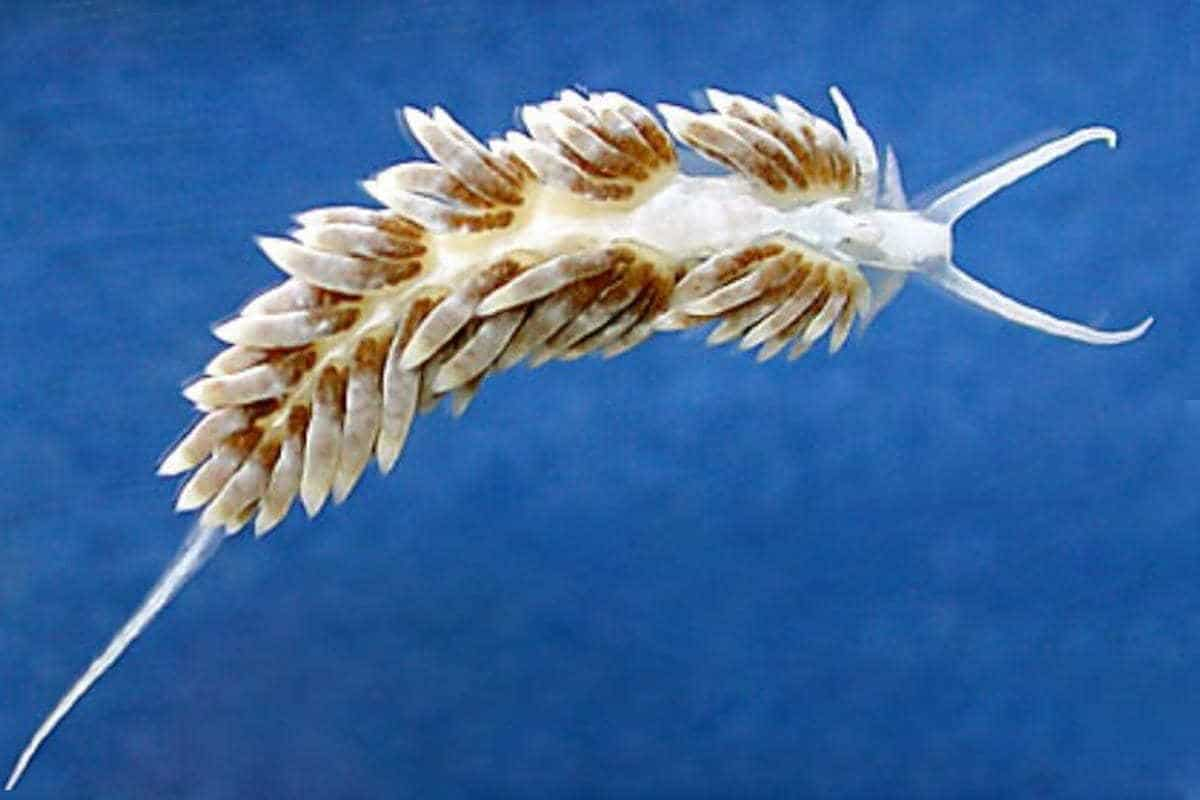
The Berghia Nudibranch is a small aeolid nudibranch, typically reaching only half an inch to one inch in adult length, with a pale cream to white body covered in delicate cerata along its back. It is an obligate specialist predator, meaning aiptasia (Aiptasia spp.) is essentially its only food source. This dietary exclusivity is what makes Berghia so valuable in a reef context: it will not touch corals, clams, ornamental shrimp, or any other reef inhabitant. Every feeding effort goes entirely toward eliminating the pest you actually want gone.
In the wild, Berghia Nudibranchs are found in tropical and subtropical marine environments where aiptasia populations exist, hunting the anemones by following chemical trails directly to their prey. In captivity, this same targeting behavior makes them extraordinarily efficient once introduced to a tank with an established aiptasia population.
How Berghia Nudibranchs Work
Berghia approach aiptasia from the base or side, where the anemone’s stinging cells are less concentrated, and consume the tissue systematically. Remarkably, they are immune to the nematocysts that make aiptasia so difficult to handle manually, sequestering the stinging cells from their prey into their own cerata as a defensive mechanism. A small group of Berghia introduced to a tank with a moderate aiptasia population will methodically work through the infestation over several weeks, reproducing as they go and increasing the working population as food availability allows.
This is not an overnight fix. Berghia work on their own schedule and cannot be rushed, but the results are thorough in a way that no chemical treatment matches. Once an aiptasia population has been eliminated, Berghia will eventually decline in number naturally as their food source disappears, which is an important consideration for long-term planning.
How Many Do You Need?
Stocking quantity depends on the severity of your aiptasia infestation. As a general starting point, most experienced reef keepers recommend a minimum of six to ten Berghia for a light to moderate infestation in a tank up to 100 gallons. Heavier infestations or larger systems benefit from higher numbers introduced at once, as a larger working population makes faster progress and reduces the risk of individuals being picked off before they can reproduce.
Introducing too few Berghia into a tank with a large aiptasia population is a common mistake. The nudibranchs may be consumed by predators or simply overwhelmed before they can establish themselves in meaningful numbers. Erring on the side of more at the outset is always the better approach.
Tank Compatibility and Predation Risk
Berghia Nudibranchs are delicate animals and have a meaningful list of natural predators commonly kept in reef tanks. Wrasses, particularly six-line wrasses and fairy wrasses, are among the most significant threats and will consume Berghia rapidly. Peppermint shrimp, some filefish species, butterflyfish, and many dragonets will also prey on them given the opportunity.
Before introducing Berghia, audit your existing livestock carefully. In tanks with known predators, temporary removal of the predatory species during the Berghia treatment period dramatically improves success rates. Some keepers choose to run Berghia in a separate treatment tank or refugium connected to the main system, allowing the nudibranchs to work without predation pressure while still accessing the aiptasia population through water circulation.
Water Parameters and Conditions
Berghia Nudibranchs require stable, high-quality reef water to thrive. They are sensitive to parameter swings and do not tolerate elevated ammonia, nitrite, or nitrate levels well. Target salinity of 1.025 to 1.026 specific gravity, temperature of 74 to 78 degrees Fahrenheit, and parameters consistent with a healthy established reef. Copper-based medications are lethal to nudibranchs and must never be used in any system housing Berghia.
Acclimation on arrival should be carried out carefully using a drip acclimation method over 30 to 45 minutes. Nudibranchs are sensitive to sudden changes in salinity and temperature, and careful acclimation on the day of arrival significantly improves survival and establishment rates.
The Importance of Captive-Raised Specimens
Not all Berghia Nudibranchs available in the hobby are equal. Wild-collected specimens carry significantly higher stress levels from collection and shipping than captive-raised animals and are more likely to arrive in compromised condition. Captive-raised Berghia, like those available through Dr. Reef’s Quarantined Fish, are acclimated to captive water conditions from birth, accustomed to the feeding behavior required in an aquarium setting, and far more likely to establish themselves successfully in your tank.
Dr. Reef’s captive-raised Berghia are produced under controlled conditions that mirror quality reef parameters, ensuring that the transition from supplier to your display tank is as seamless as possible. Each batch is inspected before shipping to confirm health and activity levels, and detailed acclimation instructions are provided with every order to give your nudibranchs the best possible start.
Introducing Berghia to Your Tank
After acclimation, introduce Berghia directly to an area of the tank where aiptasia are present, ideally in a lower flow zone during the evening when the nudibranchs are naturally more active. Dimming or turning off the lights for several hours after introduction reduces stress and gives the Berghia time to orient and begin hunting without the additional stimulation of bright reef lighting.
Resist the urge to observe them constantly in the first days after introduction. Berghia are small, largely nocturnal, and highly capable of concealing themselves within rockwork. Their absence from view does not mean they are not working. Many keepers report seeing little activity for the first week or two before noticing that aiptasia populations are visibly declining.
After the Aiptasia Is Gone
Once the aiptasia population has been eliminated, the Berghia population will naturally decline as their food source disappears. This is expected and not a cause for concern. Some keepers choose to rehome surviving Berghia to other aquarists dealing with aiptasia infestations, which is a practical and community-minded approach to an animal that has done its job.
To prevent aiptasia from reestablishing after a successful Berghia treatment, audit all new livestock, live rock, and coral frags before introduction. Aiptasia spreads easily on rock and coral bases, and a single unnoticed anemone introduced after treatment can restart the problem. Quarantine of all new additions, a practice central to the philosophy at Dr. Reef’s Quarantined Fish, is the most reliable way to prevent reintroduction.
Why Dr. Reef’s Quarantined Fish
Dr. Reef’s Quarantined Fish supplies captive-raised Berghia Nudibranchs that are healthy, active, and ready to work from the moment they arrive. The same commitment to animal welfare and preparation that defines Dr. Reef’s approach to fish and other invertebrates applies equally here. You are not receiving wild-stressed animals rushed through a supply chain. You are receiving purpose-raised biological control agents prepared specifically for success in a reef environment.
For reef keepers dealing with aiptasia, the combination of captive-raised quality, careful preparation, and the expert guidance Dr. Reef’s provides makes this the most reliable source for Berghia Nudibranchs in the hobby. Aiptasia is a solvable problem, and Dr. Reef’s Quarantined Fish has the solution.