
Boxfish

Boxfish for Sale: Complete Care Guide, Tank Requirements, and Quarantined Specimens
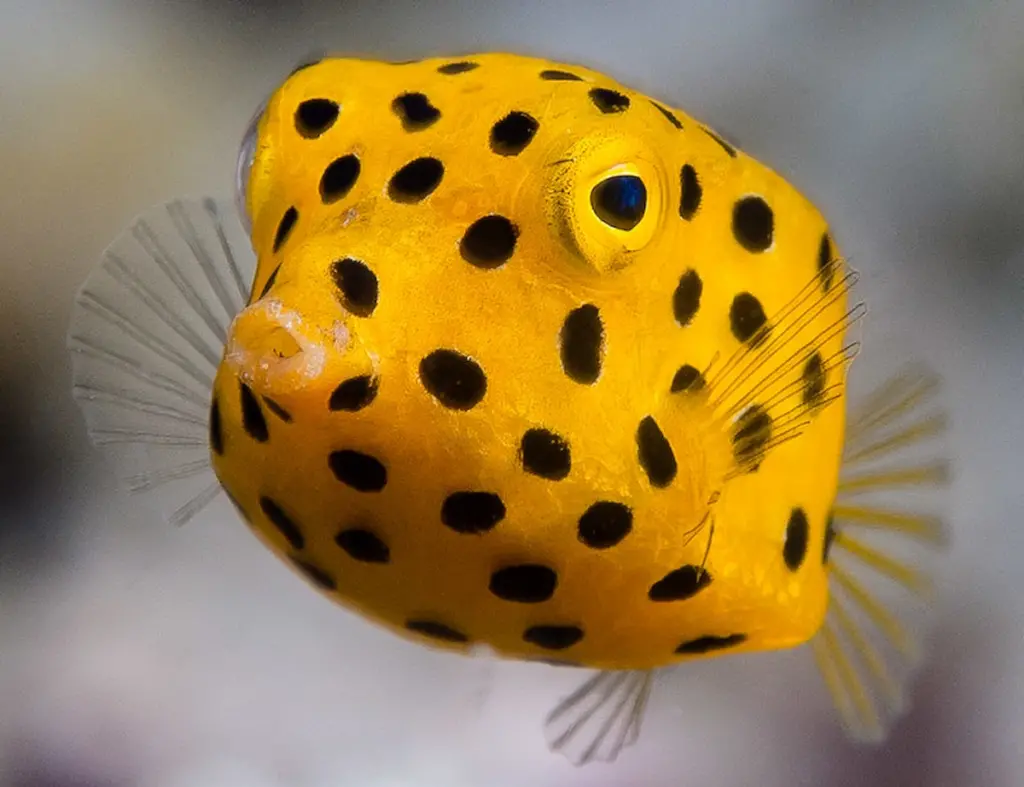
Few marine fish stop people in their tracks quite like the boxfish. With their geometric, almost cartoonish body shape, bold patterning, and curious waddling swim style, these fish are unlike anything else in the hobby. The yellow boxfish (Ostracion cubicus) in particular has become a sought-after species among experienced reef keepers, but make no mistake: boxfish are not beginner fish. They carry unique husbandry demands and a well-known defensive mechanism that can devastate a tank if things go wrong. Buying a healthy, properly quarantined specimen from a trusted source like Dr. Reef’s Quarantined Fish is not just a recommendation. It is genuinely the difference between success and heartbreak.
What Makes Boxfish So Unique
Boxfish belong to the family Ostraciidae, named for the rigid bony carapace that encases most of their body. Unlike conventional fish that flex their entire body to swim, boxfish propel themselves using only their fins, which gives them their distinctive rocking, hovering movement. This adaptation makes them fascinating to watch but also means they are not built for strong water flow or turbulent aquarium conditions.
The species most commonly encountered in the hobby include the yellow boxfish, the spotted boxfish (Ostracion meleagris), and the longhorn cowfish (Lactoria cornuta), which is technically a separate genus but closely related in terms of care requirements. Each species has its own coloration and pattern, but all share the same boxy body plan and the same critical care considerations.
Juveniles are particularly striking, often displaying vivid yellow or white coloration with bold black spots. As they mature, the coloration shifts and becomes more complex, making adult specimens visually impressive in a different way from their juvenile form.
The Ostracitoxin Warning Every Buyer Needs to Understand
Before purchasing a boxfish, every prospective keeper must understand one biological reality: boxfish are capable of releasing ostracitoxin, a powerful mucus-based toxin, when severely stressed or upon death. This substance can rapidly poison every other fish and invertebrate in a closed aquarium system, sometimes within hours.
This is not a hypothetical risk. It is one of the most commonly cited causes of total tank losses among boxfish keepers. The toxin is released involuntarily under extreme stress, which is precisely why the condition of your specimen at purchase matters so much. A fish that has been poorly handled, shipped under stressful conditions, or is already compromised in health is far more likely to trigger this response than a well-quarantined, stable animal.
At Dr. Reef’s Quarantined Fish, the quarantine process is specifically designed to reduce this risk. Specimens are held, monitored, and acclimated in controlled conditions well before they are offered for sale. By the time a boxfish is available through Dr. Reef’s, it has already demonstrated stable feeding behavior, calm demeanor, and the kind of settled disposition that dramatically reduces the likelihood of a toxic event in your display tank.
Tank Requirements for Boxfish
Boxfish require a more thoughtful setup than many marine fish. Getting the environment right before your specimen arrives is not optional. It is essential.
Tank size is the first consideration. A minimum of 125 gallons is generally recommended for adult boxfish, particularly larger species like the longhorn cowfish, which can reach 18 inches or more in the wild. Juveniles can be kept in smaller systems temporarily, but they grow steadily and will need the space. A larger volume of water also provides a critical buffer if a toxin release ever does occur, diluting the substance before it can reach lethal concentrations for tankmates.
Water flow should be moderate and non-turbulent. Boxfish struggle in strong, chaotic currents and will exhaust themselves trying to hold position. Aim for gentle, broad movement through the tank rather than high-velocity jets from powerheads. Sump-based filtration systems are ideal, as they allow for excellent water quality without the need for aggressive in-tank flow.
Water quality parameters need to be pristine and stable. Boxfish are more sensitive to ammonia and nitrite than many hardy marine species, and they do not handle large swings in salinity or temperature well. Target a salinity of 1.025 to 1.026 specific gravity, a temperature of 72 to 78 degrees Fahrenheit, and ammonia and nitrite at zero at all times. A well-established biological filter is non-negotiable before adding any boxfish.
Decor should include plenty of open swimming space combined with caves and overhangs where the fish can retreat and rest. Live rock is beneficial for biological filtration and provides natural grazing opportunities, as boxfish in the wild feed on sponges, tunicates, and small benthic invertebrates.
Boxfish and Reef Compatibility
This is where honest guidance matters. Boxfish are not considered fully reef-safe. They are known to nip at soft corals, clams, tubeworms, and small crustaceans. In a dedicated fish-only with live rock system, they are far easier to accommodate. In a mixed reef with prized corals and invertebrates, the risk of nipping behavior is a real concern that varies by individual fish and tank size.
The toxin risk also means that boxfish are best kept with robust, non-aggressive tankmates that are unlikely to harass or stress them. Avoid housing boxfish with nippy species, aggressive feeders that might outcompete them, or overly curious fish that might crowd them. Calm, larger fish such as tangs, angelfish, and larger wrasses can work in a well-planned system, though individual temperament always plays a role.
Feeding Boxfish in Captivity
One of the most important indicators of a healthy boxfish at purchase is its willingness to accept prepared foods. In the wild, boxfish are grazers and hunters, picking at sponges, small invertebrates, and algae across the reef. In captivity, transitioning to prepared foods is essential for long-term health.
At Dr. Reef’s Quarantined Fish, specimens are fed and observed during the quarantine period specifically to confirm that each fish is accepting food reliably before being offered for sale. This is enormously valuable because a boxfish that refuses to eat in a new environment is under stress, and a stressed boxfish is a risk to its tankmates.
Target foods in captivity include high-quality frozen preparations such as mysis shrimp, brine shrimp, and chopped seafood, along with sponge-based foods specifically formulated for obligate sponge feeders. Offering a varied diet and feeding small amounts multiple times per day, rather than one large feeding, tends to suit the boxfish’s natural grazing behavior.
Why Quarantine Matters More for Boxfish Than Almost Any Other Fish
The combination of the toxin risk and the boxfish’s sensitivity to stress means that the quarantine history of your specimen is more critical here than with most marine fish. A boxfish that has been rushed from collection to shipping to your tank without a proper acclimation period is a liability, plain and simple.
Dr. Reef’s Quarantined Fish puts every boxfish through an extended observation period that includes monitoring for disease, parasites, behavioral abnormalities, and feeding response. Common health concerns in boxfish include ich, velvet, and bacterial infections that can be difficult to treat once established in a display tank, particularly given the toxin risk associated with more invasive treatment methods. Addressing these issues during quarantine, before the fish enters your system, is the only safe approach.
The transparency that Dr. Reef’s provides about each specimen’s quarantine duration, feeding history, and behavioral observations gives buyers the information they need to make a genuinely informed decision, rather than guessing at a fish’s condition from a brief online description.
Pricing and Long-Term Investment
Boxfish from quality sources are priced to reflect the significant investment of time and care that goes into producing a stable, healthy specimen. Expect to pay more for a properly quarantined boxfish than you would for a fish shipped straight from a wholesaler, and consider that premium carefully in context. The alternative is a fish that may arrive stressed, refuse food, decline over weeks, and potentially take your entire display tank with it in a worst-case scenario.
Viewed through that lens, purchasing from Dr. Reef’s Quarantined Fish is not just the safer option. It is the more economical one over any meaningful time horizon.
A Final Word for Prospective Boxfish Keepers
Boxfish reward patient, prepared, and experienced keepers with years of personality-driven entertainment. They recognize their owners, interact with their environment in curious ways, and bring a genuinely unique visual character to any system. They are not forgiving of rushed decisions, poor water quality, or incompatible tankmates.
If you are ready to meet their requirements, sourcing your specimen from Dr. Reef’s Quarantined Fish gives you the strongest possible foundation for success. A healthy fish from a trusted specialist, introduced into a well-prepared tank, is the beginning of one of the most rewarding experiences the marine aquarium hobby has to offer.