
Blue Tang for Sale: Care Guide, Tank Size Requirements, and Feeding Tips

Blue Tang for Sale: Care Guide, Tank Size Requirements, and Feeding Tips
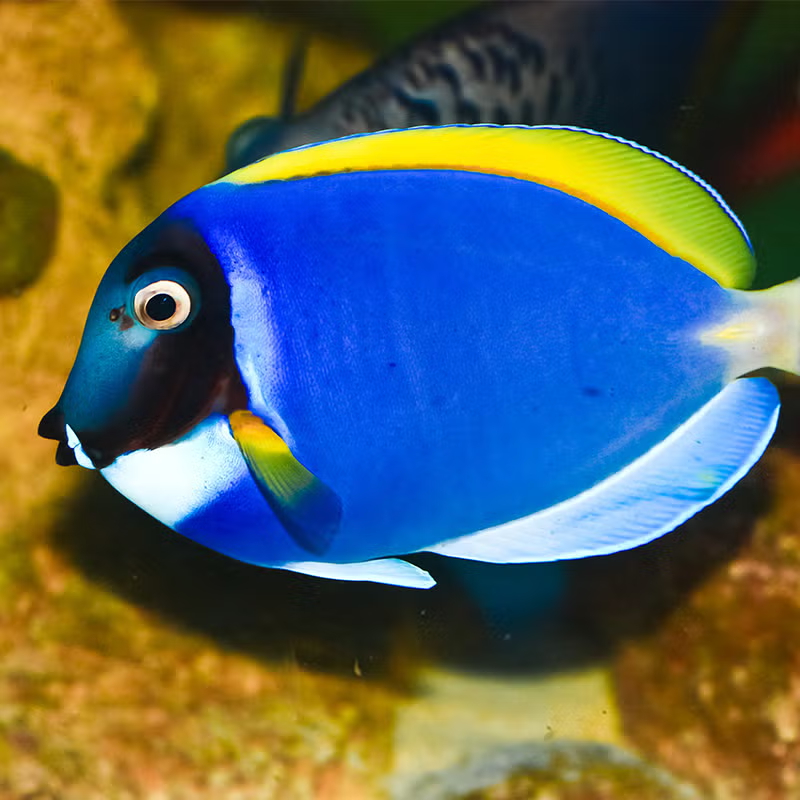
The Blue Tang is one of the most recognizable saltwater fish in the world. With its vivid blue body, bold black markings, and bright yellow tail, this fish is absolutely stunning under reef lighting. If you have watched Finding Nemo or Finding Dory, you already know this fish. And if you have ever seen one gliding through a coral reef aquarium, you know why so many hobbyists want one.
But the Blue Tang is not a beginner fish. It takes space, stability, and a commitment to proper care. When you buy from Dr. Reef’s Quarantined Fish, you get a fish that has already been through the hardest part: full disease treatment and conditioning before it ever ships to your door.
Here is everything you need to know.
Meet the Blue Tang
The Blue Tang (Paracanthurus hepatus), also known as the Regal Tang, Hippo Tang, Palette Surgeonfish, and Pacific Blue Tang, is native to the Indo-Pacific region, including the reefs of Indonesia, the Philippines, Japan, Fiji, and Australia.
Adults can reach up to 12 inches in the wild, though most captive-kept fish reach 8 to 10 inches depending on tank size and feeding. They are active, constant swimmers that need a lot of horizontal swimming space.
Like all surgeonfish, the Blue Tang has sharp caudal spines on the sides of its tail that it uses for defense. Handle with care if you ever need to net this fish. If you want a slightly easier introduction to the species, the captive-bred Blue Hippo Tang is also available at Dr. Reef’s and is notably hardier and more adaptable than wild-caught specimens.
Why Quarantine Is Critical for Blue Tangs
Blue Tangs have a well-earned reputation for being highly susceptible to parasites. Marine ich and marine velvet can hit this species fast and hard. A single unquarantined tang added to a display tank has crashed many a reef. The parasite spreads through the water, infecting other fish before you even notice the problem.
This is exactly why the quarantine step that most stores skip is so critical with this species.
At Dr. Reef’s Quarantined Fish, the process is thorough and methodical. You can read the full details on the quarantine protocol page. Fish are received and visually checked by Dr. Reef personally. They go straight into quarantine tanks with Chloroquine Phosphate at a starting dose of 20 mg per gallon, raised to 40 mg per gallon after 24 hours. Fish treated with Copper Power start at 1 ppm and are raised to 2.25 to 2.50 ppm. They stay at treatment levels for two full weeks.
After two weeks, fish move to observation tanks where they receive Prazipro and Metro to eliminate internal parasites. Treatments are repeated every 3 to 5 days. Fish are also fed twice daily throughout the process on a 50/50 mix of frozen mysis and brine shrimp, with vitamin additives like Selcon and garlic guard.
By the time your Blue Tang ships, it has been cleared of parasites inside and out, and it is already eating frozen foods. That is the Dr. Reef difference.
For current pricing on Blue Tangs, visit drreefsquarantinedfish.com and request a quote. Both wild-caught and captive-bred options are listed on the site.
Tank Size Requirements
This is the most important thing to get right before you buy a Blue Tang.
Minimum tank size: 125 to 180 gallons. Some sources list lower numbers as a minimum, but reef experts and Dr. Reef’s own product listing consistently recommend 125 gallons as an absolute minimum for juveniles, with 180 gallons being the proper target for adults. A Blue Tang that grows to full size in a small tank will be stressed, prone to disease, and may become aggressive.
The tank should be wide rather than tall. Blue Tangs swim back and forth constantly from one end of the tank to the other. A long, wide footprint gives them the horizontal swimming space they need.
Aquascape: Provide plenty of live rock for grazing, along with open swimming lanes. The Blue Tang needs both: a place to dash into when stressed, and a clear lane to cruise through all day. If you need equipment to build out a proper sump setup, the supplies and equipment section at Dr. Reef’s has quality options including filtration systems and lighting.
A sump setup is strongly recommended. This fish is too demanding on water quality for a hang-on-back filter setup. A sump adds volume, stability, and space for a protein skimmer, which is essential.
Water Parameters
Blue Tangs are not forgiving of unstable water.
Temperature: 75 to 82 degrees F
pH: 8.1 to 8.4
Salinity: 1.020 to 1.025
Ammonia: zero
Nitrite: zero
Nitrate: as low as possible
Perform water changes of at least 20 percent weekly and clean your filtration system regularly. Test your water consistently. Any ammonia spike or sudden salinity shift will stress this fish and make it more vulnerable to ich.
Feeding Your Blue Tang
The Blue Tang is primarily an herbivore, though it also needs some protein in its diet.
Algae and seaweed are the foundation of its diet. Clip dried nori seaweed to a veggie clip inside the tank. Provide plenty of live rock with natural algae growth for grazing between meals. A refugium growing macroalgae is a great supplemental food source and Dr. Reef’s carries a selection of marine plants and algae worth exploring.
Spirulina-based pellets and algae blends are another excellent daily staple. Marine algae-based frozen blends work well too.
Add protein: Enriched frozen mysis or brine shrimp should be offered a few times per week. Without enough protein and variety, Blue Tangs can develop head and lateral line erosion disease (HLLE), which causes pitting and discoloration on the head and along the lateral line. This is fully preventable with good nutrition.
Feed two to three times per day in small amounts. Tangs have small stomachs and do better with multiple smaller meals than one large feeding.
Vitamin-enriched foods boost immunity and help keep colors vibrant. Soak dried seaweed or frozen food in supplements a few times per week. Because Dr. Reef feeds every fish during quarantine, your Blue Tang will already be accustomed to frozen foods before it arrives.
Tank Mates
Blue Tangs are generally peaceful toward other saltwater fish species. They get along well with clownfish, gobies, reef-safe wrasses, cardinalfish, and most reef fish of similar or smaller size.
However, they can be territorial toward other tangs, especially fish with a similar body shape. If you want to keep multiple tangs, introduce them all at the same time and make sure your tank is large enough to reduce competition. The full tang collection at Dr. Reef’s includes other popular species like the Powder Blue Tang and the Tomini Tang if you want to plan a multi-tang system carefully. Not sure which fish work well together? The compatibility chart at Dr. Reef’s is a quick and easy starting reference.
Keeping just one Blue Tang per tank is the safest approach for most hobbyists.
Common Health Issues
Marine Ich is the number one concern with this species. White spots appear on the body, the fish scratches against rocks, and breathing may become labored. It is prevented by proper quarantine before introduction.
Marine Velvet shows as fine dust-like spots, especially visible under light. More lethal than ich. Also prevented by quarantine.
HLLE (Head and Lateral Line Erosion) causes pitting and color loss on the head area. It results from poor diet, especially a lack of vitamins, and is treatable and preventable through proper feeding.
Stress from overcrowded or small tanks is a root cause of many Blue Tang health problems. Give this fish space and it will reward you for years. Blue Tangs can live 15 to 20 years or more in captivity with proper care.
What to Look for When Selecting a Blue Tang
When selecting your fish, look for a specimen that is actively swimming, showing bright blue coloration without pale patches, eating in the tank, and showing no visible white spots, frayed fins, or sunken belly.
When you order from Dr. Reef’s Quarantined Fish, this evaluation has already been done. Dr. Reef personally checks each fish and will not ship anything that does not meet his health standards. If you have questions after ordering, the FAQs page and 24/7 email support team are both available to help.
Is the Blue Tang Right for Your Tank?
If you have a tank of 125 gallons or more, a mature system with stable water, and a reliable feeding routine, the Blue Tang is one of the most rewarding fish you can own. Its bold colors, active personality, and reef-safe herbivorous diet make it a centerpiece fish that works in almost any community reef.
The key is starting with a healthy, properly quarantined fish. Before your fish arrives, review the acclimation guide on the Dr. Reef’s website to give it the smoothest possible transition into its new home. That is exactly what Dr. Reef’s Quarantined Fish provides.
Visit drreefsquarantinedfish.com to request a quote on a Blue Tang today. Check the site for current promotions and available stock. Shipping is free on orders over $500, and there are often coupon codes available for discounts on fish, inverts, and corals.