
Black and White Clownfish for Sale: Care Guide, Breeding Tips, and Tank Setup

Black and White Clownfish for Sale: Care Guide, Breeding Tips, and Tank Setup
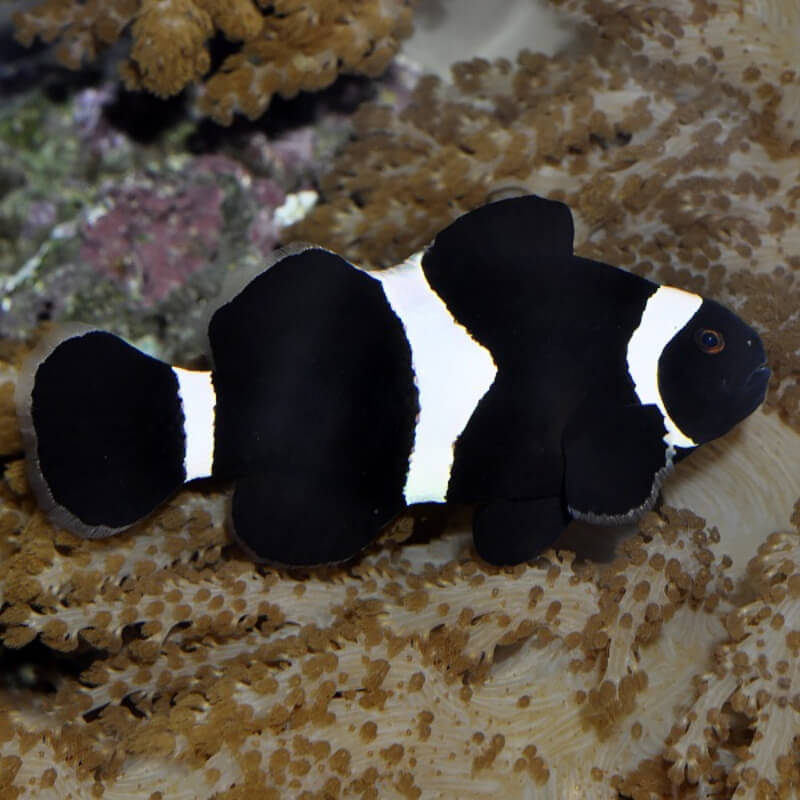
Black and white clownfish are one of the most eye-catching designer morphs in the saltwater hobby. While most people think of the classic orange clownfish made famous by the movies, the black and white variety offers something truly different: a bold, dramatic look that makes it a standout in any reef tank.
If you are thinking about adding one to your aquarium, this guide covers everything you need to know, plus why ordering from Dr. Reef’s Quarantined Fish gives you the healthiest possible start.
What Is a Black and White Clownfish?
The black and white clownfish is most commonly a color variant of the Ocellaris Clownfish (Amphiprion ocellaris), sometimes called the Black Ocellaris or Black and White Percula. Instead of the standard orange body with white stripes, this morph features a deep black body with crisp white stripes outlined in black. The effect is stunning under aquarium lighting.
These fish are almost always captive-bred through selective breeding programs. That is actually a good thing: captive-bred clownfish are more resilient, eat prepared foods more readily, and do not harm wild reef populations. If you love the look of dark designer clownfish, the full clownfish collection at Dr. Reef’s has a range of incredible variants worth exploring, from the Black Ice Clownfish to the Black Storm Clownfish.
Why Pre-Quarantined Fish Make the Difference
Wild-caught or improperly handled clownfish can carry marine ich, Brooklynella, and other parasites into your tank. Even a fish that looks perfectly healthy can be harboring a disease that will show up days after you add it to your display tank.
At Dr. Reef’s Quarantined Fish, every fish goes through a full quarantine process. You can read the exact steps on the quarantine protocol page. Fish are treated with Chloroquine Phosphate or Copper Power, then observed and treated for internal parasites with Prazipro and Metro. They are fed twice daily throughout quarantine, so by the time your fish ships, it is eating well and in great health.
For pricing, availability, and to place a custom order, visit drreefsquarantinedfish.com.
Tank Setup for Black and White Clownfish
Clownfish are one of the most beginner-friendly saltwater fish available, and the black and white variety is no different when it comes to care.
Minimum Tank Size: A 20-gallon tank works for a single fish or a bonded pair. If you plan to add other tank mates, a 30-gallon or larger tank is better.
Water Parameters:
Temperature: 74 to 80 degrees F
pH: 8.1 to 8.4
Salinity: 1.020 to 1.026
Ammonia and nitrite: zero
Aquascape: Clownfish like to claim a spot as their own. Give them a cave, coral head, or anemone to host. They will swim near it, defend it, and use it as a refuge. If you need equipment to keep conditions stable, the supplies and equipment section at Dr. Reef’s carries quality options including lighting and filtration systems.
Filtration: Standard marine filtration works well. Do regular water changes, about 10 to 25 percent every two to four weeks, and keep ammonia and nitrate levels low.
Flow: Clownfish have rounded fins and are not strong swimmers. Keep the flow moderate. Avoid high-powered powerheads aimed directly at their territory.
Anemone Hosting: Black and white clownfish may host in a Bubble Tip Anemone or other suitable anemone, but hosting is never guaranteed with captive-bred fish. Many will happily claim a coral head, a waving torch coral, or even a corner of the tank instead. Do not worry if yours never hosts. That is completely normal.
Feeding Your Black and White Clownfish
Clownfish are omnivores and some of the easiest saltwater fish to feed. They will eat high-quality flake or pellet foods, frozen mysis shrimp, frozen brine shrimp, and chopped seafood and prepared marine foods. You can browse a full range of ready-to-ship frozen food options directly through Dr. Reef’s.
Feed two to three times a day, giving only as much as the fish can eat in about two to three minutes. Leftover food in the tank leads to poor water quality and algae problems.
For breeding pairs or fish you want to condition for spawning, feed at least three times a day with a variety of high-quality foods. Soaking food in vitamins like Selcon or garlic guard boosts nutrition and appetite.
Because Dr. Reef feeds fish during quarantine on a mix of frozen mysis and brine with vitamin additives, your fish will already be eating enthusiastically when it arrives.
Breeding Black and White Clownfish
One of the most exciting things about keeping clownfish is that they can and do breed in home aquariums. Here is what you need to know.
Pairing: All clownfish are born male. In a group, the dominant fish becomes female. To form a pair, start with two juveniles introduced at the same time, or pair a smaller juvenile with a larger, established fish. The smaller one will eventually become the male. If you would like to skip the pairing process entirely, Dr. Reef’s also offers bonded Black Ice pairs with an established male-female relationship already in place.
Spawning Conditions: To encourage spawning, keep the tank temperature around 78 to 80 degrees F and feed the pair heavily. Provide a flat surface like a clay pot, slate, or flat rock near the hosting spot. Clownfish prefer a stable, quiet area for egg-laying.
Eggs: A healthy pair can lay anywhere from 50 to 500 eggs. The male cleans and guards the eggs until they hatch. Eggs typically hatch in 6 to 11 days, depending on water temperature.
Raising Fry: Clownfish larvae need a separate hatching tank. Use a 10-gallon tank with gentle aeration and adjustable lighting. Keep one side lit and leave a dark side for the larvae to retreat to. Feed rotifers for the first 10 days, then slowly introduce fine larval foods and crushed flakes after metamorphosis, which occurs around day 10. Water quality in the fry tank is critical. Small, frequent water changes are essential.
Tank Mates
Black and white clownfish are relatively peaceful. Good companions include gobies, firefish, blennies, dartfish, small reef-safe wrasses, and most reef-safe shrimp and crabs. Not sure what pairs well together? The compatibility chart at Dr. Reef’s is a handy reference before adding anything new.
Avoid keeping two different pairs of clownfish together in a small tank. They will fight. If you want multiple clownfish, introduce them all at the same time in a larger tank, and watch for aggression closely.
Common Health Issues
Clownfish are hardy, but they are susceptible to Marine Ich (Cryptocaryon), Brooklynella, and Marine Velvet. All of these diseases are dramatically reduced when you start with a properly quarantined fish from Dr. Reef’s. For more detail on what the quarantine process actually treats and prevents, the FAQs page covers common questions about disease prevention, shipping, and fish health.
Ready to Order?
Black and white clownfish from Dr. Reef’s Quarantined Fish are ordered by request. The process takes around 30 to 45 days from order to shipping, during which time your fish is acquired, quarantined, treated, observed, and conditioned to eat well. Before your fish arrives, make sure to review the acclimation guide so the transition into your tank goes as smoothly as possible.
If you enjoy the black morph look but want to explore other options, the Phantom Clownfish and the Longfin Ocellaris are both worth a look while you are browsing.