
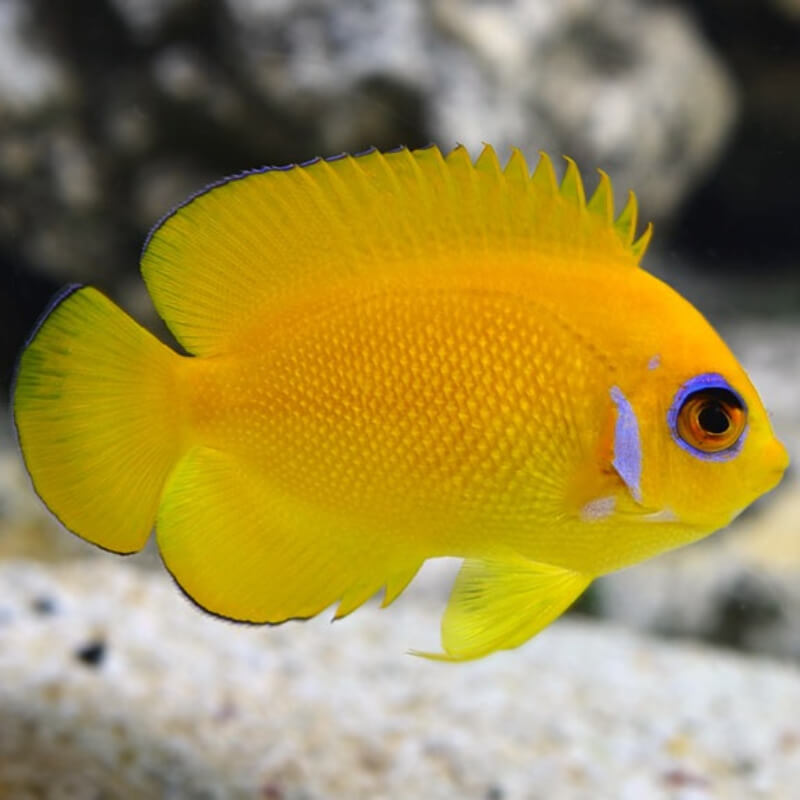
Lemonpeel Angelfish
$99.99
Centropyge flavissima
| Care Level | Moderate |
| Temperament | Semi-aggressive |
| Color Form | Bright lemon-yellow body with vivid blue highlights around the eyes |
| Diet | Omnivore |
| Reef Compatible | with Caution |
| Water Conditions | 72–78°F (22–26°C), Sg 1.023–1.025, pH: 8.1–8.4, dKH: 8–12 |
| Max Size | 6″ |
| Family | Pomacanthidae |
| Minimum Tank Size | 70 gallons |
3-Day Guarantee
Approximate Purchase Size: Small: 1-2″; Medium: 2-3″; Large: 3-4″
Description
Lemonpeel Angelfish
Also known as the Lemon Angel or Yellow Angelfish
The Lemonpeel Angelfish is a vibrant marine species celebrated for its brilliant lemon-yellow body accented with electric blue highlights around the eyes, gill covers, and fin edges. Native to the Indo-Pacific region, this small but bold dwarf angelfish brings a burst of sunshine and personality to marine aquariums, making it one of the most popular and recognizable members of the Centropyge genus.
Key Features
- Scientific Name: Centropyge flavissima
- Common Names: Lemonpeel Angelfish, Lemon Angel, Yellow Angelfish
- Adult Size: Up to 5–6 inches
- Lifespan: 5–10+ years with proper care
- Temperament: Semi-aggressive; territorial, especially toward other dwarf angels
- Reef Compatibility: Not reef-safe – known to nip at corals, clam mantles, and sessile invertebrates
- Minimum Tank Size: 70 gallons (minimum); 90+ gallons preferred
- Experience Level: Intermediate
Habitat & Tank Requirements
- Tank Environment: Provide abundant live rock with caves, crevices, and complex hiding spots. Lemonpeels are active grazers that require territories to explore and defend.
- Water Parameters:
- Temperature: 72–78°F (22–26°C)
- Salinity: 1.023–1.025
- pH: 8.1–8.4
- Ammonia/Nitrite: 0 ppm
- Nitrate: <20 ppm
- dKH: 8–12
- Aquascape: Dense live rock formations with natural algae growth are essential for grazing and establishing territory. Ensure multiple hiding spots to reduce stress.
- Compatibility: Best kept as the only dwarf angelfish in the system. Can coexist with semi-aggressive fish of different families (tangs, clownfish, dottybacks, wrasses) but may harass peaceful or timid species. Avoid housing with other Centropyge species unless in very large aquariums (150+ gallons) with strategic rockwork placement.
Diet & Feeding
Lemonpeel Angelfish are omnivores requiring a balanced diet with emphasis on algae and plant matter:
- Plant Matter: Marine algae, spirulina, nori sheets, high-quality herbivore pellets and flakes
- Meaty Foods: Mysis shrimp, vitamin-enriched brine shrimp, finely chopped seafood, marine fish flakes
- Specialty Items: Foods containing sponge material (important for maintaining health and vibrant coloration)
- Natural Grazing: Will pick at microalgae, film algae, and detritus on live rock throughout the day
- Feeding Schedule: Feed 2–3 times daily with multiple small portions. Frequent feeding helps maintain brilliant coloration and reduces stress-related aggression.
Notes & Considerations
- Behavior: Lemonpeels are bold and active once established, constantly exploring rockwork and patrolling their territory. They can display surprising aggression despite their small size, particularly toward new additions or similar-shaped fish.
- Coral Compatibility: Notorious for nipping at large-polyp stony corals (LPS), soft corals, zoanthids, and clam mantles. While some individuals may be better behaved than others, they should not be considered reef-safe. May tolerate some hardy SPS and noxious soft corals, but this varies by individual.
- Acclimation Sensitivity: Can be delicate during initial acclimation and shipping. Proper acclimation, stable water parameters, and a stress-free introduction period are critical. May hide for the first few days before becoming confident.
- Coloration Variations: Intensity of yellow coloration and extent of blue edging can vary between individuals and geographic populations. Well-fed specimens display the most vibrant colors.
- Gender: Sexual dimorphism is minimal and not easily observed. Lemonpeels are protogynous hermaphrodites (females can transform into males). Captive breeding is rare but has been documented by specialized breeders.
- Tank-Bred Availability: Some aquacultured specimens are occasionally available and tend to be hardier and better adapted to captive life than wild-caught individuals.
- Disease Susceptibility: Like many dwarf angels, Lemonpeels can be prone to marine ich (Cryptocaryon) and velvet (Amyloodinium), especially when stressed. Quarantine is highly recommended.
Why Choose a Quarantined Lemonpeel Angelfish?
Our quarantined Lemonpeel Angelfish are carefully conditioned, disease-screened, and feeding vigorously on varied prepared foods before sale. This extensive quarantine period ensures you receive a healthy, parasite-free specimen displaying peak coloration and established feeding behaviors, giving you the best possible start for long-term success in your aquarium.
Additional information
| Service Level | Quarantined |
|---|
Reviews (0)
You must be logged in to post a review.
Shipping & Delivery
Reviews
There are no reviews yet.