
Leopard Wrasse Care Guide: Common Challenges and Success Tips

Leopard Wrasse Care Guide: Common Challenges and Success Tips
Why the Leopard Wrasse’s sand-diving habits and picky appetite make it one of the trickiest reef fish to keep alive
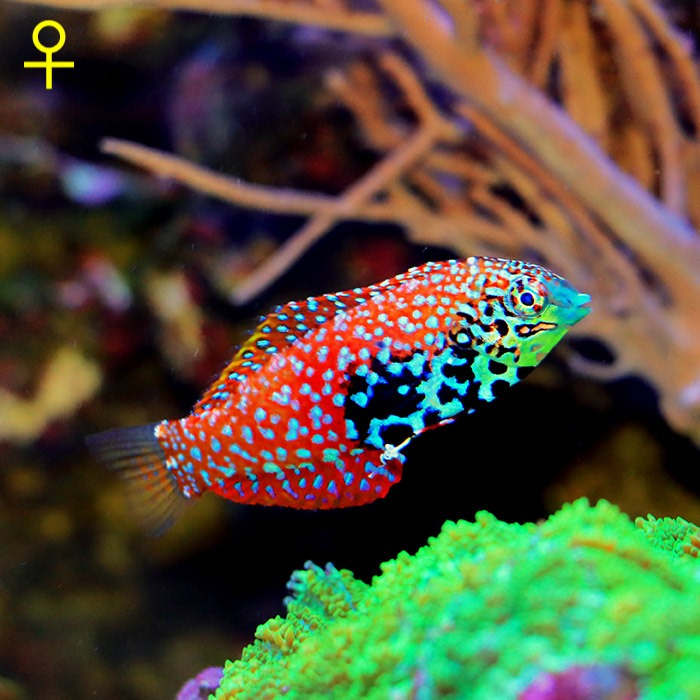
The Leopard Wrasse turns heads in every store tank it sits in. Its spotted, almost hand-painted pattern looks like nothing else in the Wrasses Reefsafe lineup, and that is exactly why so many hobbyists bring one home before they understand what it actually needs. This is not a beginner fish. It is a specialist that lives in sand, hunts live prey, and can waste away in a tank that looks perfectly healthy to everyone but the fish.
This guide walks through what actually goes wrong with Leopard Wrasses, why it happens, and what separates the hobbyists who succeed from the ones who lose their fish within a month.
What Makes the Leopard Wrasse Such a Challenging Fish
Every fish in the Macropharyngodon genus shares the same core trait: it is a sand specialist. In the wild, these wrasses spend their entire day picking tiny copepods, amphipods, and worms out of a sandy seabed, then bury themselves completely in that sand at night or whenever they feel threatened.
That single behavior explains almost every care mistake people make. A tank without enough fine sand, without an established pod population, or without enough time to mature simply cannot feed a Leopard Wrasse the way its digestive system expects. The fish starves slowly, even while food is being dropped into the tank every day.
Choosing the Right Leopard Wrasse Species
Not all Leopard Wrasses are equally demanding, and picking the right variant makes a real difference in your odds of success.
The standard Leopard Wrasse (Macropharyngodon meleagris) is the most commonly available option and, while still advanced, tends to adjust to prepared foods a bit more readily than its relatives. The Blue Star Leopard Wrasse offers a striking iridescent twist on the same pattern and carries similar care demands. The Ornate Leopard Wrasse, sometimes sold as the Adorned Wrasse, is widely considered the hardest of the three. It frequently arrives emaciated from collection and, in many cases, never fully transitions to prepared food. This one belongs only in a mature system with an expert keeper watching over it.
If you are new to sand-dwelling wrasses, start with the standard species before working up to the Ornate variant.
Tank Requirements for Leopard Wrasse Success
Sand Bed Setup
A Leopard Wrasse needs a minimum of two to three inches of fine, sugar-fine sand. This is not optional. The fish uses that sand bed every single day to hunt, and every night to disappear into for safety. Coarse crushed coral or a bare-bottom tank will not work, no matter how good the rest of the setup is.
Tank Maturity and Pod Population
This is where most failures actually start. A brand new tank, even one that has cycled properly, does not yet have a self-sustaining copepod and amphipod population living in the sand and rock. Leopard Wrasses do best in systems that have been running for at least six months to a year, with plenty of live rock to seed and support that microfauna.
Adding a refugium with a deep sand bed and macroalgae dramatically increases the food supply available to the fish around the clock, not just at feeding time.
Feeding Challenges and How to Solve Them
Getting a Leopard Wrasse to eat prepared food is the single biggest hurdle in keeping this species. Many specimens arrive from the wild already thin, having gone days or weeks without a reliable food source during collection and shipping.
A few things help enormously:
- Offer live baby brine shrimp or copepods in the first days to get the fish feeding at all
- Move to enriched frozen mysis and brine shrimp once the fish is reliably eating
- Feed small amounts multiple times a day rather than one large feeding
- Target feed with a turkey baster if other fish are outcompeting the wrasse
If a newly arrived fish is refusing everything, it helps to understand what is actually happening physiologically. Why Fish Stop Eating After Shipping and How to Help breaks down the stress response behind this and practical ways to get a fish interested in food again.
Common Health Problems and Warning Signs
A thinning body, a sunken stomach line, or a fish that buries itself and never resurfaces during the day are all red flags. Because Leopard Wrasses are naturally shy and spend time in the sand, it is easy to mistake starvation for normal behavior until the fish is already in serious trouble.
Watch for these signs early:
- A visible drop in body weight around the head and belly
- Refusal to surface even at feeding time
- Faded or dull coloration compared to when the fish arrived
- Labored breathing or clamped fins
Sourcing a fish that has already been conditioned to eat, rather than one pulled straight from the ocean, removes most of this risk before the fish ever reaches your tank.
Tankmates and Compatibility
Leopard Wrasses are peaceful and reef safe, but they are also poor competitors at feeding time. Fast, aggressive eaters like large angelfish, triggers, or boisterous tangs will out-race a Leopard Wrasse to every meal and leave it hungry. Pairing this species with calm, similarly paced tankmates gives it a fair shot at getting enough food.
Before adding any new fish to a tank that already houses a Leopard Wrasse, it is worth checking The Complete Saltwater Fish Compatibility Guide so feeding competition and aggression do not become a hidden source of stress.
Why Quarantined Leopard Wrasses Have Better Survival Odds
The difference between a Leopard Wrasse that thrives and one that fades away in the first month almost always comes down to what happened before it reached the tank. A wild-caught specimen pulled straight off a boat and shipped to a store has had no time to recover from collection stress, parasites, or starvation.
A properly quarantined fish is different. During quarantine, the fish is observed for weeks, treated preventatively for common parasites, and, most importantly, conditioned to accept prepared foods before it ever ships. That head start is often the deciding factor for a species this sensitive. You can read more about what this process actually involves in What Actually Happens During Fish Quarantine?
Once your fish arrives, a slow and careful introduction matters just as much as the quarantine period behind it. Follow the steps in the Acclimation Guide to avoid adding shipping stress on top of everything the fish has already been through.
Leopard Wrasse Pricing and Where to Buy
Leopard Wrasses are priced according to how demanding and how rare each variant is. At Dr. Reef’s Quarantined Fish, the standard Leopard Wrasse and the Blue Star Leopard Wrasse are both listed at $199.99, with the standard species occasionally available at a discounted $169.99. The Ornate Leopard Wrasse, given its difficulty and the extended conditioning it requires, is also listed at $199.99, reflecting the extra weeks of specialized care that go into preparing it for sale.
Paying a bit more for a specimen that has already been conditioned to eat is almost always cheaper in the long run than losing an unconditioned fish and starting over.
Final Thoughts
Leopard Wrasses reward patient, experienced aquarists with behavior and color you will not find anywhere else in the hobby. Success comes down to three things: a mature tank with a real sand bed and pod population, a feeding routine built around the fish’s needs rather than convenience, and a specimen that was properly conditioned before it ever left the supplier. Get those three right, and a Leopard Wrasse can live for years as one of the most fascinating fish in your reef.