
Clownfish for Sale: Best Varieties, Care Needs, and Beginner Tips

Clownfish for Sale: Best Varieties, Care Needs, and Beginner Tips
Ask anyone outside the saltwater hobby to name a marine fish, and the answer is almost always a clownfish. They are the most recognized, most loved, and most kept marine aquarium fish in the world. But within the clownfish world, there is an extraordinary diversity of species, color variants, and designer morphs that even experienced hobbyists spend years exploring. At Dr. Reef’s Quarantined Fish, every clownfish is fully quarantined, parasite-treated, and eating before it ships to you. Visit Dr. Reef’s website for current pricing and availability across the full clownfish collection.
Why Clownfish Are Perfect for Beginners and Experts Alike
Clownfish occupy a genuinely rare position in the saltwater hobby. They are hardy enough for first-time marine keepers, interesting enough to hold the attention of experienced reef builders for decades, beautiful enough to anchor any size display tank, and diverse enough in species and designer variants to support a lifetime of collecting.
They are completely reef-safe, compatible with corals and anemones, manageable in tank size requirements, and willing eaters that accept prepared foods readily. Almost every quality that makes a marine fish easy and rewarding to keep describes clownfish perfectly.
Best Clownfish Varieties
Ocellaris Clownfish (Amphiprion ocellaris)
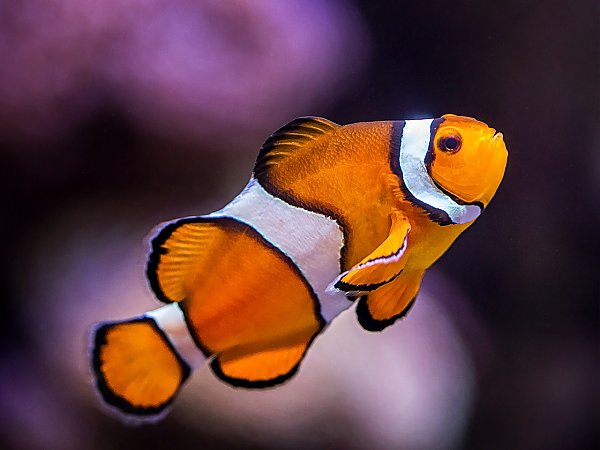
The classic. Orange body with three white stripes edged in black. The most widely kept marine fish in the world is the perfect starting point for any saltwater aquarium. Hardy, peaceful, reef-safe, and available in numerous designer morphs, including Picasso, Snowflake, Midnight, and Black Storm variants. Grows to 3 to 4 inches.
Percula Clownfish (Amphiprion percula)
Nearly identical in appearance to the Ocellaris, but with deeper black edging on the white stripes and a slightly more vivid orange base color. True Perculas are generally considered slightly more delicate than Ocellaris and command a modest premium. Also available in designer variants. Grows to 3 to 4 inches.
Maroon Clownfish (Premnas biaculeatus)
The largest and boldest clownfish species. Deep burgundy-red body with white or gold stripes, unique cheek spines, and a personality that fills the entire tank. The Gold Stripe Maroon variant, with its brilliant metallic yellow stripes, is one of the most visually stunning clownfish available. Grows to 6 inches for females.
Clarkii Clownfish (Amphiprion clarkii)
One of the most widely distributed and adaptable clownfish species with the broadest anemone host compatibility in the hobby. Bold orange and black coloring with white stripes and a cheerful, active personality. An excellent breeder and a great choice for hobbyists interested in clownfish propagation. Grows to 4 to 5 inches.
Picasso Clownfish
A designer variant of the Ocellaris produced through selective breeding, displaying bold, irregular white patterning that makes every individual fish a unique living work of art. Available in Standard, Premium, and High Grade expressions. One of the most collectible and photographed clownfish morphs in the hobby.
Black Storm Clownfish
The most dramatic designer clownfish morph available, combining deep jet-black body coloration with chaotic, irregular white patterning. Electrifying under blue reef lighting and genuinely one of a kind in the marine hobby.
Care Needs
Tank Size
Most clownfish species are comfortable in tanks as small as 20 to 30 gallons. Maroon Clownfish benefit from 55 gallons or more, given their size and territorial behavior. All clownfish species thrive in larger systems alongside compatible community fish.
Water Parameters
- Temperature: 74 to 79 degrees Fahrenheit
- Salinity: 1.023 to 1.026 specific gravity
- pH: 8.1 to 8.4
- Ammonia and Nitrite: 0 ppm
- Nitrate: Under 10 ppm for best results
Feeding
Clownfish accept nearly all prepared marine foods. Frozen mysis shrimp, high-quality marine pellets, frozen brine shrimp, and finely crushed flake food all work well. Feed two to three times daily in small amounts. Every clownfish from Dr. Reef’s Quarantined Fish is already eating prepared foods before it ships.
Anemone Hosting
Clownfish do not need an anemone to live full, healthy lives in captivity, but the hosting relationship is one of the most fascinating natural behaviors you can observe in a home aquarium. Bubble Tip Anemones are the most practical host for most clownfish species and are widely available in the reef hobby.
Beginner Tips
Start with a single Ocellaris or a known bonded pair. Make sure your tank has been running and cycled for at least 4 to 6 weeks before adding fish. Buy from a quarantined source like Dr. Reef’s Quarantined Fish to eliminate the disease introduction risk that unquarantined fish bring to new tanks. Feed a varied diet of frozen and prepared foods from day one. Keep water parameters stable and test weekly during the first few months.
Clownfish are forgiving of minor mistakes and will thrive in the hands of a careful, attentive beginner. They are the perfect foundation for a marine aquarium that grows in size, complexity, and ambition over years of rewarding experience.
Visit Dr. Reef’s Quarantined Fish website for current pricing and the full variety of clownfish species and designer morphs available.