
Lionfish for Sale: Species Comparison, Care Guide, and Feeding Tips

Lionfish for Sale: Species Comparison, Care Guide, and Feeding Tips
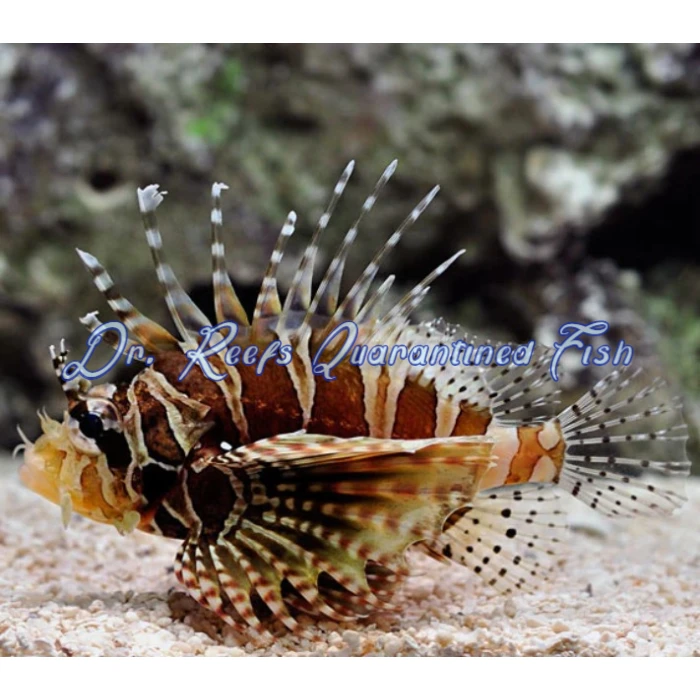
Few fish in the saltwater hobby command the kind of immediate, jaw-dropping attention that a Lionfish does. Flowing pectoral fins spread like wings, bold striped coloration, venomous dorsal spines standing at attention, and a slow, almost swagger through the water column. A Lionfish does not swim through a tank. It presides over it. At Dr. Reef’s Quarantined Fish, every Lionfish is fully quarantined, parasite-treated, and trained to eat frozen foods before it ships to you. Visit Dr. Reef’s website for current pricing and availability on all Lionfish species.
What Is a Lionfish?
Lionfish belong to the subfamily Pteroinae within the family Scorpaenidae, a diverse group of venomous marine fish found throughout the Indo-Pacific Ocean. They are characterized by their dramatically elongated dorsal, pectoral, and anal fin rays, bold striped coloration that serves as a warning to predators, and venomous dorsal spines capable of delivering a painful and medically significant sting.
In the aquarium hobby, Lionfish are among the most beloved and widely kept predator fish, prized for their visual impact, interactive personalities, and the sheer drama they bring to any display tank they inhabit.
Important Safety Note: All Lionfish species have venomous dorsal, pelvic, and anal spines. A sting causes immediate, intense pain and requires medical attention. Always use tools when working in a Lionfish tank and never handle these fish with your bare hands.
Species Comparison
Volitans Lionfish (Pterois volitans)
The most iconic and widely recognized Lionfish species. The Volitans is the largest commonly kept Lionfish, reaching 12 to 15 inches at adult size with dramatically elongated pectoral fin rays that can span nearly the full body length. Bold red, white, and brown striping and an impressive, commanding presence make this the ultimate display Lionfish for large FOWLR systems. Requires a minimum 120-gallon tank.
Antennata Lionfish (Pterois antennata)
A medium-sized Lionfish reaching 8 to 10 inches with distinctive spotted pectoral fins and long, antenna-like dorsal spines. More manageable than the Volitans but equally dramatic, the Antennata is an excellent choice for hobbyists who want full Lionfish presence in a slightly more practical package. Requires a minimum 75-gallon tank.
Fuzzy Dwarf Lionfish (Dendrochirus brachypterus)
The most popular and practical Lionfish for home aquarists. The Fuzzy Dwarf reaches only 5 to 7 inches at adult size with a stocky body covered in fleshy, hair-like appendages that give it a uniquely textured appearance unlike any other species. Full Lionfish personality and impact in a package suitable for a 30 to 55-gallon system. A fantastic entry point into Lionfish keeping.
Zebra Lionfish (Dendrochirus zebra)
A strikingly patterned dwarf species reaching 6 to 8 inches with bold alternating red and white vertical striping and large, fan-like pectoral fins. More active than the Fuzzy Dwarf and with a slightly more streamlined body shape. Requires a minimum 55-gallon tank and is one of the most visually spectacular of the dwarf species.
Radiata Lionfish (Pterois radiata)
A slender, elegant species reaching 9 to 12 inches with distinctive white-tipped dorsal spines and a more streamlined body than the Volitans. The Radiata has a reputation for being more sensitive to water quality than other Lionfish species and is best suited for experienced hobbyists with mature, stable systems.
Care Guide
Water Parameters
All Lionfish species share similar care requirements:
- Temperature: 72 to 78 degrees Fahrenheit
- Salinity: 1.020 to 1.025 specific gravity
- pH: 8.1 to 8.4
- Ammonia and Nitrite: 0 ppm
- Nitrate: Under 20 ppm
Tank Setup
Lionfish are ambush predators that spend significant time perched on rockwork waiting for prey. Provide a well-structured aquascape with caves, ledges, and overhangs at multiple heights. Lionfish appreciate having a selection of elevated perching spots with clear sightlines across the tank.
Cover all powerhead intakes with sponge guards. Lionfish move slowly and can be injured by unprotected equipment. Use titanium or external heaters to eliminate in-tank glass heater contact risk.
Lighting
Standard marine lighting works well. Lionfish are naturally most active in lower-light conditions and at dusk, so a gradual dimming cycle at the end of the photoperiod brings out their most interesting hunting and exploratory behavior.
Feeding Tips
Feeding is the most important and most entertaining aspect of Lionfish keeping.
What to Feed
- Frozen silversides (top staple food for all larger species)
- Frozen krill
- Frozen shrimp with the shell on
- Frozen squid
- Frozen mysis shrimp for the dwarf species
- Live ghost shrimp as occasional enrichment
Transitioning to Frozen Foods
Wild-caught Lionfish frequently fixate on live prey and refuse frozen foods, which is one of the most frustrating challenges in Lionfish keeping. At Dr. Reef’s Quarantined Fish, every Lionfish is trained to accept frozen foods during the quarantine process before shipping. This single advantage saves weeks of difficult feeding attempts and eliminates the ongoing cost and inconvenience of maintaining live feeder fish.
Feeding Technique
Use long feeding tongs to present food in the water column in front of the Lionfish, wiggling slightly to mimic live prey movement. Feed two to three times per week for adults. Overfeeding causes obesity and fatty liver disease, the most common long-term health issue in captive Lionfish.
Compatibility
All Lionfish are predatory toward fish small enough to eat. House them with fish of similar or larger size. They are generally peaceful toward tank mates that are not potential prey. Most Lionfish species are safe with corals, but will consume ornamental shrimp and small fish without hesitation.
Visit Dr. Reef’s Quarantined Fish website for current species availability, pricing, and sizes across the full Lionfish lineup.