
Roland Damsel
$24.99
Chrysiptera rollandi
| Care Level | Moderate |
| Temperament | Semi-aggressive |
| Color Form | Bright yellow body with a white vertical bar and blue accents on fins/eyes, Nearly solid black or very dark brown |
| Diet | Omnivore |
| Reef Compatible | Reef-safe |
| Water Conditions | 74–80 °F (23–27 °C), 1.023–1.026 sg, pH: 8.1–8.4 |
| Max Size | 5″ |
| Family | Pomacentridae |
| Minimum Tank Size | 55+ gallons |
3-Day Guarantee
Approximate Purchase Size: Small to medium
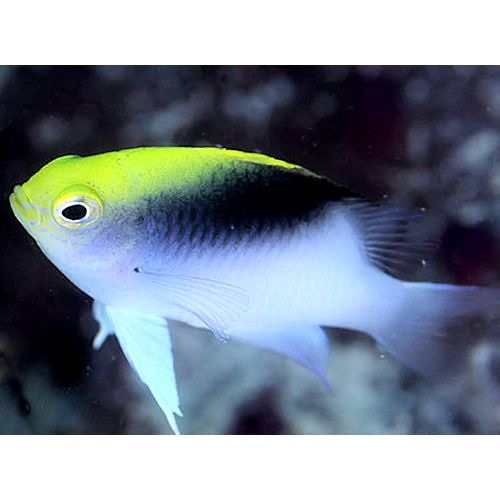
Roland Damsel (Neoglyphidodon melas)
Also known as: Black Damsel, Black-and-White Damsel, Bowtie Damsel (juveniles).
The Roland Damsel is a hardy, bold, and active damselfish found in the tropical Indo-Pacific. Juveniles are bright yellow with striking blue lines, while adults turn darker, usually deep gray to black with a white patch near the head. This species is very tough, easy to care for, and adapts to a variety of environments, making it a popular choice for hobbyists who want a strong, energetic reef fish. Although more territorial than chromis-type species, it can do well in larger tanks with the right tank mates.
Key Features
- Scientific Name: Neoglyphidodon melas
- Common Names: Roland Damsel, Black Damsel, Bowtie Damsel
- Adult Size: Around 4–5 inches (≈ 10–12 cm)
- Lifespan: Around 5–10+ years with proper care
- Temperament: Semi-aggressive, may defend its territory
- Reef Compatibility: Reef-safe and does not harm corals
- Minimum Tank Size: 55+ gallons
- Experience Level: Good for beginners, very hardy and easy to feed
Habitat & Tank Requirements
Natural Habitat
The Roland Damsel lives in shallow Indo-Pacific coral reefs, lagoons, and coastal reef slopes. Juveniles stay close to branching corals for safety, while adults roam rocky areas and reef edges where water movement is stronger. These spots give them hiding places and enough space to explore.
Tank Environment
- Provide plenty of rockwork with caves and hiding spots.
- Leave open space for swimming, especially in the middle area.
- Keep in larger tanks to reduce territorial behavior.
- Avoid very tiny or peaceful fish in small tanks.
- Moderate to strong water flow works best.
Recommended Water Parameters
- Temperature: 74–80 °F (23–27 °C)
- Salinity: 1.023–1.026 sg
- pH: 8.1–8.4
- They thrive in clean, stable water.
Diet & Feeding
Roland Damsels are omnivores. In the wild, they eat plankton, algae, small invertebrates, and organic matter.
Recommended Foods in Aquariums
- Marine pellets and flakes
- Mysis shrimp
- Brine shrimp
- Small chopped seafood
- Spirulina or algae-based foods
Feeding Schedule
Feed 1–2 small meals per day. They eat almost anything, which makes them very easy to care for.
Behavior & Compatibility
- Active, fast swimmers
- Semi-aggressive, especially as adults
- Juveniles are peaceful, but adults defend territory
- Does best in larger tanks where it can claim its own space
Suitable Tank Mates
- Larger, confident fish
- Wrasses
- Tangs
- Clownfish
- Angels, especially dwarf angels
- Other semi-aggressive species
Avoid very small, gentle fish like tiny gobies in smaller tanks.
Reef Compatibility
The Roland Damsel is fully reef-safe. It does not nip corals or damage rockwork. They can live peacefully with corals, anemones, and reef invertebrates.
Acclimation & Care Tips
- Add only to a stable, cycled tank
- Provide multiple hiding spots to reduce stress
- Feed small amounts regularly
- Keep tank lid closed because they may jump when startled
Signs of a Healthy Specimen
- Active, quick swimming
- Strong colors (yellow and blue in juveniles; dark tones in adults)
- Clear eyes
- Smooth fins
- Good appetite
- No spots, tears, or rapid breathing
Color & Development
Juveniles:
Bright yellow body with vivid blue lines and a white bowtie-shaped patch.
Adults:
Body becomes dark gray to black with a pale area near the head. Lighting, diet, and low stress help keep their color deep and vibrant.
Breeding Potential
In nature, the male cleans a rock, the female lays eggs, and the male protects and fans them until they hatch. In aquariums, this rarely happens because they become territorial and need very calm, stable conditions. Most hobbyists never see them breed in a regular tank.
Why Choose a Quarantined Roland Damsel?
A quarantined Roland Damsel is healthier, disease-free, and already used to aquarium life. During quarantine, the fish is observed closely, treated if needed, and trained to eat common foods. This gives you a strong, stress-free fish that settles quickly into your tank.
| Service Level | Quarantined |
|---|
You must be logged in to post a review.
Reviews
There are no reviews yet.