
Cream Angelfish
$139.99
Apolemichthys xanthurus
| Care Level | Moderate |
| Temperament | Semi-aggressive |
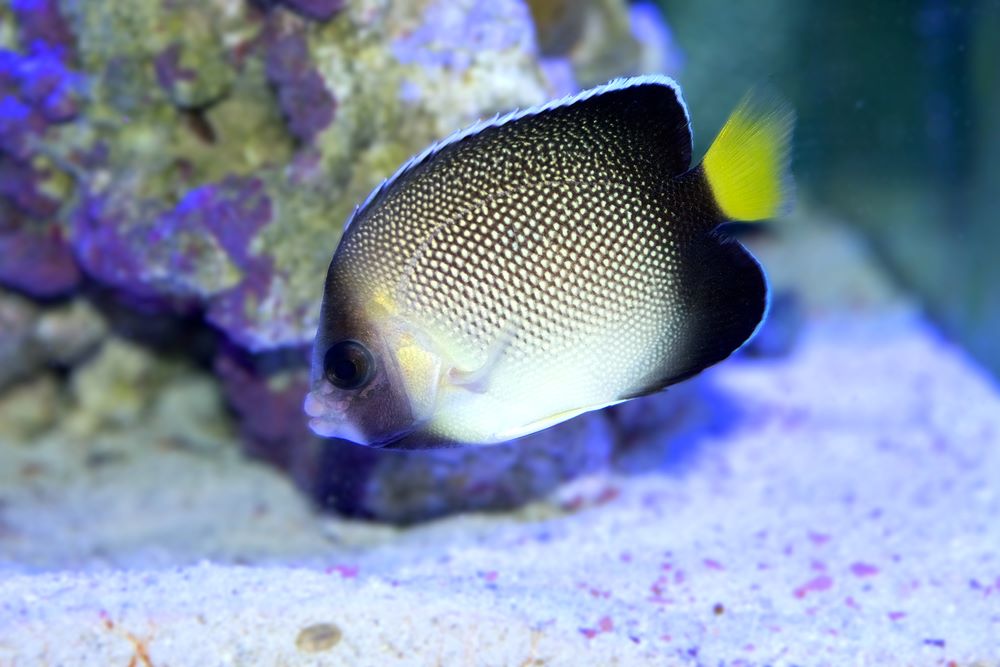
| Color Form | cream to pale silvery-gray with thin orange to red wavy vertical lines, yellow tail |
| Diet | Omnivore |
| Reef Compatible | With caution |
| Water Conditions | 72–78°F (22–26°C), Sg 1.023–1.025 ,pH: 8.1–8, dKH: 8–12 |
| Max Size | 6″ |
| Family | Pomacanthidae |
| Minimum Tank Size | 125 gallons |
3-Day Guarantee
Approximate Purchase Size: Small: 1-2.5″; Medium: 2.5-3.75″; Large: 4-5″
Description
Cream Angelfish (Captive Bred)
Also known as the Eibli Angelfish or Blacktail Angelfish
The Cream Angelfish is a graceful and moderately-sized dwarf angelfish species admired for its subtle elegance and peaceful demeanor compared to larger angelfish. Captive-bred specimens offer superior hardiness and disease resistance, making them excellent choices for intermediate marine aquarists. Native to the Indo-Pacific region, this angelfish displays soft cream to pale gray coloration with delicate orange-red wavy lines and a distinctive black vertical tail bar that gives it the “Blacktail” nickname.
Key Features
- Scientific Name: Apolemichthys xanthurus
- Common Names: Cream Angelfish, Eibli Angelfish, Blacktail Angelfish, Eibl’s Angelfish
- Adult Size: Up to 4–6 inches
- Lifespan: 5–10+ years with proper care
- Temperament: Semi-aggressive; generally peaceful but can be territorial with other dwarf angels
- Reef Compatibility: With caution – may nip at soft corals, zoanthids, and clam mantles
- Minimum Tank Size: 125 gallons
- Experience Level: Beginner to intermediate
Habitat & Tank Requirements
- Tank Environment: Provide multiple hiding places, caves, and crevices within live rock structures. Cream Angels appreciate complex rockwork that allows them to establish territory while providing grazing surfaces for algae and microorganisms.
- Water Parameters:
- Temperature: 72–78°F (22–26°C)
- Salinity: 1.023–1.025
- pH: 8.1–8.4
- Ammonia/Nitrite: 0 ppm
- Nitrate: <20 ppm
- dKH: 8–12
- Aquascape: Live rock with plenty of nooks and natural algae growth. They spend much time exploring rockwork and grazing on film algae.
- Compatibility: Can be kept with most peaceful to semi-aggressive fish. May display territorial behavior toward other dwarf angelfish, especially in smaller tanks. Best added after more timid species are established. Compatible with small to medium-sized reef fish.
Diet & Feeding
Cream Angelfish are omnivores that require a balanced, varied diet:
- Meaty Foods: Mysis shrimp, enriched brine shrimp, finely chopped seafood, high-quality marine pellets
- Plant Matter: Marine algae (nori, spirulina), natural algae growth on live rock, herbivore preparations
- Specialty Foods: Angelfish formulas containing sponge material, spirulina-based foods, color-enhancing preparations
- Frozen Foods: Quality frozen angel and herbivore formulations
- Natural Grazing: Encourage natural film algae growth on rocks for continuous grazing behavior
- Feeding Schedule: Feed small portions 2–3 times daily. Captive-bred specimens readily accept a wider variety of prepared foods compared to wild-caught individuals.
Notes & Considerations
- Behavior: While generally peaceful for an angelfish, Cream Angels can be assertive when establishing territory. They are active swimmers and constantly explore their environment. Single specimens are recommended unless the tank is exceptionally large.
- Coral Compatibility: Considered “reef-safe with caution.” While many hobbyists successfully keep them in reef tanks, individual specimens may develop nipping behaviors toward soft corals (especially zoanthids), large-polyp stony corals, and clam mantles. Monitoring is essential.
- Coloration: Body color ranges from cream to pale silvery-gray with distinctive thin orange to red wavy vertical lines across the body. The prominent black vertical bar on the tail (caudal peduncle) is their most recognizable feature. Some specimens show yellow-gold highlights on the face and fins.
- Sexual Dimorphism: Like most Centropyge species, Cream Angels are protogynous hermaphrodites. Visual differentiation between males and females is challenging; males may be slightly larger with more vibrant coloration.
- Acclimation: Take time with acclimation as they can be sensitive to sudden water parameter changes, especially pH and salinity.
Why Choose Captive-Bred Cream Angelfish?
Captive-bred Cream Angelfish provide numerous advantages over wild-collected specimens:
- Superior Hardiness: Pre-adapted to aquarium foods, water conditions, and captive environment from birth
- Health & Disease Resistance: Raised in controlled, disease-free conditions with proper quarantine protocols already completed
- Environmental Sustainability: Protects wild reef populations and reduces impact on natural ecosystems
- Better Feeding Response: Trained from juvenile stage to accept a wide variety of prepared, frozen, and pellet foods
- Reduced Stress: Less traumatic collection and shipping experience results in calmer, more confident fish
- Predictable Behavior: Captive-bred specimens typically show more consistent temperament and less aggression
- Longevity: Proven success in captivity with excellent long-term survival rates
Our captive-bred Cream Angelfish are thoroughly quarantined, nutritionally conditioned, and carefully acclimated before being offered for sale. This ensures they arrive healthy, parasite-free, and ready to thrive in your aquarium, giving you peace of mind and a beautiful, sustainable addition to your marine system that will bring years of enjoyment.
Additional information
| Service Level | Quarantined |
|---|
Reviews (0)
You must be logged in to post a review.
Shipping & Delivery
Reviews
There are no reviews yet.