
Swissguard Basslet Care Guide: A Hidden Gem for Peaceful Reef Tanks

Swissguard Basslet Care Guide: A Hidden Gem for Peaceful Reef Tanks
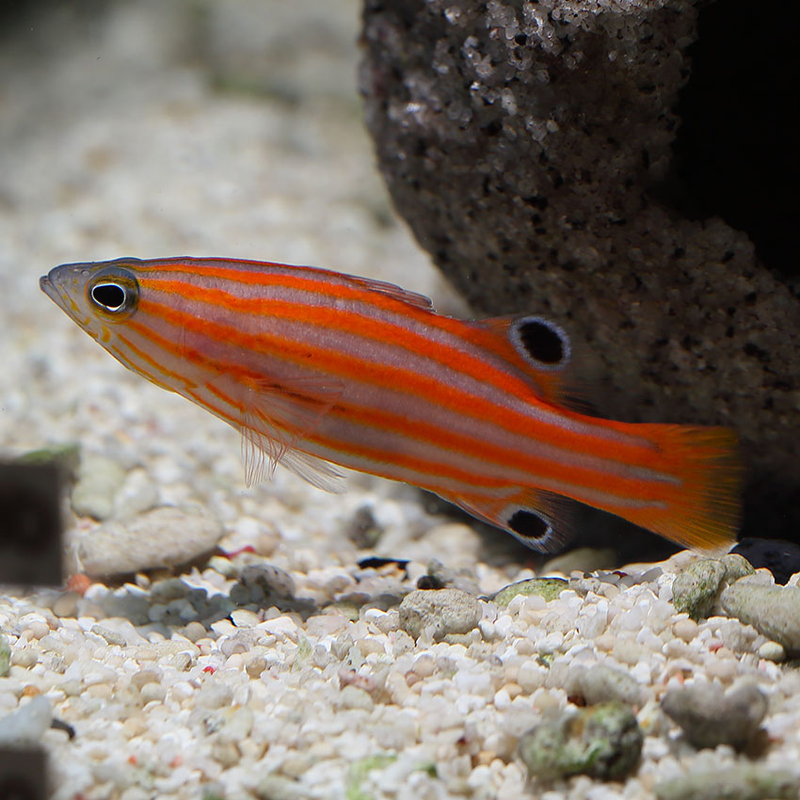
Named for its candy cane striping that echoes the uniforms of the Vatican’s Swiss Guard, this deep reef native rarely gets the attention it deserves
Most reef keepers have never heard of the Swissguard Basslet, and that is exactly what makes it such a rewarding fish to keep. It does not show up on every stocking list; it rarely gets impulse-bought at a fish store, and it demands a bit of patience from whoever keeps it. In exchange, it offers one of the most striking color patterns available in a peaceful, reef-safe package small enough for a mid-sized tank.
Meet the Swissguard Basslet
Scientifically known as Liopropoma rubre, the Swissguard Basslet is native to the Caribbean, found particularly around deep reefs off the Bahamas, Cuba, and the Cayman Islands. Its body carries bold red and white candy-cane striping that gave the fish its common name, a nod to the distinctive uniforms worn by the Swiss Guard. At Dr. Reef’s Quarantined Fish, every specimen goes through a full quarantine process before it becomes available, which matters enormously for a species this secretive and slow to settle in.
Natural Habitat: Life in the Deep Reef
This is not a shallow reef species. In the wild, the Swissguard Basslet lives on deep reef slopes, drop-offs, and cave systems at depths between 100 and 400 feet, well below where most reef fish are typically collected. It inhabits dimly lit areas riddled with cave networks and rarely, if ever, ventures into open water. That deep, cave-oriented lifestyle is the single biggest factor to plan around when setting up a tank for this fish.
Appearance and Coloration
A healthy Swissguard Basslet displays a brilliant red to orange-red body crossed by five to seven bold white or cream horizontal stripes, creating the signature candy-cane pattern the species is named for. Those stripes continue right onto the face, and the fins carry a red edge along with a distinctive black spot on the dorsal fin. When this fish feels secure enough to show itself fully, it is genuinely one of the most striking basslets available in the hobby.
Tank Requirements
Because this species evolved in a cave-dense, low-light environment, its aquarium needs to replicate that structure closely. Extensive rockwork with numerous caves, overhangs, and tight crevices gives the fish the security it needs to feel comfortable enough to venture out and feed. A tank in the 30 to 75 gallon range works well for a single specimen, though larger systems give the fish more territory to establish without competing for the same handful of hiding spots.
Subdued lighting during the initial settling-in period also helps. A fish this shy, dropped straight into bright, wide-open rockwork, often stays hidden far longer than necessary.
Feeding
Once established, the Swissguard Basslet accepts a variety of small meaty foods, including finely chopped seafood, mysis shrimp, and other frozen offerings suited to a carnivorous cave dweller. Feeding smaller portions more than once a day tends to work better than one large feeding, both because it matches this fish’s natural hunting rhythm and because it gives a shy specimen more chances throughout the day to feel safe enough to come out and eat.
Temperament and Tankmates
This species pairs well with other peaceful fish that will not compete aggressively for food or territory. Good tankmates include peaceful gobies, blennies, dartfish, firefish, calm wrasses, cardinalfish, anthias, clownfish, and small peaceful tangs. If you already keep a similarly gentle Caribbean species, the Royal Gramma shares a comparable temperament and origin, making for a natural pairing in the same display.
Avoid aggressive feeders and boisterous, highly active fish that could intimidate a species this cautious away from feeding entirely. It is also worth being careful about keeping more than one Swissguard Basslet, or a closely related basslet, in the same tank unless the system is 75 gallons or larger, since multiple individuals may compete over the same limited cave space.
Reef Compatibility
The Swissguard Basslet is completely reef safe and will not bother corals, anemones, or sessile invertebrates of any kind. It is also safe around ornamental shrimp and crabs, making it a genuinely worry-free addition to a mixed reef display from an invertebrate safety standpoint.
Sourcing a Healthy, Quarantined Specimen
Given how deep this species lives in the wild and how shy it remains in captivity, sourcing from a supplier that takes quarantine seriously matters more here than with almost any other basslet. A proper observation period, often running several weeks for a species this cautious, gives the fish time to settle, start feeding reliably, and clear any parasites picked up during collection before it ever reaches your tank. What Actually Happens During Fish Quarantine? explains what that process typically involves and why it matters so much for deep reef species in particular.
Once your fish arrives, an unhurried acclimation matters just as much. Review the Acclimation Guide before your Swissguard ships so the transition into its new cave system goes as smoothly as possible.
A Note on Related Species
Hobbyists drawn to the Swissguard often end up curious about its close relative, the Swales Swissguard, which trades the red and white candy-cane pattern for a golden-orange body marked with electric blue stripes. Both species share the same deep reef origin, the same shy temperament, and the same cave-rich tank requirements, so if you fall in love with one, the other is worth a look as well.
Pricing
Because the Swissguard Basslet is collected from unusually deep water and is genuinely uncommon in the trade, pricing varies more than it does for typical reef fish and depends heavily on current availability. Checking the live listing at the time you are ready to order is the most accurate way to confirm cost for this particular species.
Why the Swissguard Basslet Deserves More Attention From Reef Keepers
This is a fish built for patient hobbyists rather than impulse buys. It asks for cave structure, subdued lighting, and a bit of time before it fully settles in, and in return it delivers one of the most eye-catching color patterns available in a peaceful, genuinely reef-safe fish. For anyone running a mid-sized tank and looking for something a little rarer than the usual basslet lineup, the Swissguard is exactly the kind of hidden gem worth seeking out.