
Snowflake Eel

Snowflake Eel for Sale: Hardy Moray Eel for Marine Aquariums
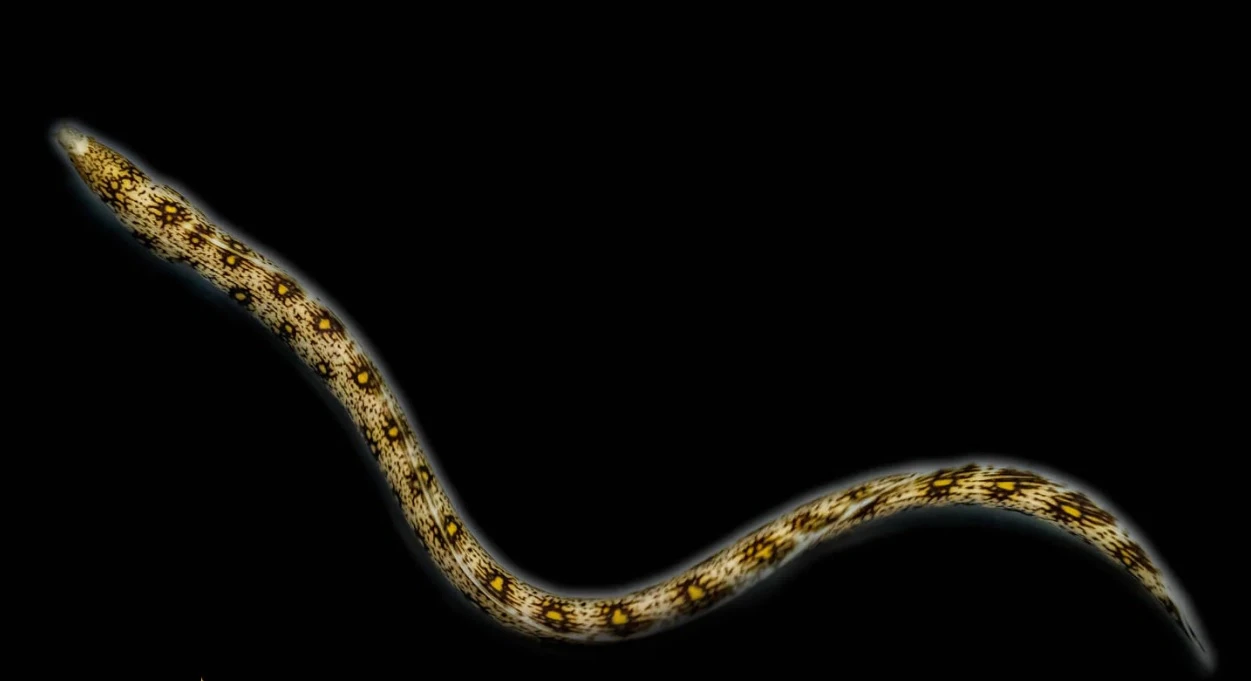
The Snowflake Eel (Echidna nebulosa) is one of the most iconic and recognizable fish in the marine hobby. Its bold black and white patterning, serpentine movement, and confident personality make it a showpiece in any large aquarium. For hobbyists who have always wanted to keep a moray eel but felt uncertain about where to start, the Snowflake Eel is the natural first choice. At Dr. Reef, Snowflake Eels are available after completing a thorough quarantine process, giving you the best possible foundation for keeping this captivating predator long term.
Why the Snowflake Eel Stands Apart From Other Morays
There are dozens of moray eel species in the marine hobby, but the Snowflake Eel earns its reputation as the most beginner-friendly for several important reasons. First, its diet in the wild consists almost entirely of crustaceans rather than fish. Its teeth are blunt and molariform, designed for crushing hard-shelled prey rather than gripping fish. This means the Snowflake Eel is far less likely to target fish tankmates than fish-eating morays like the Honeycomb or Green Moray.
Second, the Snowflake Eel is genuinely hardy. It adapts well to aquarium conditions, tolerates a reasonable range of water parameters, and is one of the more disease-resistant eel species available. A properly quarantined Snowflake Eel from Dr. Reef that is established in a suitable system can live for ten years or more, making it a long-term companion in your aquarium.
Third, it is simply one of the most visually arresting fish in the hobby. The bold white base color broken by irregular black and yellow patterning gives each individual a unique appearance, and watching a Snowflake Eel move through rockwork or emerge from its den at feeding time never gets old.
Tank Requirements
Snowflake Eels are found throughout the Indo-Pacific in shallow reef and rubble zones, where they spend most of their time concealed in crevices and caves. A tank of at least 75 gallons is recommended for a single adult, which can reach 24 to 36 inches in length. Larger tanks provide more swimming space and make it easier to maintain stable water quality given the eel’s significant waste output.
Rockwork is essential. Snowflake Eels need multiple cave-like spaces to shelter in and will quickly claim a favorite den. Once established in a hiding spot, they will regularly emerge to investigate feeding activity and explore the tank during evening hours. A tightly fitted and weighted lid is absolutely mandatory. Snowflake Eels are powerful and persistent, and any gap in the tank cover is a potential escape route. These eels are capable of squeezing through surprisingly small openings and can easily move lids that are simply resting in place.
Water parameters should be maintained at a salinity of 1.020 to 1.025, a temperature of 72 to 78 degrees Fahrenheit, and a pH of 8.1 to 8.4. Robust filtration is important because eels are messy eaters and produce substantial ammonia.
Compatibility With Other Fish
The Snowflake Eel is safe with most medium to large fish. Its crustacean-focused diet means it is far less dangerous to fish tankmates than other morays, though very small fish may still be at risk, particularly at night when the eel is most active. Good tankmates include larger angelfish, tangs, groupers, pufferfish, and lionfish. Avoid keeping Snowflake Eels with ornamental shrimp, crabs, or other crustacean invertebrates, as these will simply be treated as food.
Multiple Snowflake Eels can sometimes be kept together in very large systems if introduced simultaneously and given adequate hiding space, though this requires careful observation.
The Dr. Reef Quarantine Advantage
New eels sourced without quarantine frequently carry parasites, internal infections, and the effects of transport stress that are not visible to the naked eye. Because eels are scaleless, they are particularly sensitive to many standard parasite treatments, making disease management in a display tank genuinely difficult. Prevention through proper quarantine is far more effective than trying to treat a sick eel in a reef system.
At Dr. Reef’s Quarantined Fish, every Snowflake Eel goes through a minimum 30-day quarantine period with appropriate treatment and daily monitoring. By the time a Snowflake Eel is listed for sale, it is feeding consistently, behaving normally, and free from the hidden health issues that cause so many losses in the weeks after a new eel is introduced. Customers who purchase their Snowflake Eel from Dr. Reef regularly report that the fish began feeding within the first day or two of arrival and settled into its new den immediately, exactly the kind of result that proper quarantine makes possible.
Feeding Your Snowflake Eel
Snowflake Eels primarily eat crustaceans in the wild and should be offered similar foods in captivity. Frozen shrimp, squid, silversides, and quality carnivore preparations are all accepted by well-conditioned eels. Feed two to three times per week rather than daily, as overfeeding leads to poor water quality and obesity. Use tongs or a feeding stick to deliver food directly to the eel, keeping fingers well away from its powerful jaws. Though the Snowflake Eel is not aggressive by nature, it has poor eyesight and hunts primarily by smell, meaning fingers near food can occasionally be mistaken for prey.
Avoid feeding live feeder shrimp or crabs long term, as this can condition the eel to become more aggressive and does not provide the nutritional balance of high-quality frozen foods.
A Long-Term Showpiece for Your System
The Snowflake Eel is the kind of fish that becomes a genuine centerpiece and conversation starter in any aquarium. Its combination of beauty, hardiness, and fascinating behavior makes it one of the most rewarding predators in the marine hobby. Dr. Reef makes it simple to bring home a healthy, quarantined Snowflake Eel that is ready to thrive from the moment it arrives. Browse the current Snowflake Eel availability at Dr. Reef and add one of the ocean’s most iconic predators to your system.