
Baby Black Tip Reef Shark

Baby Black Tip Reef Shark for Sale: What It Takes to Keep a Shark
There is nothing quite like the presence of a shark in a home aquarium. The sleek, powerful silhouette of a Black Tip Reef Shark cutting through the water is one of the most dramatic sights the marine aquarium hobby has to offer. And yes, baby Black Tip Reef Sharks (Carcharhinus melanopterus) do occasionally become available to qualified, serious hobbyists. But this is not a fish for the unprepared. This article is your honest, complete guide to understanding what it genuinely takes to keep one.
About the Black Tip Reef Shark
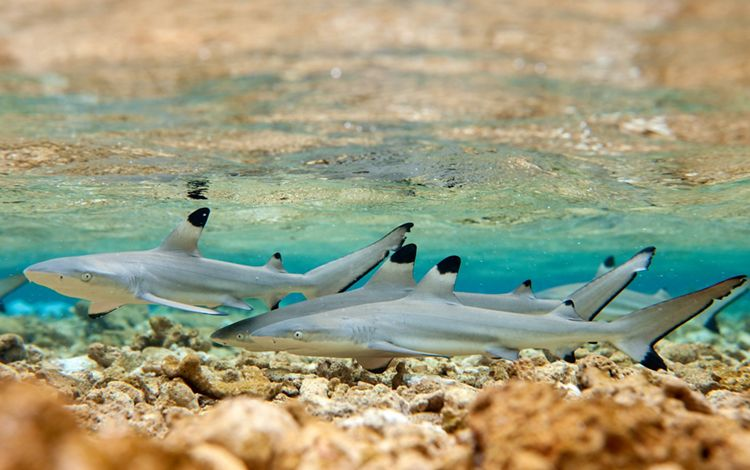
The Black Tip Reef Shark is one of the most recognizable shark species in the world, instantly identifiable by the distinctive black tips on its fins. Found throughout the Indo-Pacific, from the Red Sea to Hawaii, this species is a common inhabitant of shallow reef flats, lagoons, and the edges of coral reefs. In the wild, Black Tips are active, open-water swimmers that cover significant distances daily and are highly dependent on consistent water flow and oxygen levels.
Baby Black Tip Reef Sharks, sometimes called pups, are born and live at roughly 20 inches in length. They grow steadily and in the wild reach adult sizes of 5 to 6 feet. This growth trajectory is one of the most critical factors for any prospective keeper to understand before purchasing.
The Honest Reality of Shark Keeping
Keeping a shark is not like keeping a reef fish. It is a long-term commitment that demands serious infrastructure, ongoing maintenance, and a contingency plan for the animal’s adult size.
Before purchasing a baby Black Tip Reef Shark, ask yourself these questions honestly:
Do you have or can you build a tank of at least 3,000 to 5,000 gallons or larger? This is the realistic minimum for a long-term adult Black Tip Reef Shark. A juvenile can be kept in a smaller system temporarily, but growth happens quickly.
Do you have filtration and water movement systems capable of handling the biological load and oxygen demands of a large, active shark? Black Tips are sensitive to low dissolved oxygen and require powerful flow throughout the tank.
Do you have a professional aquarist or marine biologist you can consult? Keeping a shark requires a level of husbandry knowledge that goes beyond standard reef keeping.
Do you have a plan for rehoming if your setup cannot accommodate adult size? Responsible shark keeping means planning for every stage of the animal’s life.
If you answered yes to all of these, keep reading. If you have doubts, the good news is that Dr. Reef’s Quarantined Fish carries a wide range of stunning and manageable alternatives that deliver incredible visual impact without the logistical demands of a large elasmobranch.
Tank Setup for a Baby Black Tip Reef Shark
For a juvenile Black Tip Reef Shark, a minimum starting tank of 300 to 500 gallons with a rounded or oval footprint is recommended. Sharks can injure themselves on sharp corners and will pace a rectangular tank in ways that lead to stress and rostral abrasion. Round or oval tanks with smooth edges minimize this risk.
Filtration must be exceptional. A powerful biological filtration system, a large protein skimmer, and aggressive mechanical filtration are required. Ammonia and nitrite must remain at zero at all times. Nitrate should be kept as low as possible through regular large water changes and a robust refugium system.
Water flow needs to be vigorous and well-distributed throughout the tank. Black Tip Reef Sharks are obligate ram ventilators, meaning they must keep moving to pass water over their gills. Stagnant zones are not compatible with their survival.
Water temperature should be maintained between 72 and 80 degrees Fahrenheit, with salinity held steady at 1.023 to 1.026.
Sand substrate is strongly preferred over bare bottom or rocky substrate, as it is gentler on the shark’s underside.
Feeding a Black Tip Reef Shark
In captivity, Black Tip Reef Sharks are fed whole marine fish such as silversides, smelt, and squid. Feeding is typically done two to three times per week, as overfeeding causes water quality issues and can actually be harmful to the animal.
Trained feeders use feeding sticks to deliver food directly to the shark, which reduces competition in a multi-species system and allows careful monitoring of the animal’s appetite and behavior. A healthy shark eats with purpose. Loss of appetite is often the first sign of a health issue.
Tankmates for a Black Tip Reef Shark
Large, robust fish can coexist with juvenile Black Tip Reef Sharks. Suitable companions include large angelfish, groupers, and other similarly sized species. Avoid small fish that may be viewed as prey, and avoid invertebrates entirely.
As the shark grows, tank stocking options become more limited. Adult Black Tips are dominant animals in any system.
Why Source Through Dr. Reef’s Quarantined Fish
When a species as demanding as the Black Tip Reef Shark is involved, the health of the animal at the point of purchase is paramount. A stressed, parasitized, or ill juvenile shark is exponentially harder to treat than a reef fish of the same condition, and the consequences of introducing a sick shark into a large, established system can be devastating.
Dr. Reef’s Quarantined Fish applies the same rigorous quarantine standards to every animal, from a small goby to a baby shark. Each fish is held in professional-grade quarantine systems, observed for illness and behavioral abnormalities, and only made available once it has been confirmed healthy and feeding consistently.
The team at Dr. Reef also provides the kind of pre-sale guidance that can make the difference between success and failure with a demanding species like this. If your system is not ready, they will tell you. If there is a better fit for your current setup, they will recommend it. That honesty and expertise is what separates Dr. Reef from generic online livestock sellers.
Alternatives Worth Considering
If a Black Tip Reef Shark is your dream but your current system is not ready, Dr. Reef’s Quarantined Fish offers several smaller, visually dramatic species that bring the predator aesthetic without the scale requirements. Bamboo sharks, Epaulette sharks, and Coral Catsharks are all maintained at much smaller adult sizes and are far more manageable for serious hobbyists working with tanks in the 200 to 500-gallon range.
Dr. Reef carries quarantined specimens across a wide range of species and is always transparent about care requirements, compatibility, and long-term commitments. Browsing their available stock is a great way to find the right fit for where your system is today while planning for where it can go tomorrow.
The Reward of Doing It Right
For those who are genuinely prepared, a Black Tip Reef Shark in a large, well-designed system is one of the most awe-inspiring achievements in the freshwater or marine aquarium hobby. These are intelligent, aware animals that respond to their keepers, develop feeding routines, and command attention from every person who enters the room.
The key is preparation, knowledge, and sourcing from a provider who treats every animal with the care and professionalism it deserves. Dr. Reef’s Quarantined Fish exists precisely for that standard. When you are ready, they will be ready with you.