
Pygmy Waspfish

Pygmy Waspfish: Care, Feeding, and Tank Safety Tips
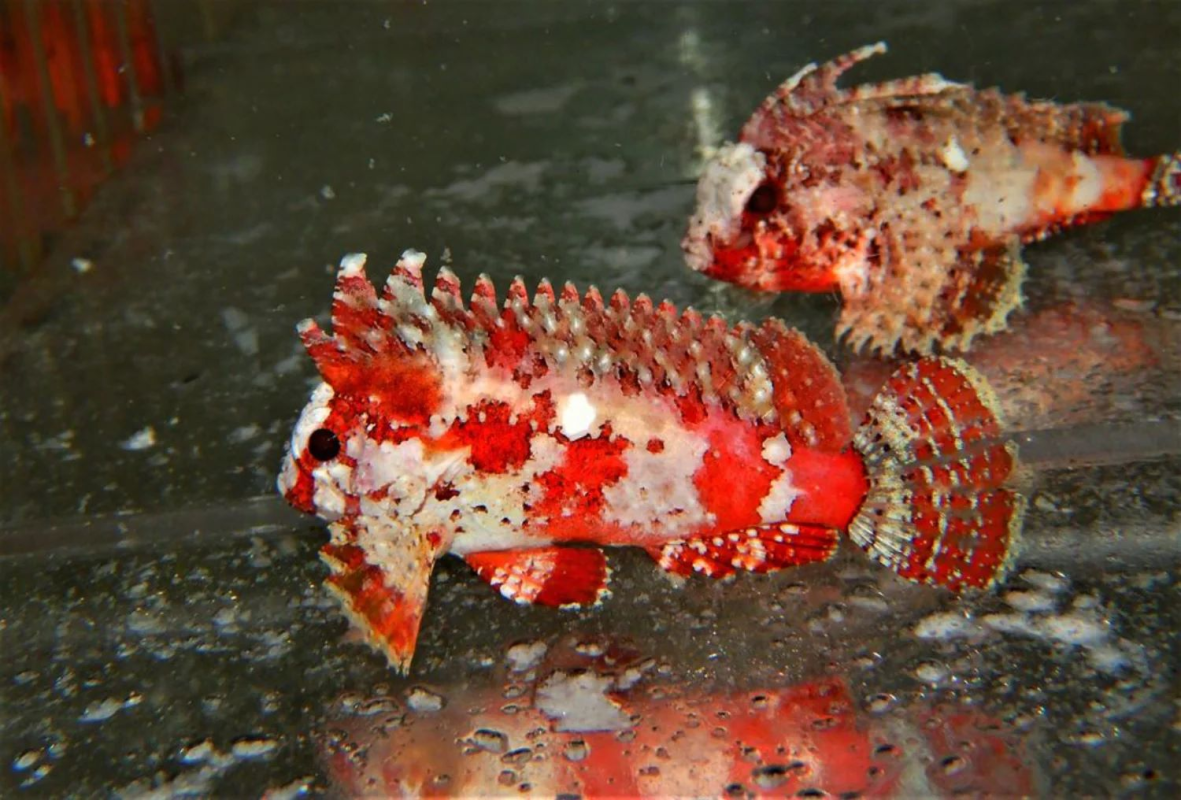
For hobbyists who appreciate the unusual side of the marine hobby, the Pygmy Waspfish (Hypodytes rubripinnis) is one of the most fascinating and genuinely unique species you can keep. A master of camouflage, a surprisingly effective ambush predator, and a species with behaviors that never fail to impress visitors, it offers something entirely different from the typical reef tank experience. However, keeping one safely and successfully requires understanding a few important facts before bringing one home.
What Is the Pygmy Waspfish?
The Pygmy Waspfish is a member of the scorpionfish family (Scorpaenidae) and is found throughout the Indo-Pacific, inhabiting shallow reef flats, rubble zones, seagrass beds, and weedy substrates. It grows to around 6 inches as an adult and has a flattened, laterally compressed body covered in irregular fleshy skin flaps and mottled coloration that can range from brown and gray to deep red and olive green depending on the individual and its environment.
Its entire body plan is built around a single strategy: looking exactly like a piece of drifting dead leaf or algae-covered debris. To complete the illusion, the Pygmy Waspfish rocks gently back and forth in the current while at rest, mimicking the movement of organic matter drifting through the water column. This behavior is genuinely mesmerizing and is one of the most compelling reasons hobbyists seek this species out despite its relatively plain coloration.
Venom and Handling Safety
This is the single most important thing to understand before keeping a Pygmy Waspfish. The dorsal spines are venomous and deliver a painful sting that causes intense localized pain, swelling, and in some individuals, nausea and systemic discomfort. While rarely life-threatening to healthy adults, the experience is deeply unpleasant and entirely avoidable with the right precautions.
Never place bare hands near this fish without being completely certain of its exact position in the tank. Use feeding tongs for all food delivery, and exercise extra caution during maintenance when your hands are inside the tank. Cover any equipment near where the fish rests before working in that area. Inform everyone in your household, including children and any guests who may interact with the tank, that this fish is venomous and must not be touched under any circumstances.
Tank Setup
A 30-gallon tank is adequate for a single specimen. The Pygmy Waspfish prefers a sandy substrate for resting, scattered rock rubble, low caves, and overhangs that provide natural resting surfaces and shelter. Low to moderate water flow is ideal, as strong flow makes it difficult for the fish to maintain its characteristic stationary posture. Dim to moderate lighting suits this species well and supports its natural camouflage behavior more effectively than intense reef lighting.
This fish spends the vast majority of its time completely motionless on the bottom or on rock surfaces, making it a species that rewards patient observation. It is best housed in a species-only setup or with large, calm non-aggressive tankmates that will not compete aggressively for food or disturb its resting sites. Keep water temperature between 74 and 80 degrees Fahrenheit, salinity at 1.023 to 1.025, and pH between 8.1 and 8.4.
Feeding
The Pygmy Waspfish is a carnivore that ambushes prey by remaining perfectly still until something edible passes within striking range. In captivity, most specimens can be trained to accept frozen silversides, frozen shrimp, and frozen marine fish pieces delivered directly in front of them using feeding tongs. Live ghost shrimp or small feeder shrimp are useful for stimulating a feeding response in newly arrived individuals that have not yet transitioned to frozen foods. Feed two to three times per week, offering enough at each feeding that the fish consumes a visible, satisfying meal.
Patience is key during the initial feeding period. Some individuals take one to two weeks to settle in and begin feeding confidently. Minimizing disturbance during this adjustment period improves outcomes significantly.
Always quarantine this species before adding it to a display tank. At Dr. Reef’s Quarantined Fish, all livestock goes through a proper quarantine and conditioning process, giving you the healthiest possible start with this remarkable and one-of-a-kind species.