

Tomato Clownfish

Tomato Clownfish Care Guide: Tank Setup and Behavior
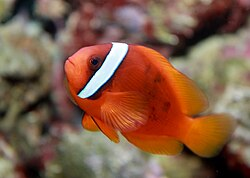
If you want a clownfish with genuine personality, the Tomato Clownfish (Amphiprion frenatus) is one of the best choices available in the marine hobby. Bold in color, even bolder in attitude, and hardy enough for hobbyists at the beginner level and beyond, this species delivers everything that makes clownfish so universally popular while adding a level of territorial fire that keeps things endlessly interesting. Here is everything you need to know to keep one thriving.
What Is the Tomato Clownfish?
The Tomato Clownfish is native to the western Pacific Ocean, ranging from the Malay Peninsula and the Philippines through to southern Japan and western Australia. It inhabits shallow, sheltered reef areas and lagoons where it associates closely with its host anemone, rarely straying more than a few inches from its protective tentacles. Adults grow to around 5 inches, with females being noticeably larger and more dominant than males.
Like all clownfish, the Tomato Clownfish is a protandrous hermaphrodite, meaning all individuals are born male. When no female is present in a group, the most dominant male undergoes a natural and irreversible sex change to become the resident female. Understanding this dynamic is helpful when planning a mated pair, as pairing a large individual with a noticeably smaller one encourages a stable male-female dynamic to establish naturally over time.
Juveniles display one to three white stripes across the body, but most adults retain only a single white stripe positioned just behind the eye on an otherwise rich orange-red body. This clean, streamlined appearance gives the Tomato Clownfish a bold and elegant look that stands out prominently in any reef tank.
Tank Setup for Tomato Clownfish
A 30-gallon tank is sufficient for a single specimen or a mated pair and provides comfortable space for establishing territory. Provide live rock for territorial reference points, open swimming areas, and ideally a host anemone positioned toward the center or back of the tank. The Bubble Tip Anemone (Entacmaea quadricolor) is the most reliably compatible host anemone in captivity and brings out the Tomato Clownfish’s most natural, entertaining, and visually appealing behaviors.
Keep water temperature between 74 and 80 degrees Fahrenheit, salinity at 1.023 to 1.025, and pH between 8.1 and 8.4. A reliable protein skimmer, consistent filtration, and regular water changes of 10 to 15 percent weekly maintain the water quality this species needs for vibrant coloration and long-term health. Tomato Clownfish are not particularly sensitive to minor parameter fluctuations, but stable conditions always produce better results than variable ones.
Behavior and Personality
The Tomato Clownfish is one of the more assertive and territorial clownfish species available in the hobby. It will charge at fish that approach its established space, particularly near a host anemone, and can become quite aggressive when defending its territory. This makes it a poor choice for tanks populated with small, timid species that cannot handle confrontation. However, for hobbyists who enjoy watching a fish with real personality and confidence, the Tomato Clownfish is deeply entertaining. Many individuals develop a recognizable bond with their keeper over time, often begging actively for food at the front of the glass.
Feeding
The Tomato Clownfish is an omnivore and one of the most enthusiastic and reliable feeders in the marine hobby. It accepts frozen mysis shrimp, frozen brine shrimp, high-quality marine pellets, and flake foods without hesitation. Feed once or twice daily, offering only what the fish can consume within two to three minutes to avoid overfeeding and unnecessary waste in the system. Occasional offerings of vitamin-enriched foods help maintain the brilliant orange-red coloration this species is prized for.
Compatibility
Due to their territorial and assertive nature, Tomato Clownfish are best kept as a mated pair or as a single specimen. Suitable tankmates include larger, confident reef fish such as tangs, hawkfish, dottybacks, and larger gobies. Avoid housing with other clownfish species, very shy fish, or species that cannot comfortably navigate the territorial challenges this fish presents.
Always quarantine new Tomato Clownfish before introducing them to your display tank. At Dr. Reef’s Quarantined Fish, every fish goes through a thorough quarantine process so you can add new residents to your reef with complete peace of mind.