
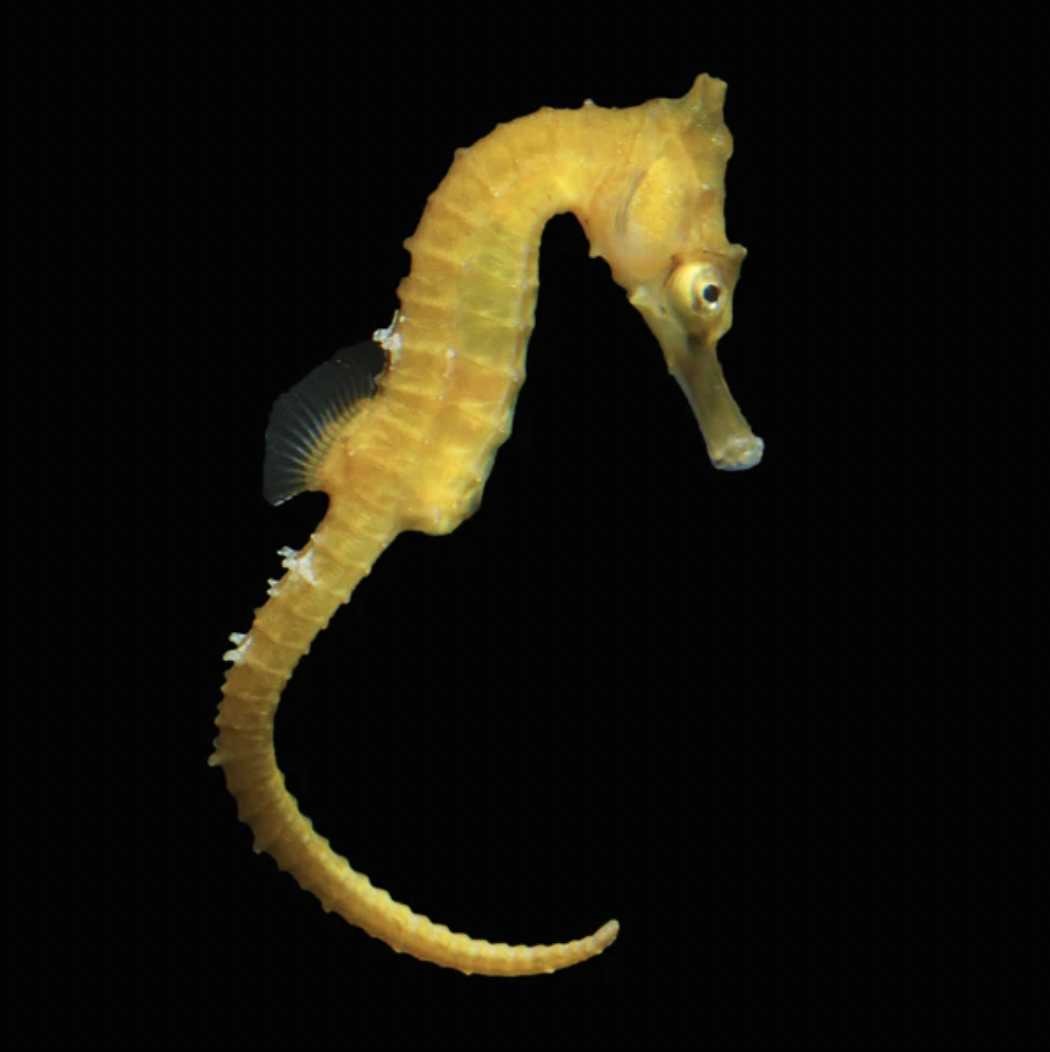
White’s Seahorse (Captive Bred)
$249.99
Hippocampus whitei
| Care Level | Intermediate to Advanced |
| Temperament | Peaceful and gentle |
| Color Form | Variable: yellow, orange, brown, purple, red, or combination patterns; may have spots or bands |
| Diet | Carnivore |
| Reef Compatible | Reef caution |
| Water Conditions | sg 1.020–1.025, 64–72°F, pH 8.1–8.4 |
| Max Size | 8″ |
| Family | Syngnathidae |
| Minimum Tank Size | 40 gallons |
White’s Seahorse (Captive Bred)
Also known as Sydney Seahorse, New Holland Seahorse, Australian Seahorse
The captive-bred White’s Seahorse is a magnificent and robust species native to Australia, featuring variable coloration including yellow, orange, brown, purple, and even spotted or banded patterns. This is one of the larger and hardier seahorse species available, making it an excellent choice for dedicated seahorse keepers. Captive-bred specimens are exceptionally hardy, already trained on frozen foods, and represent a sustainable alternative to wild collection from threatened wild populations.
Key Features
- Scientific Name: Hippocampus whitei
- Common Names: White’s Seahorse, Sydney Seahorse, Crowned Seahorse
- Adult Size: Up to 6-8 inches (height) – one of the larger seahorse species
- Lifespan: 5-8 years with proper care (longer-lived than many species)
- Temperament: Peaceful; gentle but larger and more robust than smaller species
- Reef Compatibility: Reef safe; will not harm corals but requires specialized conditions
- Minimum Tank Size: 40 gallons minimum for pair; 60+ gallons preferred
- Experience Level: Intermediate to Advanced; requires specialized care but hardier than most
Habitat & Tank Requirements
Tank Environment: Requires species-specific or seahorse-only tank with gentle to moderate water flow (can tolerate slightly more flow than smaller species). Provide abundant hitching posts: gorgonians, macroalgae, artificial seahorse trees, natural sponges, PVC structures. Include hitching posts at various heights. Moderate lighting acceptable. No anemones or aggressive corals.
Water Parameters:
- Temperature: 64-72°F (18-22°C) – temperate/cool water species
- Salinity: 1.020-1.025
- pH: 8.1-8.4
- Pristine, stable water quality essential
Equipment Recommendations:
- Quality filtration (gentle to moderate flow)
- Protein skimmer
- Moderate water circulation (can tolerate more than tropical species)
- Chiller REQUIRED (temperate species; cannot tolerate tropical temps)
- Species-only or carefully selected peaceful tankmates
Chillers are mandatory for this cool-water Australian species.
Diet & Feeding
White’s Seahorses are carnivores requiring frequent nutritious feeding.
Recommended foods include:
- Primary: Vitamin-enriched frozen mysis shrimp (staple diet)
- Variety: Frozen cyclops, enriched frozen brine shrimp, small krill, chopped prawns
- Live Foods: Live mysis shrimp (captive-bred accept frozen readily)
- Enrichment: Soak all foods in vitamin supplements before feeding
- Larger prey: Can consume larger food items than smaller seahorse species
Feeding Frequency: 2-3 times daily minimum
Special Note: Captive-bred advantage: Pre-trained on frozen enriched foods from birth. Larger size allows consumption of bigger prey items. Still requires target feeding. Heartier appetite than smaller species; ensure adequate food quantities.
Social Structure & Compatibility
- Tankmates: Best with other seahorses or very peaceful, slow-moving temperate species
- Peaceful Nature: Non-aggressive but larger and more robust than tropical species
- Pairs: Form monogamous pairs; excellent in pairs or small groups
- Hardier: More tolerant than smaller tropical species but still requires specialized care
- Species-Preferred: Species-only tank recommended for best success
Notes & Considerations
- One of the hardiest seahorse species available for aquariums.
- Larger, more robust body than tropical species; better suited to aquarium life.
- Variable coloration: yellow, orange, brown, purple, red, or combination patterns.
- Some specimens develop spots, bands, or mottled patterns.
- Can change color over time to match the environment.
- Captive-bred advantages: Exceptionally hardy, disease-resistant, frozen-food trained.
- Native to coastal temperate waters of Eastern Australia (Sydney region).
- REQUIRES COOL WATER: Chiller absolutely mandatory.
- Optimal temperature 64-72°F; cannot survive tropical temperatures (75°F+).
- Tropical temperatures cause extreme stress, disease, and death.
- One of the longer-lived seahorse species with proper care.
- Males have large, prominent brood pouches; females have smooth abdomen.
- Males carry and give birth to live young: Fascinating reproduction.
- Form strong lifelong pair bonds; pairs should remain together.
- Established pairs perform daily morning greeting rituals.
- Slow swimmers but more active than smaller tropical species.
- Use a prehensile tail to grasp hitching posts and anchor.
- Can tolerate slightly stronger water flow than delicate tropical species.
- Still require gentle conditions compared to typical reef systems.
- Larger size allows consumption of bigger prey items.
- Must still be target-fed; cannot compete with typical fish species.
- Feed by rapid suction through tubular snout.
- Suitable tankmates are very limited but broader than tropical seahorses.
- Can potentially coexist with peaceful temperate fish (very carefully selected).
- Species-only tanks are still strongly recommended for optimal success.
- Require pristine water quality; sensitive to nitrates and poor conditions.
- More tolerant than tropical species but water quality is still critical.
- Less prone to bacterial infections than some smaller species.
- Sensitive to medications; copper is toxic; use seahorse-safe treatments.
- Require frequent feeding; cannot skip meals.
- Weekly vitamin supplementation essential.
- Require stable parameters; sudden changes cause stress.
- Hardier temperament than many seahorse species; good beginner seahorse.
- Wild populations threatened; captive-bred specimens support conservation.
- Captive breeding helps preserve this iconic Australian species.
- Males become pregnant; gestation approximately 3-4 weeks.
- Can produce 100-250+ fry per brood.
- Captive breeding and fry rearing are more successful than many species.
- Long-lived; represents 5-8 year commitment with proper care.
- Requires dedication but more forgiving than delicate tropical species.
- Excellent choice for dedicated seahorse keepers seeking hardier species.
- Still requires species-specific setup and knowledge.
- Not suitable for standard tropical reef systems.
Why Choose a Quarantined White’s Seahorse (Captive Bred)?
Purchasing a quarantined captive-bred White’s Seahorse from us means you’re starting with one of the hardiest, most sustainable seahorse options available. Captive-bred specimens are far superior to wild-caught: pre-adapted to aquarium life, trained on frozen foods, disease-resistant, and ethically produced. Our quarantine process ensures optimal health, confirms robust feeding, and provides proper temperature acclimation. White’s Seahorses are also a conservation success story—captive breeding helps protect threatened wild populations. This provides the strongest possible foundation for long-term success with these magnificent temperate seahorses.
You must be logged in to post a review.
Related products
Aiptasia Eating Filefish
Price range: $99.99 through $114.99
Cerith Snail
Price range: $14.99 through $69.99
Midas Blenny
Price range: $99.99 through $114.99
Moorish Idol
$179.99
Reviews
There are no reviews yet.