
Tesselata Eel
$239.99
Gymnothorax favagineus
| Care Level | Expert |
| Temperament | Highly aggressive, predatory |
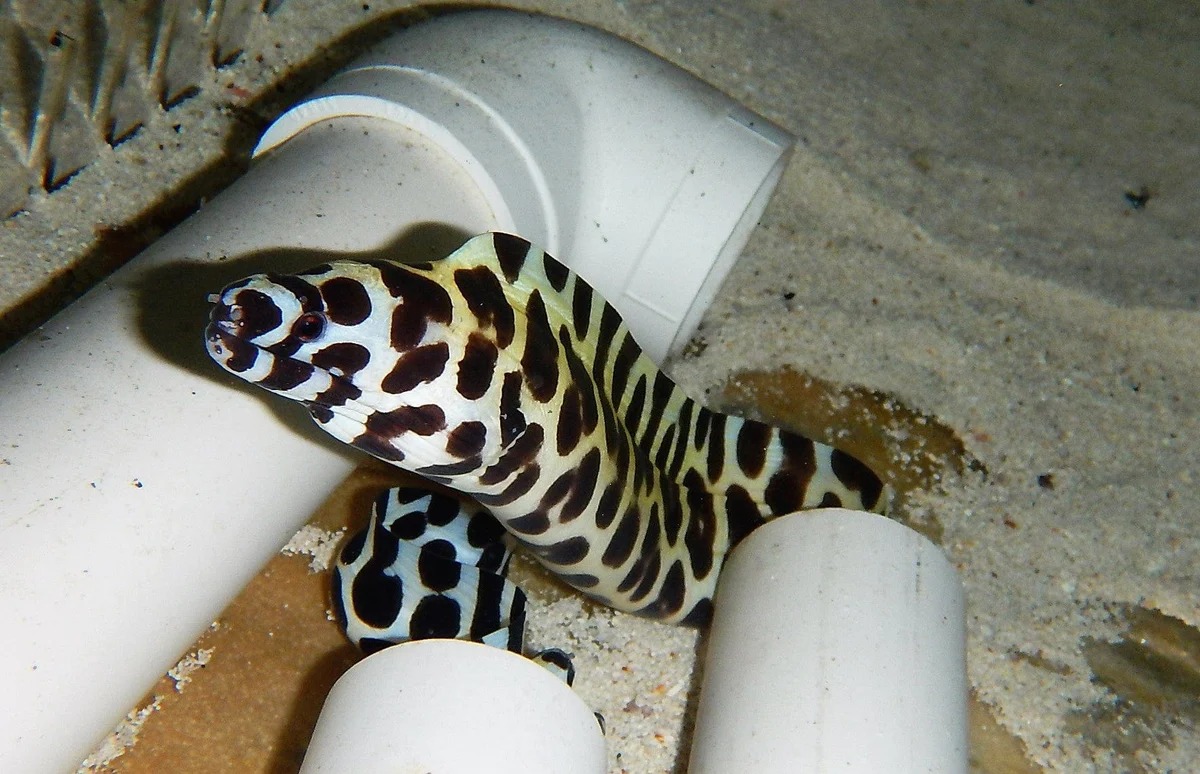
| Color Form | Cream to yellow body with dark brown honeycomb or tessellated spots |
| Diet | Carnivore |
| Reef Compatible | No |
| Water Conditions | sg 1.020–1.025, 72–80°F, pH 8.0–8.4 |
| Max Size | 10“ |
| Family | Muraenidae |
| Minimum Tank Size | 300 gallons |
Tesselata Eel
Also known as the Honeycomb Moray or Leopard Moray Eel
The Tesselata Eel is one of the largest and most impressive moray eels available to aquarists, featuring striking honeycomb or tessellated patterns of dark brown spots on a cream to yellow background. Native to the Indo-Pacific region, this powerful predator can reach truly massive sizes, making it suitable only for experienced aquarists with very large aquarium systems or public displays. Their impressive size, bold personality, and prehistoric appearance make them captivating but demanding long-term commitments requiring specialized housing and extreme caution during maintenance.
Key Features
Scientific Name: Gymnothorax favagineus
Common Names: Tesselata Eel, Tessellated Moray, Honeycomb Moray, Leopard Moray Eel
Adult Size: 6–10 feet (180–300 cm); commonly 5–7 feet in aquariums
Lifespan: 15–30+ years with proper care
Temperament: Highly aggressive and predatory; will consume fish and invertebrates
Reef Compatibility: Not reef-safe – predatory toward all fish and large invertebrates
Minimum Tank Size: 300 gallons minimum (500+ gallons for adults strongly recommended)
Experience Level: Expert only – massive size, aggressive, potentially dangerous
Habitat & Tank Requirements
Tank Environment:
- Extremely spacious aquarium with open swimming areas
- Multiple large caves and PVC pipe hideouts (12+ inches diameter for adults)
- Completely escape-proof lid with locking mechanism mandatory
- Heavy, secured rockwork (eels can topple unstable structures)
- Minimal decorations; prioritize swimming space
- Bare bottom or coarse substrate
Water Parameters:
- Temperature: 72–80°F (22–27°C)
- Salinity: 1.020–1.025 specific gravity
- pH: 8.0–8.4
- Ammonia/Nitrite: 0 ppm
- Nitrate: <40 ppm (eels more tolerant than sensitive species)
Essential Equipment:
- Oversized filtration rated for 2–3x tank volume
- Heavy-duty protein skimmer
- Secure lid with no gaps (eels are expert escape artists)
- Very frequent large water changes (25–30% weekly)
Diet & Feeding
Recommended Foods:
- Fresh or frozen whole fish (silversides, mackerel, squid)
- Fresh shrimp, squid, octopus
- Large frozen krill, prawns
- Occasional fresh seafood variety
Feeding Schedule:
- Feed 2–3 times weekly for adults
- Large meals (several whole fish per feeding)
- NEVER hand-feed – use feeding tongs with 12+ inch handles
- Fast one day weekly to prevent obesity
- Remove uneaten food promptly
Behavior & Compatibility
Temperament:
- Highly aggressive predator
- Will consume any fish or invertebrate it can swallow
- Territorial and defensive
- Can inflict serious, potentially dangerous bites
- Active hunter, especially at night
Tank Mates:
- Best kept alone or with other large aggressive species
- Compatible with: Large triggerfish, large pufferfish, large groupers (all with extreme caution)
- Avoid: All fish small enough to swallow, invertebrates, peaceful species, anything resembling food
SAFETY WARNING:
- Moray eels can inflict serious bite injuries requiring medical attention
- Bacteria in mouths can cause severe infections
- Never place hands in tank with Tesselata Eel
- Use long-handled tools for all maintenance
- Warn all household members and visitors
Acclimation & Health
Initial Acclimation:
- Extended drip acclimation over 60–90 minutes
- Keep lights off during introduction
- Provide immediate hiding spot
- May not eat for first week (normal)
Health Considerations:
- Generally hardy once established
- Resistant to most diseases
- Poor water quality can cause skin infections
- Quarantine extremely challenging due to size
Signs of Health:
- Active, alert behavior
- Clear eyes and smooth skin
- Strong feeding response
- No visible lesions or cloudiness
Special Considerations
Massive Adult Size:
- Can reach 6–10 feet in length
- Requires 500+ gallon aquarium when full-grown
- Most aquarists cannot accommodate adult specimens
- Plan for entire lifespan or have rehoming strategy
Escape Artists:
- Will escape through any gap
- Can push lids open
- Found dried on floors if tank not secured
- Weighted, locked lids mandatory
Long-term Commitment:
- 15–30+ year lifespan
- Substantial food costs ($50–100+ monthly)
- Very large system required throughout life
- Difficult to rehome large specimens
Legal and Safety:
- Check local regulations (some areas restrict large predatory fish)
- Consider liability insurance
- Not suitable for households with children
- Extreme caution required during all maintenance
Why Choose a Tesselata Eel?
Tesselata Eels are spectacular, prehistoric-looking predators suitable exclusively for expert aquarists with very large systems, long-term commitment capacity, and understanding of the serious responsibilities involved. Their massive size, aggressive nature, and potential danger require extreme caution, specialized housing, and realistic assessment of long-term care capabilities. When properly housed with appropriate precautions, they become impressive display animals, but only for those truly prepared for decades of specialized care for one of the ocean’s most formidable predators.
You must be logged in to post a review.
Related products
Achilles Tang
Price range: $549.99 through $649.99
Aiptasia Eating Filefish
Price range: $99.99 through $114.99
Copperband Butterflyfish
Price range: $149.99 through $218.99
Foxface
Price range: $149.99 through $172.99
Midas Blenny
Price range: $99.99 through $114.99
Nerite Snail
Price range: $14.99 through $69.99
Reviews
There are no reviews yet.