
Singapore Angelfish
Price range: $99.99 through $114.99
Chaetodontoplus mesoleucus
| Care Level | Moderate to High |
| Temperament | Semi-aggressive |
| Color Form | blue, yellow, with touches of black |
| Diet | Omnivore |
| Reef Compatible | With Caution |
| Water Conditions | 72–78°F (22–28°C), Sg 1.020–1.025, pH: 8.1–8.4, dKH: 8–12 |
| Max Size | 7″ |
| Family | Pomacanthidae |
| Minimum Tank Size | 90 – 120 gallons |
3-Day Guarantee
Approximate Purchase Size: Small: 1-2.5″; Medium: 2.5-3.75″; Large: 4-5″
Singapore Angelfish
Also known as the Vermiculated Angelfish, Vermiculate Angelfish, or Red Sea Butterflyfish
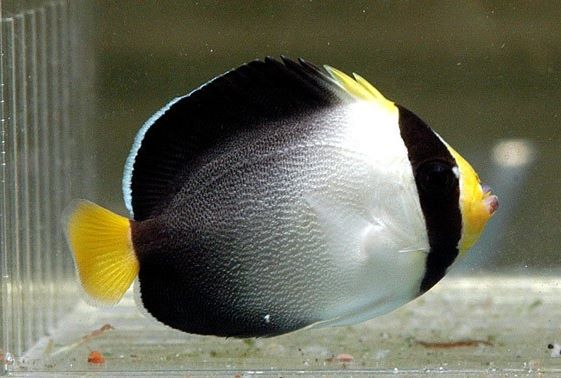
The Singapore Angel is a beautiful and distinctive marine species known for its striking two-tone coloration pattern featuring a white front transitioning to black rear body, accented by a bright yellow tail and dramatic black mask through the eyes. Native to the Indo-Pacific region from southern Japan to Australia, this elegant species is often mistaken for a butterflyfish due to its flat, oval body structure. The intricate wavy vermiculated patterns covering the body give this fish its common name. While visually stunning and relatively hardy once established, Singapore Angels belong to the challenging Chaetodontoplus genus and require careful acclimation and consistent feeding to thrive in captivity.
Key Features
- Scientific Name: Chaetodontoplus mesoleucus
- Common Names: Singapore Angel, Vermiculated Angelfish, Vermiculate Angelfish, Red Sea Butterflyfish
- Adult Size: Up to 7 inches (18 cm)
- Lifespan: 10+ years with proper care
- Temperament: Semi-aggressive; shy initially but territorial once established
- Reef Compatibility: With caution – will nip at soft corals, stony polyp corals, sessile invertebrates, and clam mantles
- Minimum Tank Size: 90–120 gallons
- Experience Level: Moderate to difficult (requires careful acclimation)
Habitat & Tank Requirements
- Tank Environment: Requires a mature, well-established tank (6+ months old) with abundant live rock for continuous grazing on algae, diatoms, and microorganisms. Provide plenty of caves, rocky crevices, and hiding places that mimic natural silty inner coastal reefs and lagoons with rich coral growth. This species absolutely requires live rock, not just for aesthetics but for ongoing natural food sources.
- Water Parameters:
- Temperature: 72–78°F (22–28°C)
- Salinity: 1.020–1.025
- pH: 8.1–8.4
- dKH: 8–12
- Aquascape: Extensive live rock formations are essential for grazing algae and providing security. Natural algae growth should be strongly encouraged. Provide ample hiding spots and cave areas while maintaining open swimming space for grazing activity. The aquarium should be quietly located away from high-traffic areas.
- Compatibility: Keep only one Singapore Angel per tank. Extremely aggressive toward conspecifics and should not be housed with other Singapore Angels or Chaetodontoplus species. If housing multiple angelfish genera, add the Singapore Angel first to allow it time to establish territory, it is more docile and timid than other large angelfish and can be easily bullied by more aggressive species. Should not be housed with overly aggressive or pugnacious tank mates that will outcompete it for food. Compatible with peaceful to semi-aggressive fish. Does best with non-boisterous tank mates that share a similar disposition.
Diet & Feeding
Singapore Angels are omnivores with dietary preferences focused on algae supplemented by sponges and meaty foods:
- Natural Diet: Primarily algae and filamentous weed, supplemented by sponges, tunicates, sea squirts, and small benthic invertebrates. Heavy grazers on algae and diatoms.
- Captive Diet:
- Plant Matter: Spirulina, Chlorella, marine algae, nori sheets, dried seaweed. Algae-based foods should form the bulk of the diet.
- Meaty Foods: Frozen mysis shrimp, enriched brine shrimp (especially spirulina brine shrimp), finely chopped clams, mussels, scallops, squid, bloodworms, silversides
- Specialty Items: High-quality marine angelfish preparations containing sponge matter (essential for long-term health), Angel Formula, Angel & Butterfly Mix (San Francisco Bay Brand)
- Premium Foods: High-quality flakes and pellets designed for angelfish
- Feeding Schedule: Feed small portions multiple times daily (minimum 3 times per day, preferably more). When first introduced, offer several daily feedings to quickly acclimate to surroundings and encourage feeding response. Multiple small feedings are critical for this species.
- Feeding Challenges: CRITICAL: Like many Chaetodontoplus species, Singapore Angels can be difficult feeders initially and may be reluctant to eat after capture and transport. Some individuals acclimate well and begin eating immediately, while others may hide and refuse food for extended periods, occasionally leading to starvation. Never purchase a specimen that will not eat—always observe the fish eating multiple times before purchase or request eating guarantees. Use garlic or vitamin supplements to entice feeding. Live brine shrimp or ghost shrimp can help trigger feeding responses in reluctant individuals.
- Critical Note: Fish that appear to be doing fine one day may suddenly stop eating for a week or more and perish. Consistent, varied feeding and careful observation are essential. If the fish stops eating, immediately offer live foods to restart feeding response.
Notes & Considerations
- Appearance Details: Striking and unmistakable coloration. Blue lips contrast sharply with a bright yellow nose and face. A broad black vertical band runs through the eye, resembling a dramatic mask. This black band is bordered by a thin vertical yellow stripe, followed by a wider white to cinereous (ashy grey) band behind the head. The rear two-thirds of the body shades into a larger black area accented throughout with intricate yellow vermiculated (wavy, winding) speckled patterning. The caudal fin is bright yellow (occasionally grey in closely related species C. poliourus). Dorsal and anal fins are edged in brilliant sapphire-blue. Pelvic fins are white. The body is oval, flat, and compressed—often mistaken for a butterflyfish.
- Similar Species: Very similar to Chaetodontoplus poliourus (Grey-tail Angelfish), which was recognized as a separate species in 2009 by Randall & Rocha. The primary difference is tail color—C. mesoleucus has a yellow tail while C. poliourus has a grey tail. Both species come from the same geographic areas and were previously considered color variants of the same species.
- Behavioral Traits: Initially very shy and secretive when first introduced, often hiding extensively among rockwork. Requires time and patience to become accustomed to surroundings. Will become more courageous and confident over time, eventually swimming freely throughout the aquarium. Once fully acclimated, it may become territorial and aggressive toward other angelfish. Very active grazers, spend most of the day moving around picking at substrate and live rock for algae and microorganisms. When alarmed, quickly retreat and hide among coral and rockwork. In the wild, normally encountered in small groups or pairs.
- Genus Challenges: The Chaetodontoplus genus contains several species that are notoriously difficult to care for, particularly during initial acclimation and feeding establishment. This genus has earned a reputation for being challenging, with inconsistent survival rates in captivity. The Singapore Angel is considered one of the more manageable species within this difficult genus, but still requires expertise and dedication.
- Acclimation Critical: A quarantine period with careful acclimation is absolutely essential for this species. Many deaths occur during the first few weeks due to refusal to eat or inability to adapt to captive conditions. Providing a refugium-style quarantine tank with live rock and natural food sources dramatically improves acclimation success. A 28-day quarantine process allows adequate time for the fish to settle in, adapt to surroundings, and establish consistent feeding behavior before introduction to the display tank.
- Reef Considerations: Not considered reef-safe. Will nip at both stony corals (LPS and SPS), soft corals (especially Zoanthus), sessile invertebrates (anemones, clams), and clam mantles. Best kept in well-established FOWLR (Fish-Only-With-Live-Rock) systems with abundant live rock for grazing. Careful observation is warranted if attempted in reef aquariums.
- Social Structure: This species is a protogynous hermaphrodite—all are born female with the ability to change to male. In the wild, typically found in pairs (one male with one female) or small groups (one male with two females). Juveniles are solitary. Males and females are not visually distinguishable.
- Cheek Spines Warning: Like all angelfish, Singapore Angels possess cheek spines along the edge of their gill covers. Exercise extreme caution when handling—never use a net for capture, as they can become stuck, tangled, or damaged. Use a container instead.
- Health Considerations: Generally hardy once established and feeding consistently. However, it is susceptible to common marine diseases when stressed, particularly cryptocaryon (marine ich). Requires pristine water quality with stable parameters. UV sterilizer and protein skimmer are recommended. Limit herbivorous tank mates to ensure adequate algae availability.
- Breeding: Hermaphroditic and extremely difficult to breed in captivity. Does not have distinguishable color variations between male and female.
- Geographic Range: Found in the Indo-West Pacific region. Range extends from southern Japan (Tanabe Bay) south through Indonesia, Philippines, Taiwan, Ryukyu Islands, Ogasawara Archipelago, Palau, Mentawai Islands, Bird’s Head Peninsula (Papua New Guinea), Solomon Islands, and northwestern Australia (Great Barrier Reef). Inhabits reefs on the continental shelf, rare around oceanic islands. Prefers silty inner coastal reefs and lagoons where there is rich coral growth. Depth range: 1–30 meters (3–98 feet). Non-migratory species.
- Conservation Status: Listed as Least Concern (LC) by the IUCN. Edible but not a targeted food fish. Sometimes consumed fresh but not commercially significant.
- Common Name Origin: Often called “Singapore Angel” due to its presence in waters off the coast of Singapore in Southeast Asia. “Vermiculated” refers to the wavy, winding vermiculated patterns covering the body and fins.
Why Choose a Quarantined Singapore Angel?
Our quarantined Singapore Angels are carefully checked and prepared before sale. Because they are challenging to keep, we do a 28-day quarantine to help them settle in and start eating reliably. They are kept in mature tanks with plenty of live rock for grazing. We make sure each fish is eating well on various prepared foods before selling. This helps ensure they arrive healthy, parasite-free, and ready to thrive in your tank.
| Service Level |
Quarantined |
|---|---|
| Extended Guarantee |
3 days (Included) ,7 days ,14 days |
You must be logged in to post a review.
Related products
Achilles Tang
Price range: $549.99 through $649.99
Cerith Snail
Price range: $14.99 through $69.99
Flame Hawkfish
Price range: $99.99 through $114.99
Foxface
Price range: $149.99 through $172.99
Nassarius Snail Large
Price range: $19.99 through $69.99
Nerite Snail
Price range: $14.99 through $69.99
Reviews
There are no reviews yet.